
Four Years After Her Passing... Nakihan Akarsal Is Present in Women's Memory
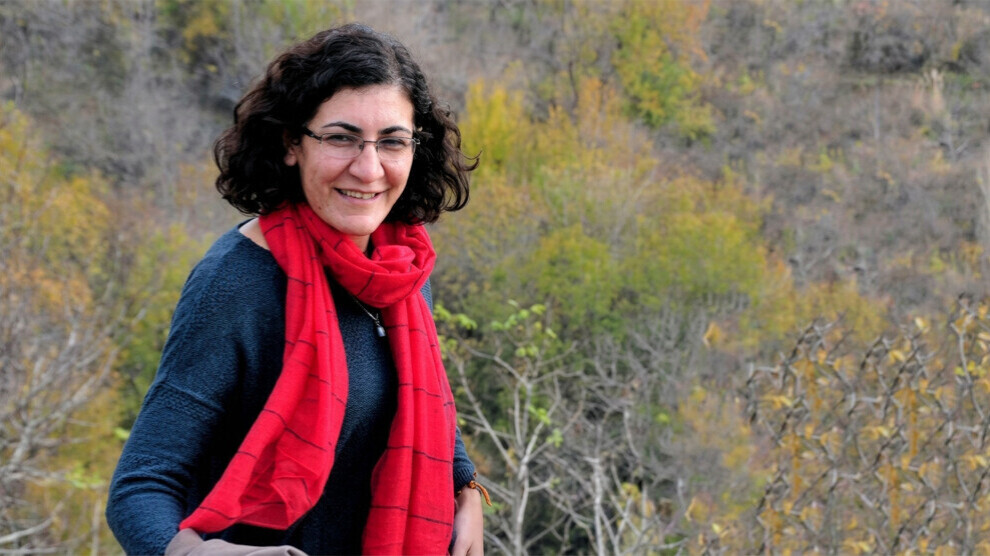
On her fourth martyrdom anniversary, journalist Nakihan Akarsal is remembered for centering her career on truth, freedom, and women, leaving an intellectual and journalistic legacy present in memory.
ARJIN DILEK ÜNCEL
AMED – "Truth is the story of a person's realization of what is eternal and everlasting, and it is at the same time a journey of discovering ourselves, and an adventure in which consciousness seeks to understand itself in a space with no beginning and no end. Reaching the truth is in itself a journey toward freedom." With these words, journalist Nakihan Akarsal expressed her vision of truth, and her career that made searching for it a path of knowledge, awareness, and freedom.
Journalist and member of the Jineology Research Center, Nakihan Akarsal, was born in 1976 in the village of "Khalikan" in the Ceyhanbeyli area of Konya province in northern Kurdistan. She completed her secondary education, then joined the Faculty of Communication at Gazi University in the capital, Ankara. In 1997, she left Turkey.
She was detained and arrested in 2001 in Ankara, Turkey, on charges of "belonging to an organization," and remained in prison until she was released in 2007. After her release, she resumed her studies in the field of journalism, which she had interrupted.
She Left a Mark Through Her Contribution to Women's Journalism
Through her life journey and influential pen, Nakihan Akarsal, who was targeted by the Turkish occupation on the fourth of October 2022 in Sulaymaniyah city in the Kurdistan Region and was martyred as a result, left a deep imprint in the souls of everyone who knew her. Her intellectual and journalistic legacy is still present, illuminating the path before women and inspiring them to continue searching for truth and freedom.
Journalist Dijle Muftioglu was among the women who closely followed part of Nakihan Akarsal's career. Dijle talks about the period that brought them together, noting that she was influenced by Nakihan Akarsal and her journalistic style, especially her interest in women's journalism, even before meeting her face to face.
She says: "I met Nakihan at Dijle News Agency. She worked in the Ankara office, while I worked in the Amed office. Before I met her personally, I had known her through the style and position she consecrated in her work. She paid special attention to women's journalism, and succeeded in leaving a clear mark in this field."
She adds: "There are people who leave a mark on us through their positions, their way of working, their discipline, without us necessarily needing to be close to them or work alongside them. This is what Nakihan did; through her reports and the topics she raised and placed at the forefront of attention, she taught us where we should stand, from which angle we should look at events, and which perspective we should adopt while practicing our journalistic work."
Dijle Muftioglu worked with Nakihan Akarsal in 2013, and they also shared a house. About that she says: "Nakihan created in the house an environment in which you could sit and talk together, through her style and understanding that allow possibilities for living together. She did not only influence women, but also influenced our male friends through her positions and point of view."
She notes that she was for her a mentor and a person of vision. "She did not hesitate to direct criticism, but saw it as a means of change and development. We realized that her criticisms were nothing but a desire to help us transform for the better."
She Traced the Traces of Women's History
Nakihan Akarsal began in 2017 working in the field of Jineology (women's science) in Afrin city in the countryside of Aleppo, Syria. In the same year, journalist Dijle Muftioglu met her again while she was in the Kurdistan Region preparing journalistic reports.
Dijle Muftioglu says that Jineology represents, according to this conception, a field for researching the hidden history of women, noting that Nakihan Akarsal devoted an important part of her work to meeting women in different areas and listening to their experiences. She used to visit Sinjar villages, and listen especially to elderly women and their stories, then convey them with enthusiasm to readers.
During the attacks that targeted Afrin, Nakihan Akarsal prepared a series of five parts for the Mesopotamia News Agency, in which she addressed the history of Afrin's women from the perspective of Jineology, and linked the city's present with its history, trying to uncover the backgrounds of what it was subjected to.
Dijle Muftioglu believes that Nakihan Akarsal possessed a clear awareness of what she was searching for and what she had lost, and constantly sought to summon history in the present, which made her leave an intellectual and journalistic mark that is still present today.
She says that, with every development witnessed by the phase of "peace and democratic society," she finds herself asking: "What would Nakihan think if she were among us?"
She recalls that Nakihan Akarsal had met leader Abdullah Öcalan before the "October 9 conspiracy," and used to share her impressions of the meeting with her colleagues enthusiastically, evoking its details with precision that made the listener feel as if they were living its events with her.
"Her Legacy Is Spreading More Widely"
Dijle Muftioglu confirms that Nakihan Akarsal was killed at a stage when the phrase "Jin Jiyan Azadî" was spreading globally, and believes that targeting her carried a message directed at women. However, "Nakihan's ideas continued to spread after her departure, and reached more women."
The phrase "Jin Jiyan Azadî" turned into a slogan symbolizing women's liberation, and the widening of its spread opened a broader discussion about the ideas it carries. In this context, Dijle Muftioglu believes that the attempt to eliminate Nakihan did not end her impact, but contributed to the widening of interest in her ideas and legacy.
She says that the continuation of killing women calls for not dealing with these crimes as passing or natural events, but researching the stories of the victims and the backgrounds of what they were subjected to. She explains that the responsibility of journalists is to uncover the roots of violence against women, and not to reduce it to individual cases, but to address its connection to the patriarchal masculine structure and the system that produces these practices, and to convey that to public opinion clearly.
Nakihan Akarsal's legacy remains present in the Women's Library in Sulaymaniyah city, which she contributed to founding. Her name also resonates with every echo of the slogan "Jin Jiyan Azadî," and the Jineology magazine and its academy continue their activity, continuing the intellectual and research path that Nakihan contributed to entrenching.