
Yemen…Cholera Threatens Displacement Camps Amid Acute Environmental Deterioration
Amid escalating displacement and deteriorating healthcare and basic services in Yemen, cholera threatens thousands of displaced in Aden, with international warningsof catastrophic repercussions multiplying humanitarian suffering there.
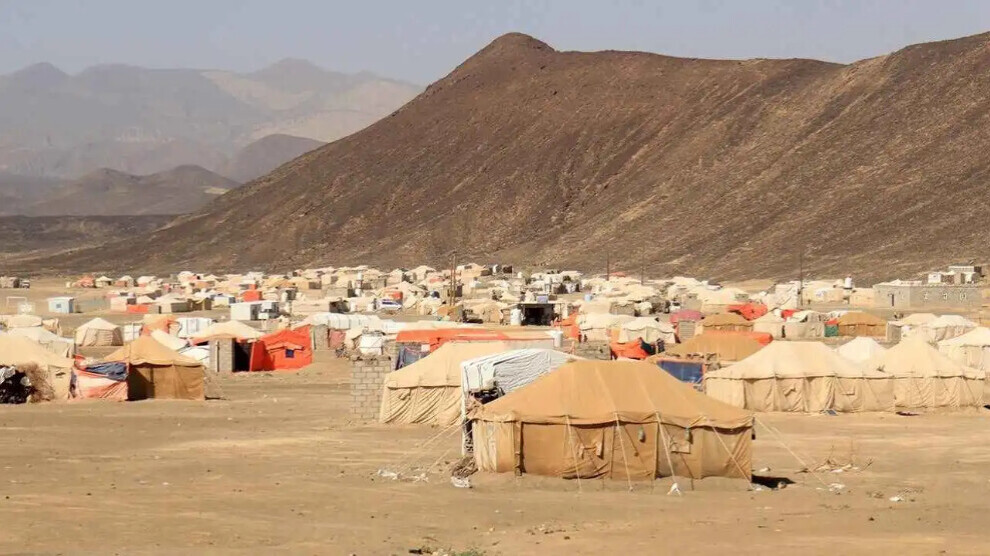
News Center – Humanitarian fears are escalating over an imminent health catastrophe inside displacement camps in Yemen due to the acute deterioration of the medical system and the absence of environmental sanitation fundamentals, which portends an accelerating spread of epidemics and deadly diseases amid the absence of urgent international interventions.
The World Health Organization announced yesterday, Tuesday, 29 September, that it had monitored alerts regarding suspected cholera cases in two sites for internally displaced persons in Aden city, noting that the Ministry of Public Health and Population had activated rapid response teams to carry out active surveillance operations.
According to the World Health Organization, the number of suspected cholera cases reached 7,784, at a time when families newly displaced from the western coast face health and living conditions that increase the risks of disease spread.
The organization warned of the deterioration of the humanitarian conditions of the newly displaced from the western coast, noting that 40% of them depend on surface water or open wells for drinking, while nearly a third of them lack safe and lockable toilets.
It added that the influx of wounded from the ongoing conflict has placed a heavy burden on the health sector, resulting in the temporary suspension of maternal and child care services and obstetric emergency services in two hospitals in Marib and Ras Al-Ara, due to the exhaustion of operating rooms and medical crews in treating the injured, and the transfer of the remaining patients to nearby alternative facilities.
It pointed out that the number of facilities submitting their reports in the cities of Marib, Taiz, Al-Dhale, and Aden has declined, noting that only about 60% of facilities were operating at full capacity before the recent escalation, and verification operations of this data are currently underway.
The organization confirmed that displacement has become the primary driver of health needs, noting that displacement movement is often circular and short-term; two-thirds of families registered within the "Rapid Response Mechanism" moved within their cities, and the Taiz districts living through conflict such as Al-Maafir and Jabal Habashi constitute the most prominent areas of origin and reception at the same time, while the conflict takes a second path extending longer distances.
The organization noted that the displaced from the Hodeidah coast are distributed in the cities of Aden, Abyan, Lahj, Hadramout, and Al-Mahra, adding that newly displaced families often settle with host families or in tents and temporary shelters, in conditions that create an environment conducive to the transmission of cholera, measles, malaria, and dengue fever with the approach of the "El Niño" phenomenon season.