
Fayli Kurds In Iraq… A History of Suffering and an Unwavering Bond to Roots and Identity.
Fayli Kurds, bearing displacement and rights denial, preserve their identity amid hardship, still seeking justice and the fate of their missing.
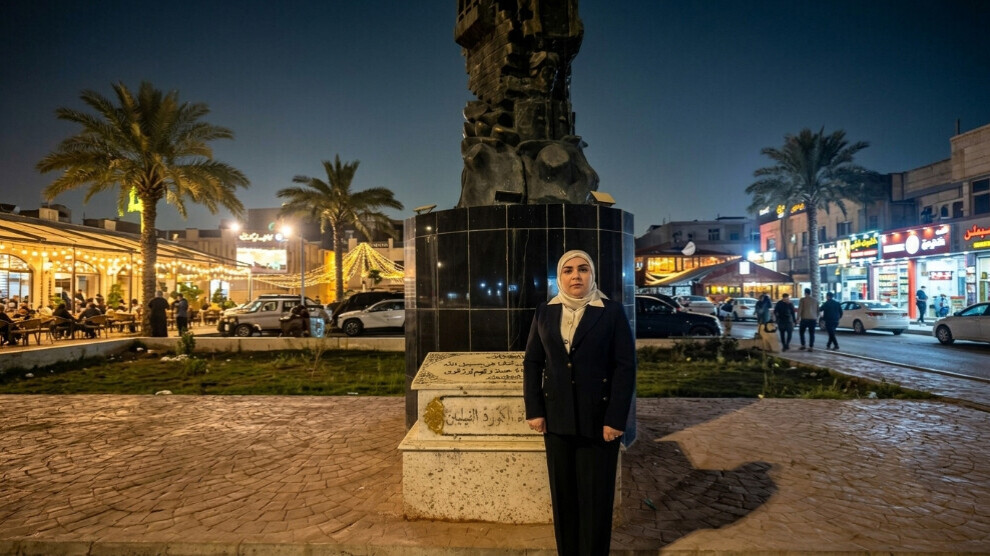
RAJAA HAMID MOHAMMAD
Iraq — Over the course of long decades, the Fayli Kurds have endured one of the most painful chapters in modern Iraqi history. Between forced displacement, the revocation of citizenship, the confiscation of property, and the enforced disappearance of thousands of their sons, this community has lived through a harsh experience that has left deep marks on the collective memory. Despite this, the policies of exclusion have failed to uproot them or erase their cultural and social identity. On the contrary, these hardships have only strengthened their attachment to their national belonging and historical legacy.
However, past decades have carried accumulated tragedies for them, including mass displacement, the stripping of citizenship, and deprivation of basic rights—wounds whose effects remain present to this day. While demands for justice, the disclosure of the fate of the missing, and the restoration of rights continue, the Fayli Kurds continue to defend their identity and heritage as an integral part of Iraq's history and present.
The Fayli Kurds Between Moving Geography and Changing Borders
The Fayli Kurds constitute an authentic part of Iraq's diverse fabric, as their historical presence extended across Baghdad, Diyala, Wasit, Khanaqin, and other areas, contributing to the country's economic, social, and cultural life. A large number of them also lived in the Iranian provinces of Ilam, Kermanshah, and Lorestan. According to one narrative, the name "Fayli" dates back to the sixteenth century, when it was used to distinguish the "Little Lor Emirate" and its ruler, who was considered "the true or actual Lor." Over time, the word "actual" transformed into "Fayli" according to the phonetic shift rules of the Little Lori dialect.
This border geography made them vulnerable to the fluctuations of politics between the Persian and Ottoman empires, and later between Iran and Iraq after the demarcation of borders in 1905. With every war or crisis, new waves of displacement pushed the Fayli Kurds toward Baghdad and the holy shrines in search of safety and work, particularly in the 1920s, 1930s, and 1940s.
The Fayli Kurds had settled in Baghdad for centuries and had a neighborhood known as the "Kurdish Quarter" during the Abbasid era. After the displacement of Jews in 1951, the Fayli Kurds filled the economic vacuum in the capital, emerging as merchants, craftsmen, and porters who monopolized the transport of heavy loads in Baghdad and Basra. This economic and social presence made them an essential part of the city's fabric, but it also made them a target for successive authorities who saw their density and influence as a weight to be controlled, especially after their support for Kurdish revolutions and their resistance to the Ba'ath coup of 1963 in the Bab al-Sheikh area.
Preserving Identity: The Battle of Memory and Belonging
Azhar Abdul Majeed, President of the Kurdistan Women's Union – Baghdad Branch, describes her identity as a Fayli Kurdish woman as a blend of Kurdish national belonging and Fayli cultural distinctiveness, affirming that this identity has endured despite the political and social transformations Iraq has witnessed.
She noted that the Fayli Kurds have a long and intricate history, beginning from the depths of ancient civilizations and extending through the centuries. They continue to strive to preserve their language, customs, and collective memory, while remaining open to the various components of Iraqi society, based on their belief that diversity is a source of strength and enrichment for society, not a reason for marginalization or exclusion.
She affirmed that the Fayli family still plays a pivotal role in transmitting the features of identity to new generations through preserving the Fayli dialect, instilling values of family cohesion, adhering to social customs and folk heritage, as well as passing down stories of suffering and resilience that have become part of the Fayli collective memory.
Despite the continued presence of the Fayli dialect within many homes, especially among the elderly, it faces increasing challenges with the expanding use of Arabic among younger generations, as Azhar Abdul Majeed explained. She believes that the absence of media, educational, and cultural support may threaten the future of this dialect and expose it to gradual decline.
A Rich Heritage That Tells the Story of a People
Fayli culture is rich with a diverse heritage that reflects the depth of its historical roots. From traditional Fayli Kurdish attire to popular dishes led by dolma, kibbeh, and special occasion foods, to folk songs and traditional dances, the identity of this community is manifested in the details of daily life.
Azhar Abdul Majeed also highlighted Fayli social customs, characterized by values of generosity, social solidarity, and respect for the elderly—values that have remained present despite years of displacement and dispersion. She noted that on religious and national occasions, the Fayli Kurds maintain their own rituals. On Nowruz, the meanings of freedom, connection to the land, nature, and Kurdish identity are embodied, while the Ashura commemoration carries profound spiritual and social dimensions manifested in gatherings and rituals that evoke the values of sacrifice, justice, and humanity.
At the heart of every story of resilience, women have been present as the faithful guardians of identity and heritage. They have played a pivotal role in transmitting folk tales, songs, proverbs, and social customs from one generation to another, thus preserving the collective memory of Fayli society.
She affirmed that the younger generation has become more interested in their identity and belonging compared to the past, benefiting from social media and cultural activities that have contributed to raising awareness of the history and issues of the Fayli community. However, she also warned of a gap among some young people due to weak connection with the language and heritage, making it essential to strengthen the role of the family and cultural and educational institutions in connecting new generations to their historical and cultural roots.
Displacement and Revocation of Citizenship... An Unhealed Wound
The suffering of the Fayli Kurds reached its peak on April 4, 1980, when the Ministry of Interior under Saddam Hussein's regime decided to deport those it described as "Iranian dependents" to Iran, among whom were hundreds of thousands of Fayli Kurds. At that time, approximately half a million Fayli Kurds were displaced, and more than 22,000 young men performing military service were detained, the fate of many of whom remains unknown to this day. According to documented history, the displacement was not based on judicial rulings but was a coercive process carried out by security agencies in an arbitrary manner.
This was also affirmed by Azhar Abdul Majeed, who considered it one of the harshest chapters in their modern history, noting that during that era, thousands of Fayli Kurds were subjected to arrest, enforced disappearance, and confiscation of property, while entire families were forcibly compelled to leave their homeland. She affirmed that these events were not merely transient political measures but constituted a deep wound in the collective consciousness of the Fayli Kurds, the psychological, social, and economic effects of which are still evident today.
She pointed out that during the years of displacement and suffering, Fayli women not only bore the burdens of family and loss of loved ones but also faced challenges of discrimination and exclusion. Despite all this, they managed to become symbols of patience and steadfastness.
Continuing Obstacles to Restoring Rights
Despite the passage of years since the fall of the previous regime, the Fayli Kurds still face administrative and legal obstacles hindering the full restoration of their rights. The Fayli Kurds had hoped to regain their rights, but their reality has remained complicated due to political and sectarian divisions. Despite their recognition as a Kurdish minority in the Iraqi constitution, their outstanding files still include restoring citizenship to those from whom it was withdrawn, disclosing the fate of thousands of missing persons, recovering confiscated properties, as well as political representation befitting their size and history.
Azhar Abdul Majeed points out that among the most prominent obstacles is the continued referral of some of their transactions to the foreign affairs departments—a procedure that leaves a painful psychological impact on the members of this community, who see it as a contradiction with the reality of their national belonging and the history of their existence in Iraq. She noted that returning returnees face additional difficulties due to the requirement to present a housing card when completing procedures for restoring citizenship, forcing many to rent housing and bear new financial burdens despite the difficult circumstances they have endured.
Between the Missing and Compensation... Delayed Justice
Azhar Abdul Majeed believes that the file of compensation and government redress is still far from achieving the desired justice. Although there have been some positive steps, they do not rise to the scale of the tragedy the Fayli Kurds endured.
She affirms that true justice is not limited to material compensation but requires full official recognition of the violations committed against them, the disclosure of the fate of the missing, the restoration of rights, and the provision of guarantees to prevent the recurrence of such tragedies in the future.
Azhar Abdul Majeed stressed that achieving genuine reconciliation with the Fayli Kurds requires practical steps that go beyond slogans, beginning with full official recognition of their victimization, and the fair and equitable handling of the files of citizenship, missing persons, and property. She also called for the inclusion of Fayli Kurdish history in school curricula, and for the strengthening of their cultural, media, and political presence on all levels.