
“Experiences of a Kurdish Woman”: A Memoir of Decades of Pain and Resilience
The book “Experiences of a Kurdish Woman” documents a life shaped by pain and hardship, conveying generational suffering, affirming women’s endurance, and highlighting their strength across social and cultural fields.
Nagham Jajan
Qamishlo — “Experiences of a Kurdish Woman” is a book that has become a space dense with traces of pain, tears, and hardships faced by women over the years. Every passage reflects the suffering of those who lived through harsh conditions; readers find echoes of their own experiences within it and draw strength that urges them to hold on to hope.
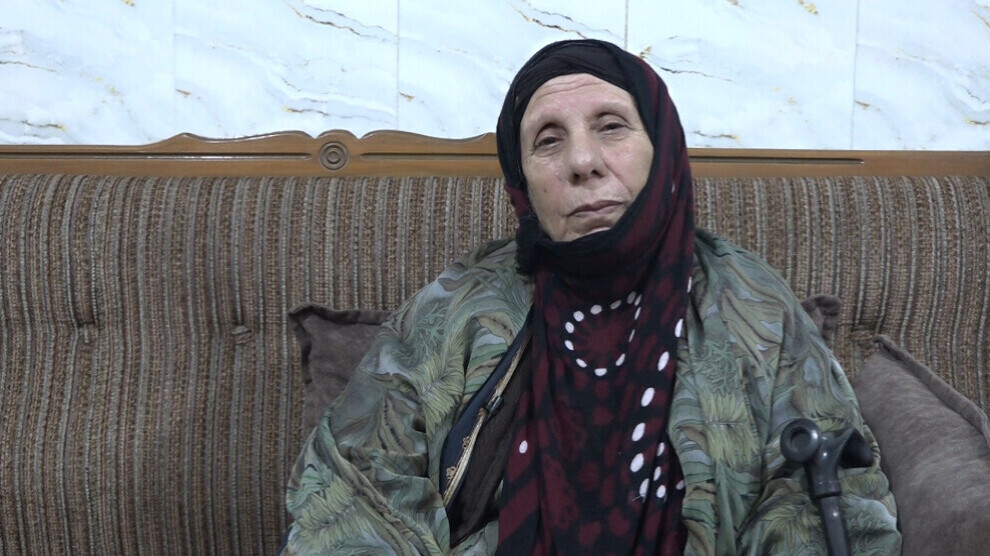
Fawzia Haji Birko, a Kurdish woman in her seventies living in the city of Qamishlo, spoke about her experience and life journey documented in the book “Experiences of a Kurdish Woman,” offering deep insight into the motivations that led a teacher to write her story.
Fawzia Haji Birko recounted the details of her early marriage: “I married at a very young age. I did not understand the meaning of marriage, and rural life was extremely difficult for me. When I moved to the village for the first time, I felt great fear because everything was new and hard for me.”
Regarding the suffering her family endured as a Kurdish family under the former Syrian regime, she said: “Our family tasted a great deal of pain under that regime. When I went to enroll my son in school, they refused to accept him simply because his name was Kurdish. As for my eldest son, he joined the Freedom Movement.” She explained that “my other son was arrested by the regime and imprisoned until he lost his life there. That wound still lives with me every moment. My pain is like a support that never leaves me; it is like any organ of my body, with me wherever I go. Pain does not age, nor does it leave memory. It cannot be forgotten; it continues to speak to us through our looks, our steps, and our hands.”
Speaking about the book “Experiences of a Kurdish Woman,” which documents her life journey, Fawzia Haji Birko explained: “It is inspired by everything that any Kurdish woman has gone through.” She noted that “one of the teachers wrote down my life story and turned it into a book. The work took nearly a full year. The book was written in Kurdish, and we are currently working on translating it into Arabic, but it has not yet been published.”
She clarified that her goal in this book was to record the pain, hardships, and moments of joy she experienced: “My aim is for the new generation to learn about our lives and experiences. It is important for every woman to write her story in a book.”
Fawzia Haji Birko added: “My wish is that women always reject violence and never accept it under any circumstances. Every woman must tell what she goes through so that future generations can know the pain and injustice women before them endured.” She explained, “In the past, there was no one to document what we lived through or bear witness to our suffering. Today, however, many realities are being recorded and conveyed by writers and journalists who document with their cameras and pens what women are exposed to. It is essential that women do not accept any form of violence. Women today participate in combat, carry weapons, and carry out military duties, and they have proven their capability and competence in all fields.”