
Between the Challenges of Reality and Opportunities for Change… The Path of Feminist Work During a Turbulent Year
The past year saw increased violence against women, alongside funding and legal challenges, underscoring the need for economic and political empowerment and sustainable partnerships to strengthen protection and enhance women’s participation in society.
Asmaa Fathi
Cairo — Over the past year, violence against women has escalated alongside complex funding and legislative challenges, highlighting the importance of economic and political empowerment, as well as the role of partnerships and sustainable strategies in strengthening women’s protection and supporting their presence in society.
In recent years, society has witnessed a noticeable increase in violence directed at women, both physically and digitally. This has affected many women’s lives at home, at work, and within the community. This reality has pushed women’s organizations to focus on protection mechanisms and supporting women’s independence through programs aimed at empowering them economically, socially, and educationally.
Studies and field observations have confirmed that empowering women is the most effective solution to confront these violations, as it enables women to make their own decisions, secure stable incomes, and enhance their participation in society. Despite limited resources and funding, feminist organizations have succeeded in developing programs focused on training, capacity building, and integrating women into economic and political life, achieving tangible impact on the ground.
In this context, legislative challenges clearly emerge, as some existing laws do not reflect women’s modern needs nor provide adequate protection, making legal reform and modernization essential. Funding challenges and project sustainability are also part of the reality faced by feminist organizations, rendering long-term planning and local and regional partnerships a fundamental necessity to ensure program continuity and desired impact.
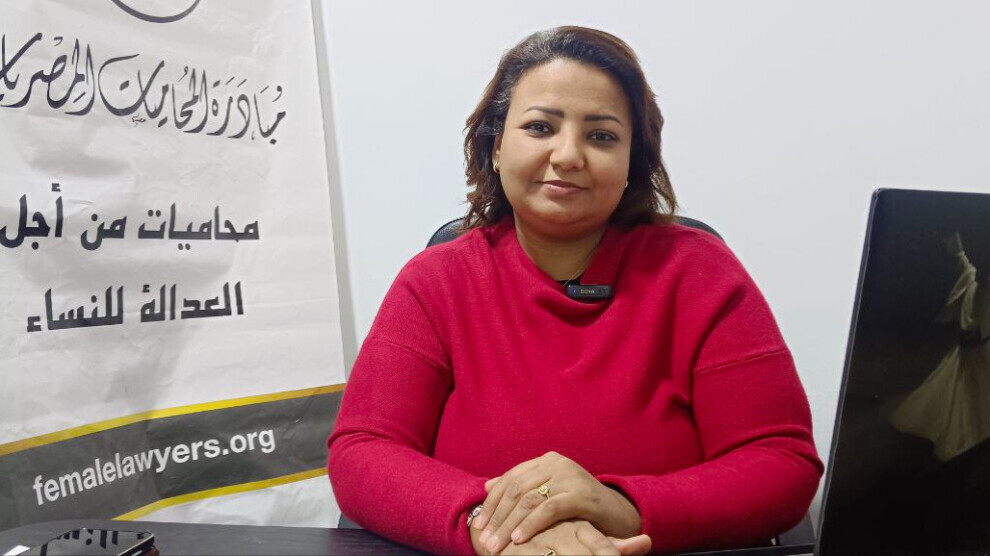
To take a closer look at the outcomes and challenges of the past year, our agency conducted an interview with Heba Adel, Chair of the Board of Trustees of the Egyptian Female Lawyers Foundation for Women’s Rights, who shared insights into their future plans for the coming year and her expectations for feminist work ahead.
A Highly Complex Year Has Passed… How Do You Evaluate It, Especially Regarding Violence Against Women and Its Impact on Feminist Programs?
The past year witnessed a significant increase in crimes of violence against women, including bullying, harassment, digital blackmail, and even systematic killings. Feminist organizations received more numerous and diverse complaints than in previous years, varying in victims’ ages, the nature of crimes, and the social backgrounds of affected women.
This situation necessitated continuous awareness campaigns, with a particular focus on digital crimes, to ensure women’s protection and enhance their independence. These efforts contributed to raising societal awareness of the dangers of violence and the importance of empowerment as a means of protection.
We implemented a range of programs aimed at building women’s capacities and strengthening their empowerment, including training women in political participation, developing professional skills, and launching leadership and digital skills training programs.
We also organized large-scale activities during the 16 Days of Activism Against Gender-Based Violence campaign, focusing on international resolutions on women, peace, and security. Political empowerment campaigns continued during union elections, alongside support for female candidates to ensure greater representation of women in various councils.
How Has the Lack of Funding Affected the Continuity of Feminist Programs in Egypt?
The shortage of funding has clearly impacted many programs, especially in countries where civil society lacks self-sustaining funding sources. Some programs were abruptly halted due to changes in funding priorities, posing major challenges for feminist organizations.
However, this crisis also prompted a reassessment of local strategies, the development of internal resources, and the building of sustainable partnerships, alongside training teams in long-term planning to ensure continuity and lasting impact despite funding fluctuations.
What Are Your Future Plans for the Coming Year, Especially Regarding Partnerships?
Our future plans focus on strengthening women’s economic and political empowerment, developing legislation that ensures protection from violence, and sustaining educational and training programs.
Plans also include linking empowerment projects to environmental and sustainability issues, and providing innovative educational programs for girls to reduce school dropout rates, while ensuring a safe and encouraging learning environment that develops life and social skills.
Institutions rely on cooperation within regional networks and agreements to unify efforts against violence and exchange expertise. Alliances are formed between multiple organizations to work on joint projects, such as developing unified laws to combat violence, as well as regional political empowerment programs through networks focused on training, research, and educational methodologies to enhance women’s participation.
These partnerships represent a core element of resilience in the face of challenges, ensuring program continuity and effectiveness. Women’s issues are similar across the Arab world, and regression in some countries requires collective action.
Regional partnerships also contribute to exchanging expertise and developing strategies, strengthening women’s political and social empowerment and achieving tangible impact.
There Is Broad Debate Around Laws and Whether We Need More of Them… How Do You View Current Legislation and Its Impact on Protecting Women?
The biggest challenge is not the absence of laws, but the fact that many are outdated and incompatible with current realities. We bear significant responsibility in drafting new legislation aligned with today’s context, as many existing laws require complete overhaul rather than minor amendments.
Patching laws is no longer sufficient; comprehensive legal reform is needed to reflect society and balance punishment with rehabilitation.
The government must also resume its role in awareness campaigns to change prevailing mindsets and end fabricated conflicts that normalize violence against women.
Despite the major challenges faced by feminist organizations in 2025, it has become clear that empowering women is not a secondary option, but a fundamental necessity to confront violence and ensure justice and equality. Various programs—whether in leadership training, political participation, economic empowerment, or awareness against digital and physical violence—have demonstrated women’s ability to transform challenges into opportunities and create tangible impact in their lives and communities.
The dialogue also highlighted the importance of sustainability in feminist work, through developing local resources and building strong regional and international partnerships to ensure program continuity amid funding fluctuations and political or legislative challenges. Equally important is collective action among feminist organizations, which enables experience-sharing, strategy development, and coordinated, realistic responses to violations.
At the same time, current legislation remains in need of comprehensive updating to better reflect women’s realities and provide effective protection against all forms of violence. Legal reform, alongside continuous awareness campaigns, forms the cornerstone of achieving justice and combating violations effectively and sustainably.
Overall, the path ahead for the feminist movement is filled with challenges, but also holds great opportunities. Empowering women, reforming legislation, investing in partnerships, and providing sustainable educational and economic programs are all essential steps toward building a safer and more just society—one that integrates economic, political, social, and environmental dimensions to ensure real and lasting impact for women and girls across society.