
Avashin Helin: Free Media Guarantees the Defense of Women's Rights
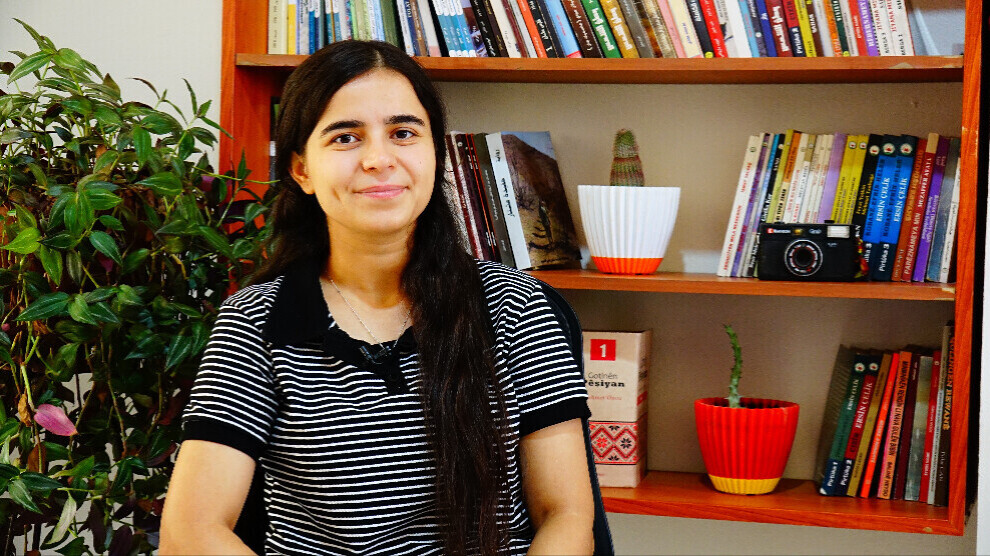
Journalist Avashin Helin affirmed the importance of solidarity and cooperation among women journalists , pointing out that free media is essential so that systems cannot conceal files of crimes committed against women by false narratives.
SORKEL SHEIKHO
Qamishlo — The orientations of the new authority and its questions regarding the future of free journalism, women's rights, and pluralism raise fears that the media landscape in the coming phase will be subject to standards and visions imposed by the authority, which may limit media independence and diversity.
In this context, our agency conducted an interview with journalist Avashin Helin from the city of Qamishlo in Rojava, to discuss the reality of Syrian media and the transformations it is witnessing, along with the challenges and opportunities the current phase presents for those working in the media sector.
How can media in Syria maintain its independence and confront attempts to impose the authority's visions and the capitalist system on society, particularly regarding women's rights?
Syria is passing through a very sensitive and transitional phase, after years of war, conflict, displacement, asylum, and migration, accompanied by killings, abductions, and economic and humanitarian crises. Despite these conditions, the people of Rojava and the Syrian people in general have shown great capacity for resistance and perseverance. Amid this phase, efforts have been made for media to be a voice for society, conveying events and developments to public opinion, while journalists, particularly in Rojava, continue to uncover truths and defend issues that should receive legal and constitutional guarantees in the new Syria.
The responsibility of women journalists increases as multiple forms of violence against women persist, including polygamy, domestic violence, state violence, and everyday violence—issues that make many women hesitant to speak about their experiences or unable to express them. At the same time, political change has not yet sufficiently reflected on women's rights, as there are still fears of the persistence of the mentality that prevailed under the Ba'ath regime, and of women not being granted rights that ensure their active participation in building society and decision-making.
Women's struggle to secure their rights in the Syrian constitution has intensified. This struggle is not limited to participating in its drafting or joining relevant committees, but essentially lies in ensuring recognition of women's rights and their place in the constitution's text itself. Hence, the importance of the role of women journalists emerges, as they face pressure and attempts to silence women, working to convey their voices to society.
In confronting these pressures, women journalists believe that women's struggle should not be subject to the authority's vision or to pleasing others, but must stem from their right to participate, make decisions, and express themselves. Confronting the patriarchal mentality and the patterns imposed by the capitalist system on women—from their appearance to the details of their lives and choices—represents an essential aspect of this struggle, as it seeks to reduce women to an imposed image or role rather than treating them as actors capable of influencing society.
From this perspective, the role of women journalists is not limited to conveying events, but also includes confronting these mentalities, raising women's awareness of their rights, and enhancing their presence and participation in various areas of life.
In Syria, women and girls are subjected to killing, abduction, and sexual violence, yet many of these crimes do not receive sufficient attention. In your view, why is this being concealed, and what are the risks of continued concealment?
Across Syria, particularly in coastal areas, news of women being killed, abducted, harassed, and sexually assaulted recurs, along with some being deprived of their right to education. What we hear and see is only part of a broader reality; hundreds of stories and incidents do not reach the media. In the past fifteen days alone, more than three girls have been killed. Often the identity of those involved is known, and they may be family members, close associates, or even state-affiliated entities, reflecting the continuation of a mentality that allows these crimes to be committed.
The problem does not lie only in the occurrence of crimes, but also in concealing them. The number of women and mothers appearing in the media to speak about killing, abduction, harassment, rape, and threats remains limited due to fear and the absence of a sense of protection from the government, family, or society. Amid this silence, it becomes difficult to uncover truths and hold those responsible accountable.
Impunity also contributes to the continuation of these crimes. Even when accountability occurs in some cases, it is often limited or formal, while the identities of those involved are concealed and misleading narratives are sometimes presented to cover up crimes. Therefore, confronting this phenomenon requires greater presence of women journalists, working to be a voice for women and children who cannot defend themselves, alongside strengthening the role of institutions concerned with women's and children's rights.
Hence, the urgent need for free and independent media that works according to the public interest, not the interests of the authority, emerges. Revealing crimes, verifying information, and presenting it to public opinion can contribute to reducing impunity and applying pressure for accountability of those responsible. Media should also represent the various components of Syrian society and provide a safe space for women to speak about violations they have experienced.
The role of women's media is not limited to conveying news; it extends to changing awareness, confronting the patriarchal mentality, and highlighting women's issues and rights violations, contributing to strengthening solidarity with them and supporting their struggle for their rights.
Syria is going through a transitional phase. What is the role of media in this phase, and how can it contribute to changing the reality of women and defending their rights?
Media can contribute to changing the reality of peoples and women in particular, because it is not limited to conveying information but also plays a role in shaping awareness, change, and education. The editorial line of a media institution directly affects society's view of women. If it is based on glorifying authority, belittling women, portraying them as victims, and confining their role to the home, it reinforces this image and promotes a reality that limits their participation. Media based on freedom, equality, women's rights, and environmental protection can enhance women's presence and role in society.
Issues that should receive media attention include building a democratic family, enhancing women's right to express opinions and participate in decision-making, and highlighting models of active women in various fields. Through this role, media can influence public awareness and support women's aspirations for freedom and equality.
In this context, women's media plays an important role in Syria and can contribute to changing women's reality and destiny. The Women's Media Union (YRJ), as an umbrella for women journalists in Rojava, has been working for years to organize women journalists and address the problems they face. As the transitional phase continues in Syria, the Union seeks to connect with women journalists across the country, provide support to them, and prepare conditions that enable them to practice their work freely, away from pressures and interference in their media work.
The most important thing in this phase is strengthening solidarity among women journalists in Rojava and other Syrian regions, because cooperation and solidarity among them can contribute to building freer media capable of defending women's issues and expressing their voices.
Syria is a country rich in national, cultural, and linguistic diversity. What is the role of media in promoting this diversity and confronting nationalist and sectarian discourse? How can it contribute to building an equal and just society that respects women's rights?
Syria is a country rich in its national, cultural, and linguistic diversity, and this diversity represents one of its sources of strength and beauty. However, state policies, in both past and present, have contributed to fueling differences between nationalities and religions, leading at various stages to tensions and conflicts that have affected the ability of society's components to coexist.
Nevertheless, Syrian society's components have, in many regions, maintained traditions of coexistence and mutual respect. National or religious identity was not an obstacle to daily relationships between people, and respect for different languages, cultures, and religions continued. This legacy of coexistence remains present and can be built upon.
In current circumstances, the danger of discourses fueling national and religious divisions intensifies, especially when external interventions intersect with them. Here, the responsibility of media in confronting hate speech, intolerance, and discrimination emerges, working instead to promote pluralism and coexistence among the various components of Syrian society.
Women journalists in particular should be aware of this responsibility and contribute to presenting a media discourse that respects diversity and rejects discrimination based on nationality, religion, or gender. Media based on pluralism can play an important role in building a more just and equal society that protects the rights of all its components, supports women's role, and preserves the environment