
Alawite Women in Syria: From Historical Marginalization to Sectarian Targeting
After decades of marginalization within a patriarchal, isolationist structure, Alawite women now face layered challenges, bearing the cost of their sectarian identity and exclusion while navigating the impacts of a war that spared no one
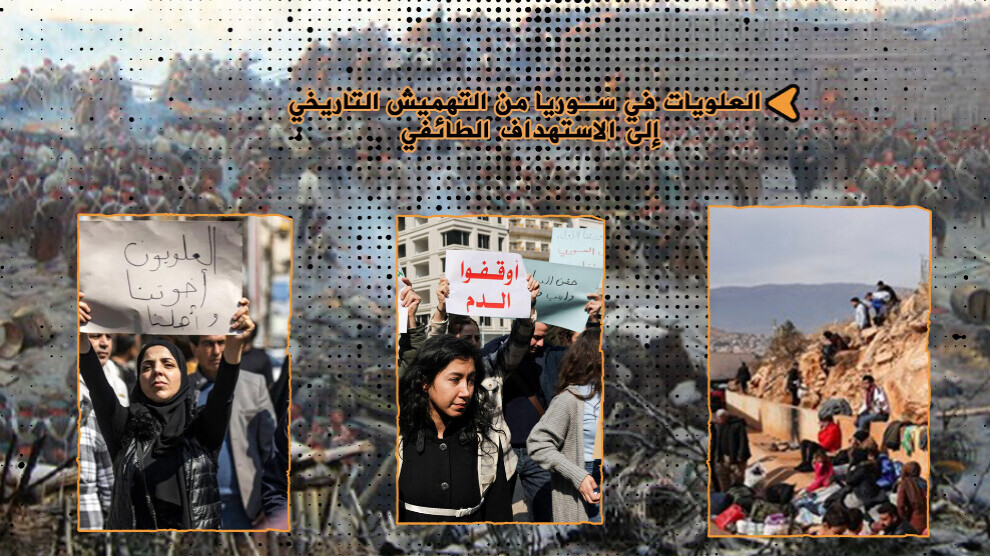
News Center – In Syria, torn apart by war, Alawite women have found themselves at the heart of a vortex of sectarian violence and structural marginalization after decades of exclusion, becoming double targets.
The story of Alawite women in Syria intersects with paths of sectarian violence, political shifts, and the social collapse that has swept the country since the beginning of the crisis in March 2011. This group of women, who have long lived on the margins of public life under a patriarchal social structure, now finds itself in the eye of the storm, paying a compounded price for its sectarian affiliation and a long history of marginalization.
Historical Roots
The Alawites, or Nusayris as they were historically known, belong to an esoteric sect that emerged in the ninth century and took refuge in the coastal mountains of Syria, both geographically and socially. In this isolationist context, the traditional role of the Alawite woman focused mainly on agriculture and caring for the family, while remaining distant from public affairs, especially in the political and military spheres.
With the beginning of the twentieth century, signs of change appeared, especially during the French Mandate period, when some women became involved in education and political activism. Female figures emerged in literature, arts, and medicine, although these examples remained exceptions that did not reflect a comprehensive structural transformation.
Limited Openness and Silent Resistance
Despite what seems like relative openness, Alawite women continue to encounter the solid walls of deeply rooted patriarchal traditions, especially in core issues such as inheritance, where in some communities they are deprived of their rights under the pretext of preserving “family property.” Their existence is often confined to the home, and their value measured by their obedience and ability to bear children, while laws that protect them from violence and ensure economic and social independence remain absent.
But these perceptions are no longer absolute. There are growing currents seeking to dismantle stereotypical roles and establish equality. Reality reflects this shift: the percentage of households headed by Alawite women rose from about 4% before 2011 to 22% in 2023—reflecting increasing economic burdens carried by women in the absence of legal and social protection, and revealing a feminine willpower challenging restrictions and redefining role and dignity.
The Moment of Explosion
With the outbreak of protests during the Arab Spring in 2011, the country entered a spiral of violence that spared no one. Women were among the most affected groups; violations targeted their basic rights—from housing to education—and extended to their bodies, souls, and dignity. Alawite women watched from the margins, as they always had, but the war did not distribute pain equally. They paid a compounded price for their sectarian affiliation and history of marginalization, losing homes, rights, and being excluded from any role in rebuilding society.
With the fall of the Syrian regime on December 8, 2024, the country entered a new phase of chaos. Jihadists from Hay’at Tahrir al-Sham seized power, and a new wave of crimes and retaliatory sectarian violence surged. Alawite women found themselves particularly targeted by jihadist factions—chief among them HTS—which justified its crimes by labeling them “remnants of the regime.”
Between Ransom and Humiliation
The coastal areas with Alawite majorities witnessed massacres that claimed thousands of lives, including women and children. Kidnapping became a systematic tool to break the will of Alawite women. Local and international human rights organizations—including Amnesty International—documented dozens of such cases in the Syrian coast since early 2025. Victims ranged from young children to women in their forties. The organization reported receiving accounts from activists and women-focused human rights groups, indicating that hundreds of women had been kidnapped, with their fate and whereabouts still unknown.
In recent days, Homs has also witnessed dangerous tensions, with clashes and violence erupting in predominantly Alawite neighborhoods. The Syrian Network for Human Rights documented the killing of more than 221 civilians in Homs—including women and children—along with 89 kidnapping cases since early December 2024.
Motives behind these crimes vary: ransom, forced marriage, human trafficking, and sectarian humiliation. What worsens the tragedy is the complicity of official silence. Despite promises by the interim government to build “a Syria for all Syrians,” reality tells a different story. The fact-finding committee formed by Ahmad al-Shar’a (al-Jolani) denied receiving any reports about kidnapped women, describing such incidents as “voluntary escape” or “moral issues,” a blatant denial of reality. This raises the fundamental question: How can the criminal himself be part of a fact-finding committee?
Absence of Investigations and Institutional Complicity
Kidnapping stories in the Syrian coast vary. Some women returned after ransoms were paid; others disappeared completely. The story of Marwa, 29, who disappeared on her way to Tartous, reveals explicit death threats and a ransom paid in four installments with no result.
Contact with her was cut off, and her family searched desperately until they received a message on WhatsApp from her number. An unknown person wrote: “Forget the girl and don’t let anyone interfere, or we will send her back to you in pieces.”
As for Abeer, she was kidnapped in Safita. She later contacted her family from an Iraqi phone number to tell them she was not in Syria, before contact was cut again after the ransom was paid.
Marwa and Abeer are not alone. Hundreds of girls from the Alawite community disappeared in the provinces of Tartous, Latakia, and Hama. Half returned, while the others remained silent out of fear of retaliation or social stigma.
In most cases, families’ reports were met with mockery or neglect by the relevant authorities, who described some cases as “romantic issues.” No official records were opened, and no serious investigations were launched.
According to Syrian law, kidnapping is a criminal offense punishable by imprisonment. But the absence of a judicial authority and the fragmentation of state institutions made accountability nearly impossible. There are no clear mechanisms for transitional justice and no independent investigative committees, opening the door wide to impunity.
Multi-Faceted Violence
Violence against Syrian women is not limited to Alawites. Sunni, Christian, and Druze women have also suffered severe violations at the hands of HTS jihadists, including rape and forced displacement. It is a structural phenomenon fed by war, customs, and the absence of law.
Coinciding with the international 16 Days of Activism Against Gender-Based Violence, the picture appears bleak: displaced women, kidnapped women, abused women, and communities justifying silence in the name of honor, sect, or fear.
Facing this reality requires acknowledging that change comes not only from laws but from the will of women themselves, and from cross-sectarian community solidarity. The voice of the Alawite woman—like the voice of every Syrian woman—must be heard not only as a victim, but as an active agent, a witness, and a claimant of justice.