
Afghanistan... Pakistani Attacks and Female Doctors Barred from Access
Amid new Pakistani attacks on Afghan border areas, Taliban restrictions on female doctors disrupt first aid, endangering women and children.
Baharan Lahib
Afghanistan — In recent weeks, a new wave of Pakistani military attacks on some Afghan border areas has caused widespread concern among citizens.
These attacks, justified as countering security threats, have once again exposed civilian areas to a state of insecurity, fear, and instability. Local residents, particularly women and children, are the first victims of these tensions, as their homes, farms, and daily lives are directly affected.
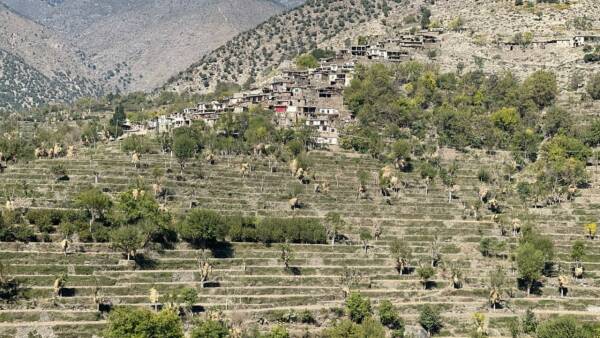
Previously, border tensions between Afghanistan and Pakistan have repeatedly led to clashes and exchanges of fire, but what makes the current situation more alarming is its coincidence with the difficult humanitarian and economic conditions inside Afghanistan. The population, already suffering from poverty, unemployment, and social restrictions, now faces new security threats. The recent attacks have not only caused human and material losses but have also affected the psychological state of the community. Families spend their nights in fear of the sounds of explosions and aircraft flyovers, children wake up terrified from their sleep. This situation has directly impacted education, work, and even access to health services.
In such circumstances, the need for urgent health services emerges more than ever. The wounded and sick need treatment, but the lack of resources and movement restrictions have made access to health centers extremely difficult. Many doctors and health workers also face serious challenges in performing their duties.
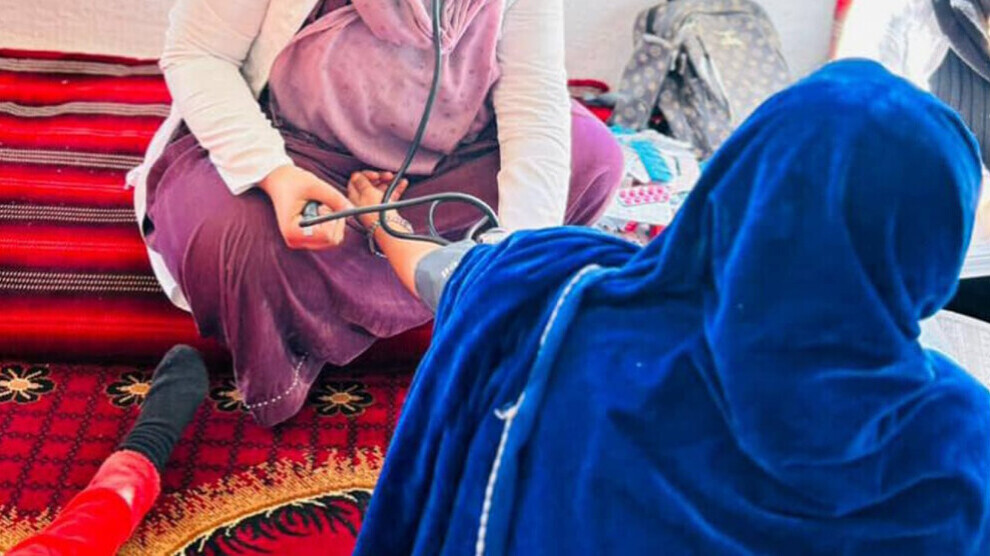
At the same time, the restrictions imposed on women in Afghanistan have increasingly weakened the capacity of the health system. Female doctors and nurses, who constituted an important part of providing health services, face serious obstacles in some areas preventing them from working or moving. This issue, especially in remote areas, has serious consequences for female patients and children.
In the attack that occurred days ago on the Bihsud district of Nangarhar province, 18 people from one family died under the rubble. In this context, a number of doctors tried to go to Bihsud to provide health services, but they faced unexpected obstacles from the Taliban. Some female doctors were prevented from entering because they are women; a measure that not only violates their professional rights but also deprives needy patients of access to vital services.
Dr. Fawzia Nadir, a doctor in the city of Jalalabad, says: "I decided to go to Bihsud when we received news that several families needed urgent treatment as a result of the recent attacks. Despite the worry, I prepared the basic equipment and moved with a small team towards the area. I had nothing in my mind but the image of children perhaps waiting for help to arrive. On the way, I saw houses with cracked walls and people with tired and worried faces standing by the roadside. When we arrived at the checkpoint, Taliban elements inspected our documents. After a few minutes of conversation, I was informed that I was not allowed to enter the area because I am a woman."
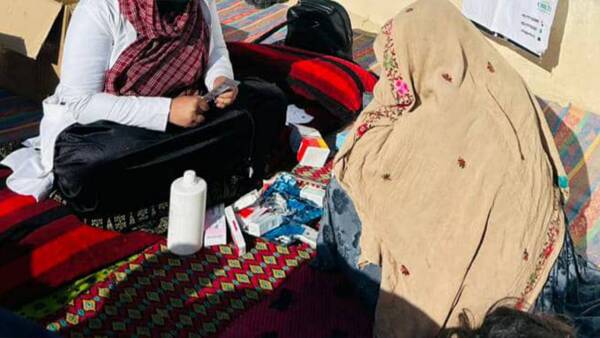
She added: "I tried to explain that the wounded needed health services, and that the presence of a female doctor was necessary to treat women and children. But their response was decisive: 'This is an order.' We were forced to return. At that moment, I felt ignored, not only as a woman but also as a doctor."
She explained: "The hardest thing upon my return was knowing that on the other side of the checkpoint, there were women who might not be able to receive treatment due to the absence of a female doctor. The deprivation was not directed at me alone, but at all the patients who were waiting for help. A large number of journalists were also prevented from entering the area."
With tearful eyes, Dr. Fawzia Nadir said: "That day, I clearly realized that alongside the sound of explosions, there is another silent sound: the sound of women who are not given the opportunity to save their fellow women. Unless the obstacles to women's work, especially female doctors, are removed, the humanitarian crisis in such fragile areas will deepen."