
Afghan Women Between International Court Rulings and the Continuation of Taliban Violations
One year after ICC warrants against Taliban leaders, does this advance justice for Afghan women or remain symbolic eyewash without substantive effect?
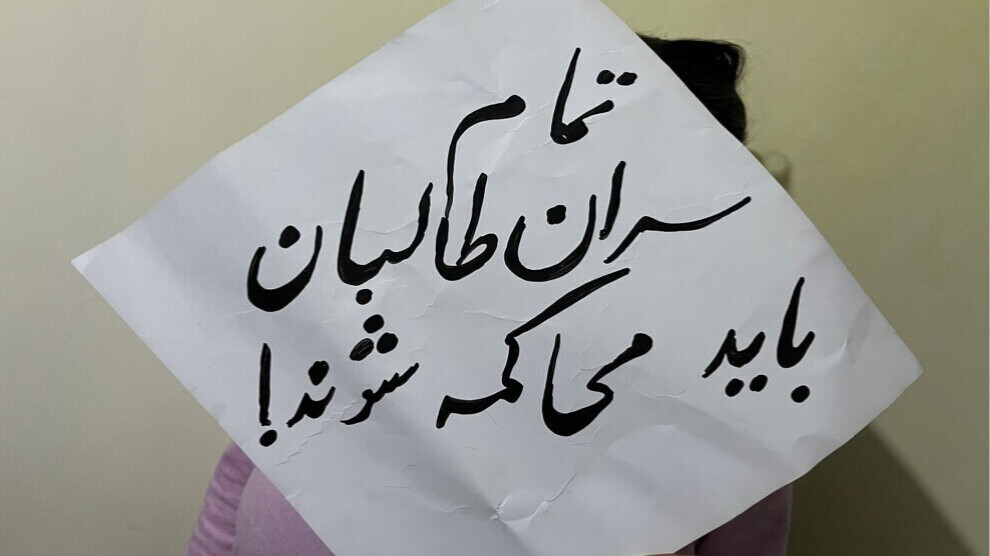
BAHRAN LAHIB
Faryab — The International Criminal Court (ICC) has returned the file of violations against women in Afghanistan to the forefront of international attention, following its issuance one year ago of arrest warrants against two senior Taliban leaders on charges related to crimes against humanity, including gender-based persecution.
However, more than a year has passed since these warrants were issued, and nothing has changed in the condition of Afghan women; rather, Taliban authorities continue to impose their laws targeting women.
In 2003, Afghanistan acceded to the Rome Statute of the ICC. At that time, many senior state officials were leaders of jihadist factions, Taliban figures, and individuals associated with previous governments. When civil society activists called for investigations into war crimes and crimes against humanity, these officials opposed the step because they saw themselves as vulnerable to prosecution.
In 2014, a committee was formed to cooperate with the ICC, yet many human rights advocates believe that, instead of advancing justice, it hindered the investigation of past crimes.
After years of demands for justice, the ICC announced that it possessed jurisdiction to examine crimes committed in Afghanistan since May 1, 2003, based on the country's membership in the Rome Statute. During the information-gathering phase, over one million complaints were recorded against the Taliban, the Haqqani Network, Afghan government forces, and foreign forces, including US forces.
On July 8, 2025, the ICC issued arrest warrants for Hibatullah Akhundzada and Abdul Hakim Haqqani on charges of "crimes against humanity, including persecution on grounds of gender and political motives." Nevertheless, the warrants have not been executed to date, while the Taliban, with the approval of Hibatullah Akhundzada, have continued to enact and enforce laws imposing further restrictions on women, including regulations issued by the Ministry for the Propagation of Virtue and the Prevention of Vice.
Afghan lawyer Fawzia Nawab discusses in an interview with our agency the legal dimensions of this decision and the challenges facing its implementation.
From the perspective of international law, what is the significance of issuing arrest warrants against Taliban leaders?
The issuance of arrest warrants by the ICC is a significant legal step, as it affirms that the widespread and systematic violations of women's rights in Afghanistan are not merely a domestic issue, but can be regarded as international crimes.
The deprivation of women from education, employment, freedom of movement, social participation, and other fundamental rights, if carried out in a widespread and systematic manner, may constitute gender-based persecution, which is one of the forms of crimes against humanity.
The significance of these warrants lies in their sending of a clear message to perpetrators of human rights violations that political or military officials cannot shield themselves with power to evade justice. They also represent international recognition of the suffering of victims, particularly Afghan women.
Why does the execution of the arrest warrants remain difficult despite the passage of a year since their issuance? And upon whom does the responsibility for their execution fall?
The ICC does not possess independent enforcement power, such as an international police force; the implementation of its rulings depends on the cooperation of states and the international community.
When an arrest warrant is issued against an individual, states parties to the Rome Statute are obligated to arrest that person if they enter their territory and surrender them to the Court. However, the execution of these warrants in practice faces political, diplomatic, and security obstacles.
The absence of political will, the relations some states maintain with the Taliban, and regional considerations all serve to slow the path to justice. Nevertheless, the difficulty of executing the warrant does not render it valueless; it remains an important legal instrument for future accountability.
To what extent have the laws and regulations issued by the Taliban—such as the Vice and Virtue Law, family regulations, and the courts' internal procedures—changed the reality of women in Afghanistan? And what are the most prominent legal and social effects that have resulted?
From a legal perspective, any law that deprives women of their fundamental rights on the basis of their sex contravenes the principles of equality and the prohibition of discrimination under international law.
The Taliban's laws and regulations in recent years have imposed extensive restrictions on women's individual, social, educational, and economic freedoms. These laws have not only restricted women's access to their fundamental rights but have also created a legal structure that affords women exceedingly limited opportunities to defend their rights.
When the judicial system lacks independence and women cannot access justice on an equal footing, the risk of further violations intensifies.
Why, despite the international attention given to the issue of Afghan women, has no practical change occurred in their lives?
International recognition of any issue represents only the first step; genuine change requires political, legal, and executive measures. Human rights are not safeguarded merely by issuing solidarity statements or condemnations; they require sustained pressure, accountability for perpetrators, and practical support for victims.
Today, Afghan women live in a state of contradiction: on one hand, the world speaks of their conditions; on the other, the restrictions imposed upon them increase day by day. Hence, many women ask: if our rights are recognized in international law, why do we not receive practical and effective support?
What can the international community and international institutions do to achieve justice?
The international community should move beyond verbal condemnation to employing the available legal and political instruments. Among the measures that could be effective are: supporting international judicial processes, documenting human rights violations, supporting victims, exercising diplomatic pressure, and preventing the normalization of impunity.
Justice for Afghan women does not only mean punishing those responsible for violations; it also means creating conditions that enable women to reclaim their fundamental rights, such as education, employment, freedom of choice, and participation in society.
Ultimately, the true test for the international community remains whether the principles of human rights will remain ink on paper, or whether they will be translated into practical action in the face of one of the world's gravest crises of women's rights.