
Escalating repression in East Kurdistan and Bauchistan under the weight of executions and bullets
Secret executions and state-sanctioned killing have intensified in past four days, alonf with arrests of civil activists and pressure on families seeking justice, reviving fears of 1960s-style repression.
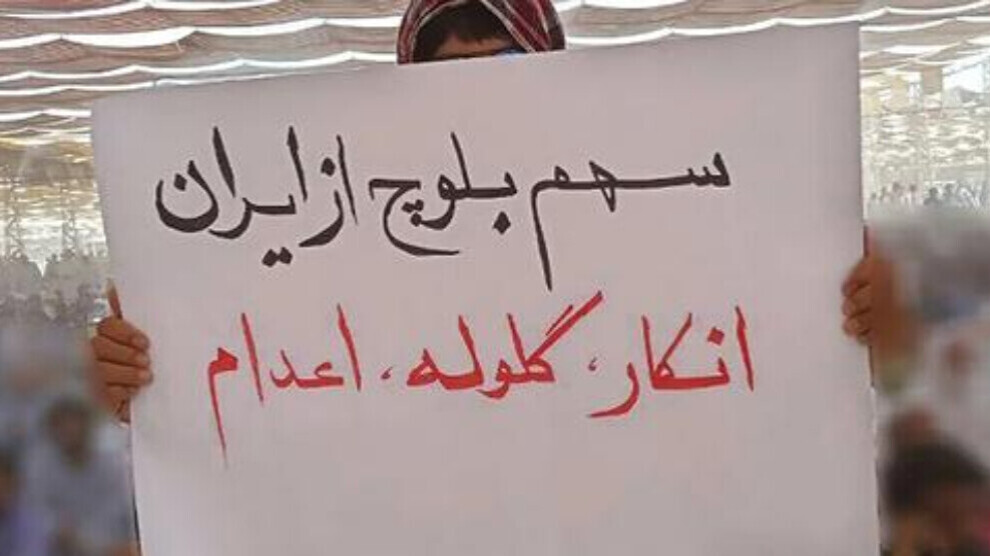
News Center – With the expansion of the security situation as a result of the war, and the intensification of control by intelligence agencies and military institutions in Iran, the cities of East Kurdistan and Baluchistan have once again become major centers of government repression, executions, arrests, and killings.
Numerous reports have been published about the killing of Kurdish and Baluch activists by the Islamic Revolutionary Guard Corps and security institutions, the secret execution of death sentences without the knowledge of their families, the transfer of prisoners to solitary confinement and denial of their final visits, in addition to the disappearance of victims' bodies and increasing pressure on families seeking justice. According to many human rights organizations, this trend is a reminder of the policies of the 1960s and the government's efforts to silence any protest voice in the border regions and among marginalized components.
The security environment
In recent days, human rights organizations and civil society activists have warned that the Islamic Republic is exploiting the security situation resulting from the war to intensify repression and silence opposition voices. According to these organizations, while public attention is focused on military and security developments, the pace of arrests, harsh sentences, political executions, and the suppression of families seeking justice is accelerating.
According to published reports, at least 37 political and security prisoners have been executed in Iranian prisons since the beginning of the recent military conflict – a statistic that has raised fears of a new wave of political executions.
A large proportion of these sentences were issued on charges such as "espionage for Israel," "war against terrorism," "acting against national security," and "cooperation with opposition groups" – charges that human rights organizations have warned about, pointing to the lack of transparency in trial procedures and the possibility of extracting confessions under duress in these cases.
At the same time, numerous reports have been published about the transfer of political and security prisoners to solitary confinement, cutting off their contact with their families, preventing prisoners from accessing an independent lawyer, and carrying out sentences secretly without prior notice.
A few days ago, Iranian Revolutionary Guard intelligence forces raided a house in Kermanshah and shot two Kurdish activist brothers, killing them. The two brothers had been pursued by security agencies and were forced to live in hiding under the weight of pressure, threats, and the possibility of arrest.
Following the recent protests that swept the country and the widespread crackdown on protesters in Yarsani‑majority areas, pressure on cultural and civil activists in Kermanshah has sharply increased. Civil activists in Kermanshah say that security agencies have intensified the summoning, arrest, and threat of cultural and civil activists after the protests.
Human rights activists say that dozens of Kurdish businessmen and traders have been directly targeted by military forces in recent years without posing any armed threat. According to local sources, with the worsening security situation as a result of the war, pressure on border areas has increased and violent clashes with Kurdish citizens have escalated.
Executions and killings
In Baluchistan, the wave of executions and repression has reached a wide scale. Human rights organizations say the government is exploiting the security situation, internet shutdowns, and widespread censorship to carry out death sentences, where many have been executed secretly without informing their families or allowing them to visit them. News of their executions was published weeks later due to widespread internet outages.
Baluch activists say that many Baluch prisoners are executed under circumstances where their families are not given the opportunity to contact them or bid them farewell. According to published statistics, at least 143 Baluch citizens were executed in Iranian prisons in 2025 alone.
Baluch women victims of insecurity and violence
In Chabahar, a Baluch woman was killed and another injured in an armed attack targeting a residential house in Komp village, while a resident of the house was kidnapped and his fate remains unknown despite several days having passed since the incident. In Zahedan, the body of a teenage girl estimated to be about 16 years old was found in the Shahr Abad area; reports indicated that she had suffered severe blows to the head and neck.
The body of a young Baluch man with gunshot wounds was also found. Baluch activists affirm that the escalating state of insecurity, the recurrence of suspicious killings, and the absence of accountability by security institutions have made the situation in Baluchistan more dangerous than ever.
Increasing sentences
Concurrently with these events, the pace of issuing and executing political sentences has accelerated. In recent days, the judiciary of the Islamic Republic announced the execution of a man accused of "espionage for Israel," while no details of the trial or the possibility of appointing an independent lawyer have been published. Four detainees in the "Ekbatana town" case were also sentenced to death on charges of "waging war."
Human rights activists say that the widespread use of charges such as "espionage," "waging war," and "acts against national security" in the current security environment has become a tool for eliminating opponents and creating public fear.
Under the weight of pressure, threats, and ignorance
In East Kurdistan and Baluchistan, families of victims are under greater pressure than ever. The non‑handover of victims' bodies, the prohibition of mourning ceremonies, threats to relatives, the denial of prisoners' final communication, and the arrest of victims' relatives are all part of a policy whose pace has accelerated in recent weeks.
In Kermanshah, Dalahu, Sardasht, Mahabad, Saqqez, Zahedan, Chabahar, Taftan, and other cities in East Kurdistan and Baluchistan, families not only grieve for their loved ones but also face intense pressure from security agencies. Human rights organizations warn that the Islamic Republic, under the security environment resulting from the war, is once again moving toward the pattern of widespread repression that prevailed in the 1960s – a pattern that specifically targeted Kurds, Baluch, families of protesters, and civil activists.