
The Kurdish language between the struggle for recognition and future fears
The Kurdish language issue sparks debate in Syria: residents demand official recognition and constitutional guarantee, while challenges leave Kurdish families struggling to preserve their cultural heritage.
Surkol Sheikhou
Tel Tamer – The Kurdish language is part of the cultural and civilizational diversity in Syria, yet despite this, the Syrian interim government has not recognized it as an official language in the country.
Today, Rojava is experiencing a completely different linguistic reality from what it was under the Ba'ath regime. The Kurmanji Kurdish language, which was banned in schools and official institutions for decades, is now freely spoken among the population, and the various components of the region have been able to revive their cultures and identities. Nevertheless, the Syrian interim government continues to procrastinate in granting official recognition to the Kurdish language, despite the major changes on the ground and the ongoing demands of the residents.
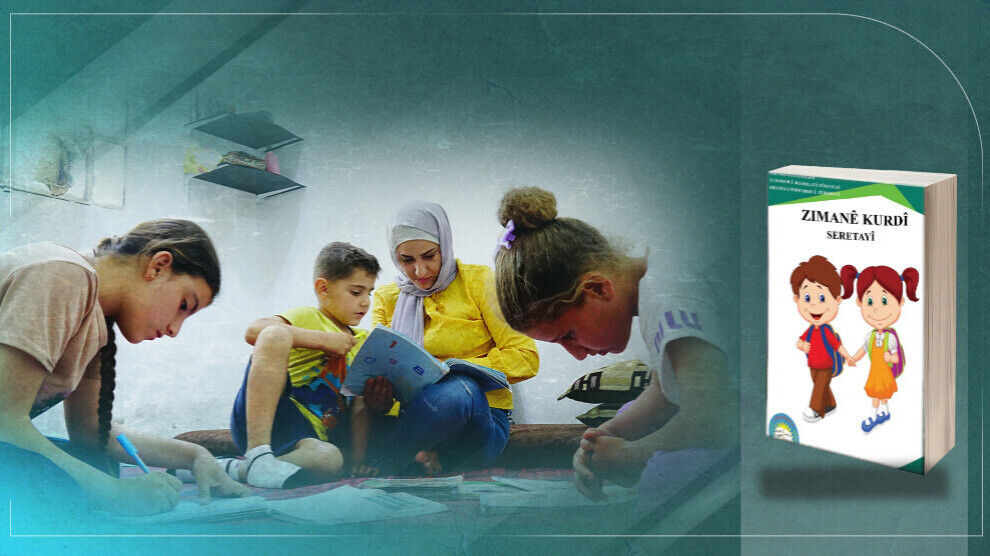
Samira Al‑Hassan is a mother of children named Heline, Eline, and Ahmed, who are in primary school. She spoke about the fears she lives with and her demands as a Kurdish woman and mother. "Even though there were Kurdish students and teachers, we were not allowed to speak our mother tongue inside the school. When we spoke Kurdish, they treated us as if we were committing a crime against the Ba'ath regime, because our language was banned everywhere. The impact of the Ba'ath regime's intellectual policies even reached our homes, so we used to speak Arabic with each other." She also recalled her mother's role in protecting and preserving the Kurdish language. "My mother was the reason we remained attached to our Kurdish language inside the home, because she had not studied in the regime's schools and was not influenced by its policies. She spoke to us in Kurdish and hummed folk Kurdish songs to the young children. We felt great happiness when we spoke our Kurmanji dialect at home, without fear of the regime's punishments."
"The revolution was an opportunity for the children"
Samira Al‑Hassan also spoke about her children who were born during the war and revolution, saying: "Unfortunately, our children who were born during the revolution grew up amidst war, but they had the opportunity to live and learn in Kurdish. Today, our children learn their Kurdish language freely in schools, without fear of a regime that punished them for their language. When we review lessons at home, I also learn the Kurdish language with my children. The opportunity I lost in my childhood, I try to regain today with my children, and I rediscover my Kurdish history and identity."
"Kurds in Syria are not a minority"
Our speaker affirmed that the Kurdish language is not just a means of expression or information transfer; it is identity, culture, and history. "The Kurdish language is our culture, our history, and our identity. No one can cancel our language. Why does the interim government try to ignore the Kurdish language and not recognize it? Kurds are not a minority in Syria; they are people of history and land, and their existence cannot be denied."
"Kurdish rights must be included in the Syrian constitution"
Samira Al‑Hassan stressed that Kurds and the Kurdish language cannot be separated from each other, calling for the recognition of Kurdish rights in the Syrian constitution. "Kurdish rights must be preserved and protected in the constitution. As mothers, we will never accept that our children receive education in a language other than their mother tongue, and that Kurdish language education be limited to only two or three hours per week. Our children have the right to learn their language freely, because if they only learn in Arabic, they will forget their history and culture. Our children will also become victims of the intellectual policies and exclusionary policies practiced by the interim government."