
Iraqi Women Media Forum affirms the importance of promoting press freedom and protecting journalists
“Iraqi Women Media Forum participants affirmed press freedom in Iraq still faces majör challenges: lack of deterrent laws, and social and tribal restrictions make their work even more difficult.”
Rajaa Hamid Rashid
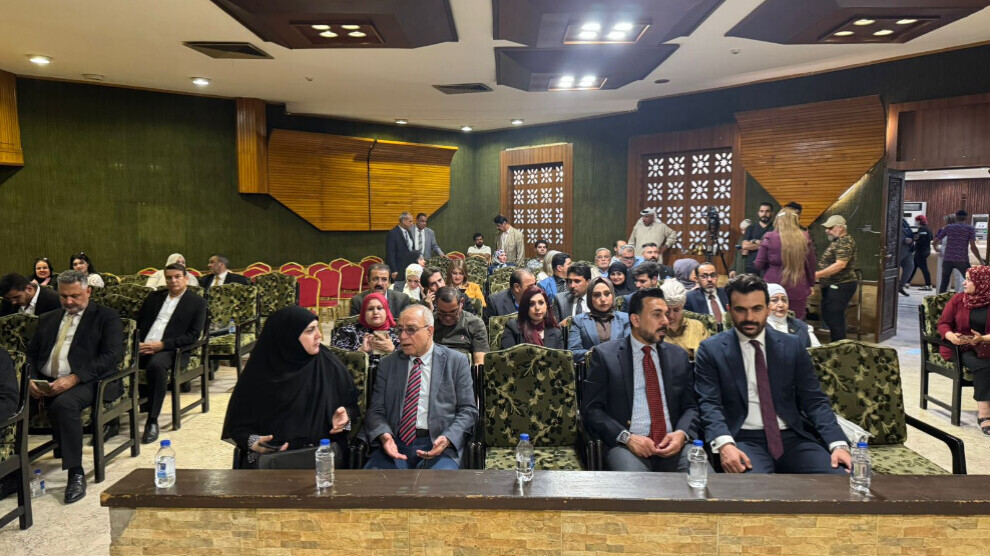
Iraq – On the occasion of World Press Freedom Day, the Iraqi Women Media Forum, in cooperation with the administrative board of Al-Alawiya Club, organized a seminar titled "Press Freedom: Analysis of Challenges and Exploration of Horizons in Light of the Annual Monitoring Report," yesterday, Saturday, May 2, at Al-Alawiya Club in Baghdad.
The forum, moderated by journalist Rusol Riyadh, began with a speech by Dr. Abeer Mohammed Al-Jubouri, a member of the administrative board of Al-Alawiya Club, in which she affirmed that press freedom represents a fundamental pillar in the life of societies, pointing out that journalism is not just a profession, but a tool for conveying truth and a voice reflecting the pulse of the street, as well as its role in connecting citizens with decision‑makers.
She noted that journalistic work faces increasing challenges, ranging from political and professional pressures to field risks, in addition to digital transformations that have reshaped the media landscape. She stressed the importance of analyzing these challenges and exploring the future of press freedom based on data from the annual monitoring report, calling for a balance between freedom of expression and professional responsibility, and for building a safer and fairer media environment.
Legal challenges restrict media freedom
Nibras Al‑Maamouri, head of the Iraqi Women Media Forum, reviewed the legal framework for media freedom, explaining that the Iraqi constitution, particularly Article 38, guaranteed freedom of expression and the media, but practical application faces several challenges, including the use of defamation and penal laws, the absence of specific legislation on the right to information, in addition to ongoing debate over the cybercrime law.
She pointed out that female journalists face repeated violations, including defamation, harassment, and electronic blackmail, as well as increasing social and professional pressures, exacerbated by the spread of new media phenomena on digital platforms.
Regarding the monitoring of violations, she indicated that statistics show approximately 182 cases of lawsuits and violations according to independent estimates, half of them in the Kurdistan Region, at a rate of 7 to 9 violations. She also noted additional challenges in the region, related to the prosecution and arrest of journalists, as well as the impact of partisan hegemony on media outlets.
Nibras Al‑Maamouri also touched on the reality of Iraqi drama, pointing out that it faces pressures and criticism for addressing sensitive issues such as corruption, the security situation, and some social issues, which sometimes leads to regulatory restrictions or calls to stop or modify certain works. She added that the ambiguity of some standards, such as "inappropriate content," raises questions about the possibility of using them to restrict freedom of expression, especially in critical or political matters.
She concluded her speech with a set of recommendations, most notably setting clear standards for regulating media content, protecting journalists and holding aggressors accountable, legislating the right to information law, in addition to supporting media production freedom and promoting press freedom throughout Iraq, including the Kurdistan Region.
Female journalists between violations and restrictions
Journalist and translator Rusol Ali affirmed that marking this occasion represents an affirmation of the importance of press freedom and the right to access information, pointing out that female journalists face double challenges given the security and political conditions, which requires legislation to protect their work and guarantee their professional rights.
Journalist Sara Majid pointed out that press freedom in Iraq still faces major challenges, due to the absence of deterrent laws protecting journalists from violations, which range from physical and verbal assaults to defamation campaigns.
She added that female journalists suffer from social and tribal restrictions that increase the difficulty of their work, especially in political coverage, exposing them to threats and harassment, which has led some of them to leave the profession or reduce their activity to preserve their safety.
The report presented during the seminar concluded with the diagnosis of several key challenges, most notably impunity, weak legal protection, political interference, digital restrictions, and pressure on media and artistic content.
A set of recommendations was also raised during the seminar, including ensuring the independence of the Media and Communications Commission, establishing clear and transparent standards for regulating media content, enhancing the protection of journalists and holding aggressors accountable, supporting the freedom of dramatic and artistic production, legislating the right to information law, and promoting media freedom throughout Iraq, including the Kurdistan Region.
At the conclusion of World Press Freedom Day activities, the call to entrench the principles of freedom of expression and protect journalistic work as a fundamental pillar of any democratic society is renewed. This day affirms the importance of enhancing the legal and professional environment that ensures the safety of journalists and enables them to carry out their mission away from pressures and violations, contributing to conveying the truth and serving the public interest. It also represents an occasion to assess the media reality and explore ways to develop it, in line with rapid transformations, and to enhance the role of media in building awareness and consolidating the values of transparency and accountability.