
Conflict Without a Fixed Farmework…Why Are Analyses Falling to keep Up with the War?
As the War between Iran and the US-Israel continues, a conflict beyond traditional military boundaries emerges, with political tensions, media pressures, and rapid shifts making it multi-layered.
Shayla Qasenkhani
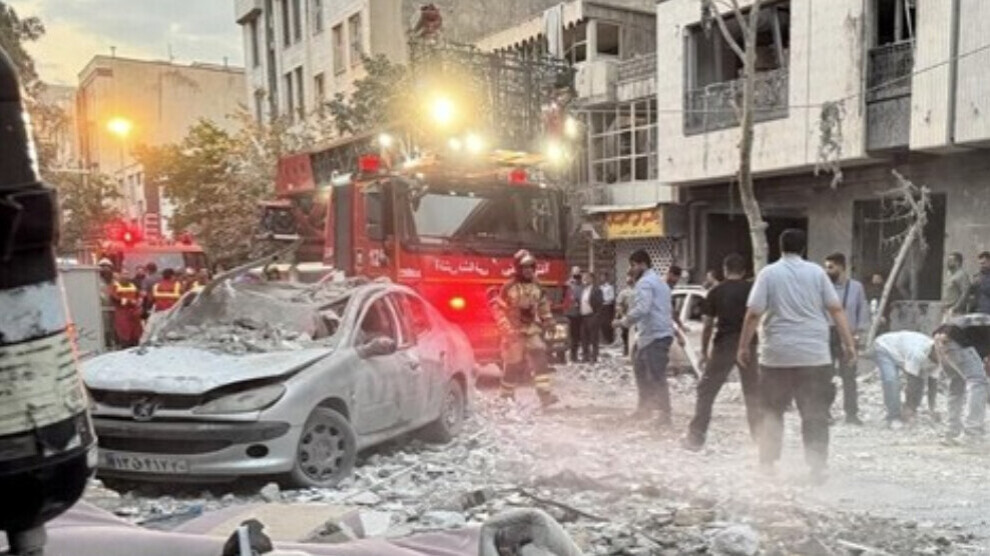
News Center _ Nearly a month has passed since the war between the United States and Israel on one side and Iran on the other; a war that has proven that today’s conflicts are no longer confined to traditional battlefields. When the pressure of political tug-of-war and military attacks is coupled with the power of media, it reaches a point where the human mind and psyche become another arena of confrontation.
In this context, Donald Trump’s rhetorical maneuvers via the media have confounded analysts and further obscured the prospects for interpretation and predicition. The result is a situation in which analysis has become more complex,and public opinion is mired in an exhausting state of ambiguity regarding the future of this war.
In these days when war is raging—and even before it broke out—the pace of interpretation has become faster than the pace of reality itself. Narratives are crafted in haste, analyses follow one after another, and each side seeks to define the meaning of the war within a framework that grants it legitimacy and a superior position. Yet the problem lies in the fact that wars do not necessarily unfold according to these narratives; they are shaped more by the course of events than explained by them.
In the classical view, war is considered a phenomenon that is understandable and, to some extent, predictable. From models of power balance to the logic of deterrence and cost‑benefit calculations, these tools were supposed to help us understand when a war begins, how it evolves, and at what point it might stop. Yet the experience of contemporary conflicts, especially what we are witnessing in the recent tensions between Iran, the United States, and Israel, shows that while these frameworks are useful, they are no longer sufficient to explain reality as it is.
A clear example of this is the gap between official narrative and the reality on the ground. On one hand, Israel defines its attacks as a preemptive act to contain a threat; on the other hand, Iran describes these actions as aggression and presents its response as legitimate defense. At the media level, this contradiction seems simple and understandable: action and reaction. But on the ground, the gradual expansion of the confrontation—from an exchange of strikes to the increasing presence and role of the United States in the region—reveals that reality is far more complex than this simplistic binary.
These complexities become even more evident when we look at the predictions made before the war erupted. In the months leading up to the confrontation, many American think tanks, including the Brookings Institution, the RAND Corporation, and the Council on Foreign Relations, assessed that the likelihood of a direct, large‑scale war was low. These assessments were based on the familiar framework of cost‑benefit calculations and the assumption of actor rationality—namely, that the costs of a large‑scale conflict would naturally lead the parties to exercise restraint.
Nevertheless, what happened showed that relying exclusively on these models to understand the dynamics of war is insufficient. Part of this inadequacy stems from the assumption of fixed actor behavior. In many of these analyses, there was an assumption that political leaders, including Donald Trump, would ultimately avoid sliding into a costly war. But what actually happened demonstrated that decisions were not necessarily governed by long‑term calculations; rather, they were heavily influenced by short‑term considerations, internal pressures, and rapid changes in the political landscape.
Furthermore, the contradictions in official statements have added to the complexity. Repeated assurances that the war is nearing an end come at a time when facts on the ground show no sign of de‑escalation; on the contrary, there are indications of its expansion. The constant shifts in tone and official positions—sometimes over very short periods—reveal that relying on declared discourse alone is no longer sufficient to predict the war's trajectory.
First, there is the war as known at the official level: the direct military confrontation visible in attacks, responses, and field maneuvers. This level of war is what appears in breaking news and seems, at first glance, controllable and analyzable. Within this framework, each side seeks to change the deterrence equation in its favor by drawing red lines and demonstrating strength.
But at the second level, a less visible war unfolds: the war of short‑term political calculations. At this level, decisions are not necessarily made with the aim of achieving a final military victory; they often serve to manage internal situations or temporarily reset balances. For example, a limited strike may have a political or media function—ranging from changing the public agenda to sending messages to adversaries or allies—more than being a purely military step.
At this level, even "controlling" the war becomes a tool in itself: a war neither so wide as to spiral out of control nor so limited as to have no impact. This situation, in a way, contributes to the war's persistence, as it can be kept at a level that ensures its continued political utility.
Finally, there is the third level: war as a process. A process that wears down existing structures and gradually redefines them. The contours of this level can be seen in the shifting regional balance of power, in the transformation of direct confrontation—previously avoided by certain parties—into something familiar, and in the changing expectations that actors have of one another. This level is often the least visible, yet its impact is the most enduring.
The problem with many analyses is that they stop at the first level. They ask: who will win? But they rarely ask: what is this war changing? Therefore, when the war deviates from the expected path, those analyses lose their credibility.
Perhaps the most important question is not about the end of the war, but about the logic of its continuation: what keeps the war going despite its rising costs—from economic pressures to international concern and public opposition? The answer cannot be found in military calculations alone, but in the intersection of domestic politics, regional rivalries, and the logic of unstable decision‑making.
War is not waged only on battlefields; it is also waged in language, in narratives, and in moment‑by‑moment decisions. As long as these levels are not taken together, any analysis, however precise it may seem, will miss part of the reality.
This war is not just a military confrontation; it is a test of how we understand war itself—a test that reveals that grasping today's complex reality requires moving away from rigid, one‑dimensional frameworks and moving toward analyses that embrace instability, multiple layers, and the potential for transformation.