
Medical Deprivation and Psychological Pressure… Reports Reveal Narges Mohammadi's Suffering Inside Prisons.
The "Free Narges" Coalition has expressed grave concern over the severe deterioration in the health of Iranian activist Narges Mohammadi, following reports that she has been denied independent medical care inside Zanjan Prison.
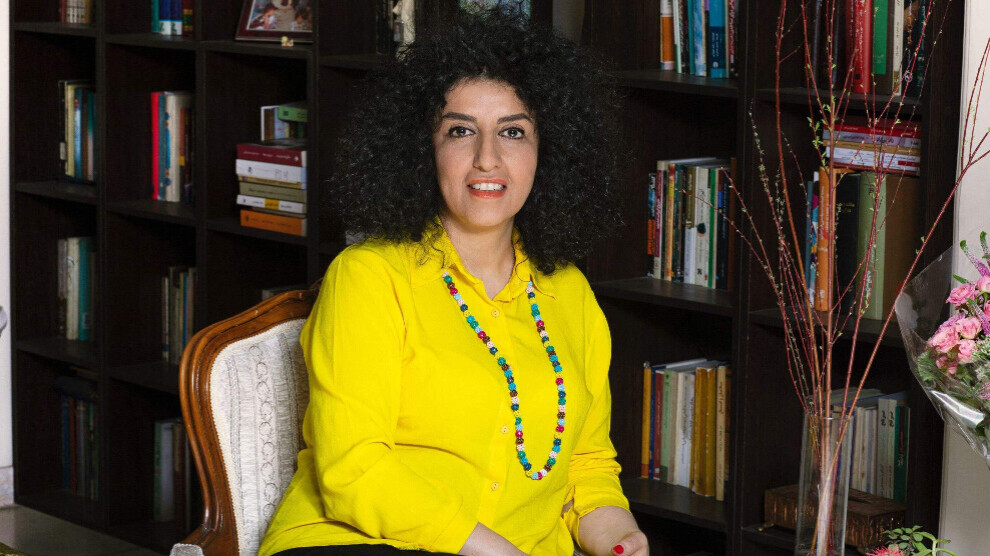
News Center — Iranian prisons are witnessing a new health crisis after recent reports revealed the spread of serious illnesses among a number of prisoners due to deteriorating medical services and the absence of specialized care, raising fears about the authorities' ability to contain the crisis and ensure minimum safety standards.
The "Free Narges" Coalition, citing reports from inside Iran, expressed its grave concern over the health condition of Narges Mohammadi and her being denied independent medical care. According to the report, after weeks of continuous follow-up and under difficult circumstances caused by the war and widespread communication blackouts, her legal team, accompanied by a family member, was able to meet with her in Zanjan Prison under tight security measures.
During the meeting, the general health condition of the activist Narges Mohammadi was described as "critical." She had been transferred to the hospital minutes before the meeting due to severe chest pain, and arrived at the meeting room in a state of extreme weakness, pale, and having lost significant weight.
In a statement, the Coalition's steering committee announced that "Narges Mohammadi's health condition is critical," calling on the authorities of the Islamic Republic to grant her medical leave and provide her with specialized care immediately. It considered that detaining her alongside prisoners convicted of violent crimes, given her heart condition and the tense circumstances caused by the war, poses a serious threat to her life. It also called for her immediate and unconditional release along with other prisoners of conscience.
According to the report, Narges Mohammadi was found unconscious in her bed, a condition that lasted over an hour. According to her fellow prisoners, she suffered symptoms such as coldness and numbness, and eventually regained consciousness after being transferred to a health center and receiving treatment. However, despite clear signs that she had suffered a heart attack, the authorities refused to transfer her to a hospital or have her examined by a specialist.
Reports also indicate other symptoms, including severe headaches, nausea, double vision, and weakness in both eyes—problems that, according to sources, began after her violent arrest in Mashhad, during which she was repeatedly struck on the head. Narges Mohammadi also suffers from severe blood pressure fluctuations, which is extremely dangerous given her heart and lung conditions and the stent placed in her heart.
According to the report, despite a specialist's recommendation for an immediate angiogram after anesthesia at the detention center in Mashhad, she was transferred to Zanjan Prison. There were also reports of explosions heard near the prison, adding to the psychological pressure on her.
The report also mentioned severe communication restrictions, including limiting phone calls to brief conversations with family members, banning communication with lawyers, and all visits being conducted under the supervision of authorities.
Narges Mohammadi, a prominent human rights defender, has previously been sentenced to long prison terms and is currently serving approximately 18 years in prison. She is the recipient of the 2023 Nobel Peace Prize, along with numerous other international awards in the fields of human rights and freedom of expression.
In conclusion, the "Free Narges" Coalition called on all parties involved in the conflicts to protect the lives of detainees by releasing prisoners of conscience and ensuring their safety and health.