
From Searching for a Place That Brings Mother and Daughter Together to Establishing the First Ballet School in Upper Egypt
Rafida Hammad embarked on a unique journey in Asyut, defying the lack of trainers and societal reservations to give Upper Egypt's children the opportunity to practice an art that had long remained out of their reach.
IMAN SAMIR ALI
Egypt — Rafida Hammad's desire to establish her own project was not merely a search for a source of income; it began from a personal need she noticed during her stay in Alexandria, when she would accompany her daughter to a ballet class and discover that the venue simultaneously offered a yoga session for mothers.
The idea caught her attention: instead of waiting for her daughter to finish training, the mother could also invest that time in exercise. When she returned to Asyut, she looked for a place that offered the same experience but found nothing, especially as many gyms at that time were either for men or offered women only limited hours.
From a Childhood Dream to Achieving Ambition
From here, Rafida Hammad, a graduate of the Faculty of Commerce (English section), began thinking about establishing her own project—combining a gym for women and a ballet school for children.
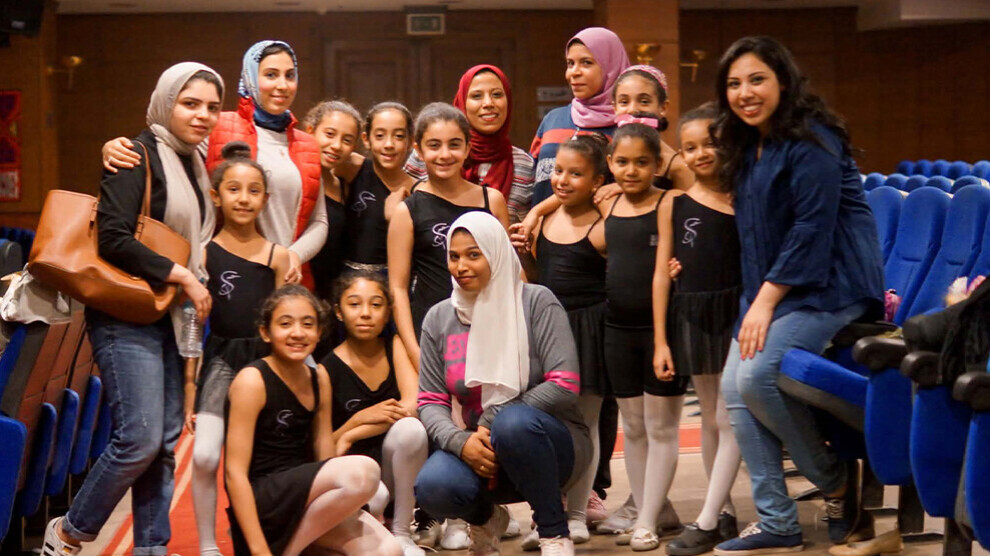
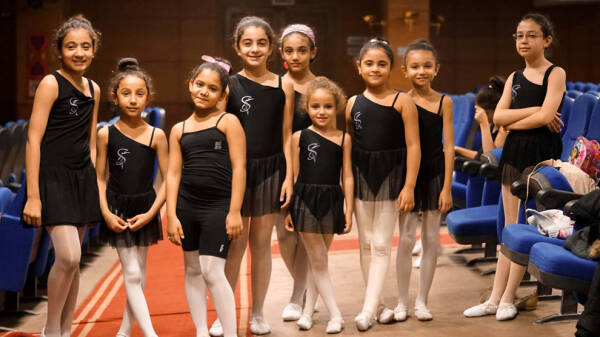
In 2015, she started her project with limited resources, initially receiving her own daughters and the daughters of some friends. The idea of teaching ballet to children in Asyut was largely novel at a time when this type of activity was not widespread in Upper Egypt.
The idea faced mixed reactions from the start; while some encouraged her, considering it a new and distinctive experience, others advised her to reconsider, believing that society might view ballet as a form of dance rather than a sport and art form.
However, Rafida Hammad's connection to ballet was long-standing. Since childhood, she had watched ballet performances on television and felt the beauty and elegance the art carried. She wished she had had the opportunity to learn it as a child in Sohag, and she says this feeling was one of the reasons for her insistence on the idea—her desire to give Upper Egypt's children an opportunity that was not available to her in her childhood.
The project faced numerous challenges at the beginning, most notably the absence of specialized ballet trainers in Asyut. Hiring trainers from Cairo was difficult, especially given the limited number of children at the project's inception. To overcome this, Rafida Hammad began recruiting students from the Faculty of Physical Education, who studied "movement and artistic performance" and received training in ballet basics and some fundamental movements through this course.
As demand for the school grew, the number of children increased and the school reached a waiting list stage, prompting her to search for a specialized trainer. She later managed to hire a trainer from the Ballet Institute in Cairo, who also worked at the Egyptian Opera House. This brought a clear improvement in training standards and helped provide costumes, shoes, and performance supplies, enabling children to be prepared for training and performances more professionally.
Between Societal Criticism and Expanding the Experience
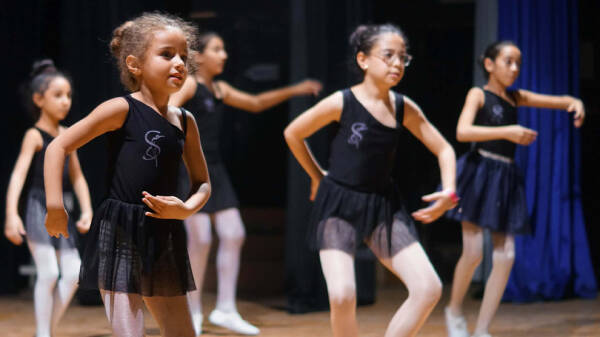
Alongside technical challenges, the school faced another aspect related to customs and traditions in Upper Egypt. Rafida Hammad explains that the question frequently asked when registering children at the school was not always about the trainer's qualifications and experience, but often: "Is the trainer male or female?" She noted that some families stipulated that a female trainer be present during their daughters' training, and in some cases, families would refuse enrollment if only a male trainer was available.
She believes this reflects certain reservations held by some families in Upper Egypt, while simultaneously affirming that this view does not apply to all families—a significant number of families supported the experience and continued to send their daughters to the school for years.
The project's journey was not without criticism, especially through social media, where some posts related to training or ballet performances would attract negative comments. She says some comments treated ballet as unacceptable, and some went as far as criticizing the families and children participating in the activity. However, she chose not to engage with those commenters, considering that anyone has the right not to be convinced by or participate in the idea, but they have no right to insult others for their choices.
She affirms that the experience on the ground was different; the families who enrolled in the school were generally supportive of the idea, and a number of children continued training and participating in performances for years.
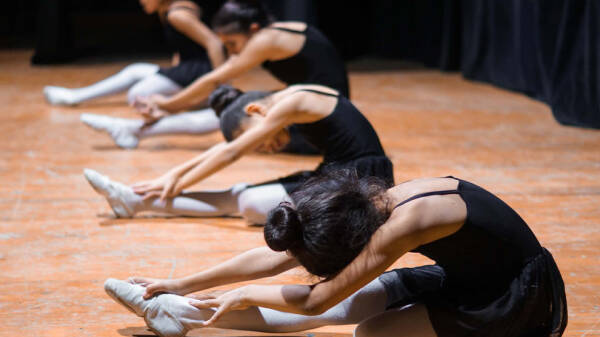
In addition to the ballet school, Rafida Hammad works through "Fitness & Gallery" to offer sports activities for women and children, including weight training, fitness, cardio, and yoga. The venue's activity is not limited to sports; it occasionally hosts open events targeting women and families, such as showcases of clothing collections, home products, or children's wear. These events are held on designated dates announced in advance, during which the venue transforms into a space combining sports activities with events relevant to women and families.
Since the school's opening in 2015, Asyut has seen significant expansion in the number of gyms, and gyms—including women-only facilities—have become more widespread. However, Rafida Hammad sees her project as different in nature, as it does not rely primarily on traditional gym equipment, but rather on movement-based training, weight exercises, fitness, cardio, and yoga.
She considers the project's continuation for over ten years an important success, especially as some clients have been with her for many years, and children enrolled at a young age continued with her into older age groups.
Despite what has been achieved, Rafida Hammad still aspires for the ballet school to operate year-round without interruption. She explains that demand for ballet remains lower compared to other sports such as gymnastics, which is widely popular in Upper Egypt and hosts tournaments and activities throughout the year. Ballet, however, still requires a larger base of interested children to make year-round operation stable.