
Mariana Abdullah… A Martial Arts Coach Breaking Stereotypes in Upper Egypt
She emphasized that martial arts are not just physical training, but a meaningful path through which she can offer something valuable to society, especially for youth.
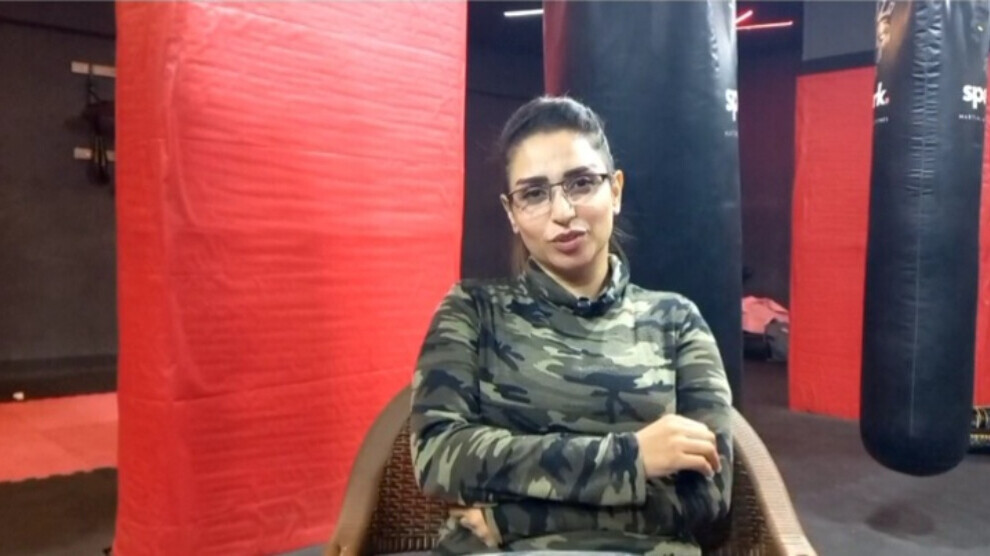
Iman Samir Ali
Egypt — With steady steps and unwavering determination, Captain Mariana Abdullah Shehata has carved her path in a field that has long been distant from women. She has become an inspiring model who redefines strength, discipline, and the educational message that sports can carry, proving that determination can break any social barrier.
Mariana Abdullah Shehata, a native of Upper Egypt, grew up in a society that long confined martial arts within a strictly male domain, where physical strength and leadership were seen as exclusively male traits. However, she chose to break this barrier and enter a field traditionally reserved for men.
Her goal was not to challenge men themselves, but rather to challenge the very idea, and to redefine strength as commitment, discipline, and an educational mission—not merely muscles or dominance.
Mariana Shehata explains that her professional journey has been long and diverse. Before entering the sports field, she worked in various private sector jobs, starting as a cashier and in sales, then moving into secretarial roles and human resources. She gradually advanced to administrative positions such as Customer Service Manager and Delivery Services Manager, and also gained experience in real estate investment.
A Passion for Martial Arts Since Childhood
She pointed out that her entry into the sports field took shape later in life, when she realized that her life path was heading in a completely different direction than she had planned. She had been passionate about martial arts since childhood, influenced by action movies and the values they promote, such as self-confidence and courage. While practicing sports alongside her children, she decided to take the experience seriously and enter the world of sports and martial arts professionally.
Over time, Mariana Shehata discovered that it was not just a sport, but a mission and a goal she aspired to achieve. She felt that martial arts represented a path she must continue, treating it as a personal challenge and a genuine desire to prove herself.
After starting her training, she obtained numerous certifications. She became a certified coach by the Kickboxing Federation, a certified coach by the Muay Thai Federation, an internationally certified coach by the Kung Fu Federation, and an official member of the German BDS Wing Chun School. She also completed courses in Personal Training (PT) and Fitness Training (FT), in addition to courses from the Olympic Committee, including a basic Kung Fu course (graded Excellent) and a physical preparation course (graded Very Good).
She also noted that she became a member of the Syndicate of Sports Professions and continues to strive for self-development. She emphasized that coaching is not limited to mastering technical skills, but is a comprehensive science combining both practical and theoretical aspects.
She stressed the importance of studying psychology, especially sports psychology, as a fundamental element in the training process. A coach must understand the nature of the society they work in, as well as the age groups they deal with and their psychological and behavioral needs.
Challenges and Obstacles
Regarding the difficulties she faced, she explained that as a woman living in Upper Egyptian society, she had to act wisely in a way that aligns with traditions, customs, and religion, without confrontation or تجاوز. She believes that the real challenge is not in breaking traditions, but in delivering a positive message to society—that sports play a central role in building generations and creating a balanced community.
She emphasized that this role is not limited to children, but also includes adolescents, a sensitive stage where time can easily be lost in cafés and negative behaviors. Through her work, she seeks to instill values such as discipline, commitment, and teamwork, making sports a way of life that benefits individuals, their families, and society psychologically, physically, and intellectually.
She explained that the idea was not fully accepted at the beginning, but improved over time. She initially practiced sports with her children to encourage them and did not face strong opposition. As she became more involved and as her family and community noticed the positive impact she had on children and youth, attitudes gradually changed, and she gained support and appreciation.
Mariana Abdullah Shehata believes that martial arts do not promote violence; on the contrary, they refine behavior and teach self-control and emotional stability. She sees martial arts practitioners as more capable of controlling themselves in difficult situations, as their strength extends beyond the physical to intellectual and psychological strength.
Regarding training youth, she explained that those who join are aware in advance that she is the coach. Some people prefer not to train with a female coach, which she fully respects. However, those who choose to join commit to strict rules based on respect, discipline, and performing a salute before and after training. In the training arena, there is no difference between men and women—only a coach and one team. She treats trainees as her children and siblings, which has helped build mutual trust and great respect.
She also pointed out that one of the main challenges she faced was continuity, as she did not have a permanent coach and had to rely on self-development. She had to travel from Assiut to Cairo to attend courses and workshops, which created both financial and family burdens. Nevertheless, her self-motivation and desire for growth drove her to continue.
Regarding societal challenges, she emphasized that dealing with adolescents is one of the most difficult aspects, given their psychological fluctuations, academic pressures, and the spread of some negative habits. Through sports, she strives to help them channel their energy, improve concentration, and avoid harmful behaviors, thereby supporting families in raising their children and building well-balanced personalities.