
When Politics Becomes Costly... Are Financial Resources Turning Into an Obstacle for Moroccan Women?
As Morocco's elections approach, debate is reigniting over women's political participation. Beyond representation and parity mechanisms, a question emerges: how decisive have financial resources become in women's ability to compete politically?
HANAN HARIT
Morocco — Political participation is not tied to will and competence alone; it also requires the ability to bear the cost of electoral campaigns, travel, communication, and continuous engagement in party work. Although women currently hold 96 of 395 seats in the House of Representatives — the highest level of women's representation in the history of Morocco's legislative institution — a number of women active in the field believe that higher representation does not necessarily mean equal opportunity, given the persistence of economic challenges that can hinder women's access to positions of decision-making.
Amid the debate over representation, another question arises concerning what precedes access to elected institutions: do all women have equal opportunities to enter the world of politics, or have financial resources become an unspoken factor determining who can continue and who is forced to step back?
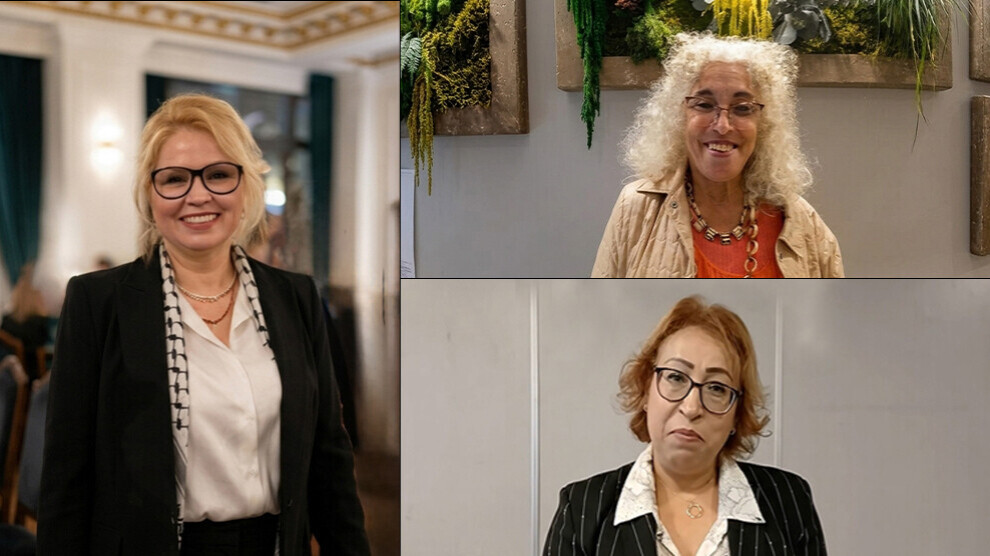
The experience of Halima El Fekri, deputy head of the Sidi Othman district in Casablanca, reflects part of this reality. For her, the hardest thing she faced over more than two decades of political work was not convincing society that women are capable of leadership, but bearing the financial cost that political practice demands.
She says: "I've gone through several electoral contests, and for years my dream has been to become a parliamentarian and represent citizens, but the economic worry has always stood in the way of achieving that ambition," considering that what she experienced is not an isolated case, but a reality shared by many women who possess the competence and ambition, yet lack the resources that would allow them to compete politically on equal footing.
She adds that women have become more present in managing local and national affairs, but reaching higher levels of responsibility remains, in her view, tied to factors that go beyond competence or commitment, extending also to the ability to bear the financial cost that political practice imposes.
An Obstacle the Numbers Don't Capture
Halima El Fekri believes that for a number of women, financial cost turns into an unspoken barrier limiting their ability to continue their political path, calling on political parties to adopt more effective mechanisms to support women's talent.
She affirms that investing in women should not be limited to encouraging them to run for office, but must also include ongoing training and support within the parties, considering that Morocco is rich in capable women who are ready to take on responsibility, provided the right conditions and resources are made available.
Will Is Stronger Than Cost
By contrast, human rights advocate and politician Fatima Fawzi believes Morocco's political landscape is undergoing a shift marked by growing numbers of women entering political life, despite its rising cost, arguing that focusing on economic burdens should not obscure another reality: women's growing awareness of the importance of participating in decision-making.
She says women are no longer content with demanding their rights from outside the institutions, but have come to see political participation as part of the responsibility of defending those rights and contributing to shaping public policy, adding that the rising cost of political work has not succeeded in curbing the will of many women, as the desire for change has become stronger than the difficulties political practice imposes.
However, she stresses that strength of will should not become a justification for ignoring structural imbalances, affirming that it is not fair to ask women to compensate for a lack of resources by doubling their sacrifices, or for political success to become hostage to the ability to bear financial burdens rather than tied to competence and merit.
She believes democracy is not measured solely by the number of women who succeed in overcoming obstacles, but also by society's and institutions' ability to remove those obstacles, noting that the growing number of women entering political work places a greater responsibility on parties and institutions to ensure equal opportunity.
Quotas Alone Are Not Enough
For her part, politician and party activist Kabira Chatar believes the debate over women's political participation is still often reduced to the quota mechanism, considering it not a privilege granted to women, but a transitional measure adopted to correct a historical imbalance in their representation within elected institutions and to enable their access to decision-making positions.
She says the 2011 constitution opened new horizons for strengthening women's participation by enshrining the principle of parity, but implementing this principle has, in her view, fallen short of expectations, given the lack of sufficient political will to translate it into practical measures within parties and representative institutions.
She explains that the obstacles facing women are not limited to the legal framework, but extend into party practice itself, where many female candidates still face difficulties obtaining the logistical and financial support needed to run electoral campaigns.
She notes that despite the existence of a fund dedicated to supporting women's candidacies, the scale of this support remains limited and subject to a number of criteria, pushing many female candidates to rely on their own resources to cover the costs of travel, field outreach, and campaigning, at a time when the level of support provided by parties varies from one organization to another.
Kabira Chatar believes that women's weak access to decision-making positions is not linked to a lack of talent, so much as it reflects persistent challenges related to candidate-selection mechanisms and the balance of power within political organizations — making the achievement of equal opportunity dependent on reforms that go beyond legal texts to reach party practice itself.