
TJA spokesperson: Changing society’s mentality is the foundation of women’s liberation and achieving peace
TJA spokesperson Başak Sardal affirmed changing society requires more than women’s struggle alone, as the movement targets root mentality change, citing Kurdish women’s ongoing fight for freedom, peace, and equal representation.
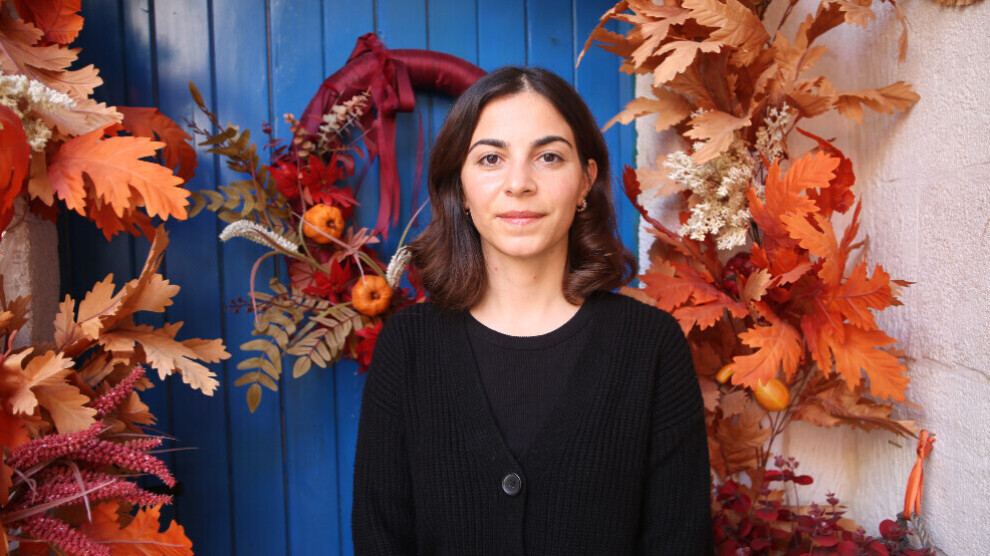
ARJIN DELIK Üncel
RIHA_The Free Women’s Movement (TJA), the organizational umbrella for Kurdish women in the cities of northern Kurdistan and Turkey, has continued its struggle since November 20, 2016, against gender discrimination, militarism, labor exploitation and violence in all its forms in defense of women’s freedom and in pursuit of finding paths to a solution.
But the organized struggle of Kurdish women dates back to earlier decades, as it emerged more prominently during the 1980s and 1990s, amid the burning and evacuation of villages, sexual torture during detention, and unidentified killings, which pushed women to engage effectively in rights and political struggle.
This struggle extended to building alliances with women’s movements in Turkey and at the international level and organizing joint events to combat patriarchal state violence and defend a solution to the Kurdish issue.
In 2003, the Free Democratic Women’s Movement (DÖKH) was founded as the first comprehensive framework for the Kurdish women’s movement, followed by the founding of the Free Women’s Congress (KJA) in 2015. After it was closed by decree law during the state of emergency that followed the coup attempt in Turkey in 2016, women continued their struggle under the umbrella of the Free Women’s Movement (TJA).
"TJA emerged in the face of the patriarchal state system imposing itself"
On the occasion of the tenth anniversary of the movement's founding, its spokesperson in Riha, Başak Sardal, reviewed the journey of Kurdish women's struggle, its most prominent stations, and its aspirations for the next phase.
Başak Sardal said that women's struggle existed during the 1960s and 1970s, but with the 1980s and 1990s, and in tandem with the growth of societal and national awareness, this struggle turned into an organizational approach, pointing out that the need at that time arose for a comprehensive organizational framework for women.
She added: "Women's struggle before the emergence of the Free Women's Movement had a foundation existing under different names and in different time periods. But its transformation into a more organized form, acquiring an institutional and societal character, and the broadening of the struggle line to include different fields — all of that was achieved with the Free Women's Movement."
Regarding the root causes of the Kurdish issue, she said: "What the phase preceding the September 12 coup and what followed witnessed — torture in prisons, denial of identity, genocidal practices, evacuation of villages, women being subjected to harassment and rape during village evacuations, in addition to facing various forms of physical, psychological, and economic violence — all of that created the need to struggle for identity and to struggle for women's rights. The Free Women's Movement emerged as a result of confronting denial, genocide, and the rejection of women's identity, as well as in the face of the imposition of the state system based on men's domination of itself."
"Kurdish political parties have an influential role in women's struggle"
Başak Sardal said that Kurdish political parties contributed to uniting women within their struggle for freedom and paved the way for organizing their ranks.
She explained that women's struggle was not limited to supporting the national struggle or armed struggle, but also aimed at enabling women to become an essential actor in political life, through participation in decision-making, directing policies, and setting visions. She pointed out that reaching this stage required great sacrifices, with women continuing to be arrested and others losing their lives during the struggle.
She said that women's efforts in various fields contributed to the approval of the women's quota system, whose percentage gradually rose from 25 to 35 then 40 percent, leading to the adoption of the co-presidency system in the Democratic Society Party (DTP). In 2009, the principle of equal representation of women enabled them to become essential actors in political life, and to entrench an administrative model based on participatory democracy in the face of one-dimensional mentality.
She affirmed that the ideas and assessments of Leader Abdullah Öcalan had an important role in this path, considering that women's transition from a position of presence in societal discussions to a position of actor and influencer in politics constituted a fundamental station in the journey of organized women's struggle.
"They wanted to embody equal representation on the ground"
Başak Sardal explained: "The goal here is to generalize the principle of equal representation to all areas of life. In places where the influence of liberalism, capitalism, and military forces is active in the Middle East, Turkey, and Kurdistan, equal representation cannot be embodied on the ground except through this system that women developed in the face of the deep war situation they are subjected to."
She said that Kurdish women, alongside the national struggle, wage a struggle for women's freedom. "Since women are the first to be subjected to domination when a nation is placed under control, reaching freedom required, as Mr. Abdullah Öcalan said, that we search for freedom in the place where it was lost, and from there a path to salvation and liberation must be found. And of course, that would happen through women."
"Joint struggle between Kurdish women and feminists"
She added that women in Kurdistan have faced, since the 1990s, the dangers of threats, rape, and killing, dangers that are no longer limited to Kurdistan but include women in various regions.
She affirmed that the founding of the Free Women's Movement came to continue the national struggle and the struggle for women's freedom in the face of the policies of the patriarchal state domination system, pointing out that the movement draws its roots from a historical legacy and reorganizes its ranks in line with the needs of society. It does not address a specific category of women, but proceeds from the belief in women's ability to change and transform, and seeks to build a common ground that brings together women from different segments and regions.
"We aim to change society's mentality"
Başak Sardal explained that the Kurdish women's movement has undertaken the task of changing society and helping it return to its own structure, stressing the special importance of workshops in which men participate.
She explained the reasons for their interest in "men's workshops," saying: "We believe that the will to solve existing problems cannot be limited to organized women's struggle alone. There is also a societal reality that reorganizes itself and expands and grows daily, also based on patriarchal state violence. Therefore, we place changing and transforming society at the heart of our priorities. Liberation is not an issue that concerns women alone; men also face a problem in achieving their liberation. And if we adopt change and transformation as a fundamental goal, we cannot achieve that by excluding any segment of society."
"The state planted the mentality of masculinity in society"
She pointed out that the state worked over long years to entrench the mentality of masculinity in society. "Within the framework of organizing workshops aimed at changing and transforming this mentality, men initially began to realize that violence is not limited to physical practices, but also includes economic and psychological violence, forms they had only recently acknowledged. They began to ask themselves questions such as: 'Is what we were practicing considered violence?' And it was important to raise these questions, as we notice that the men who participated in those workshops are today more inclined to review and question themselves."
She added: "If we define the problem as a mental problem, then we must start the process of change and transformation from the mentality itself. Therefore, workshops and intellectual education programs must be organized. Masculinity workshops have acquired particular importance, because they allow men to question themselves and the societal structure, and to understand the foundations on which violence is based and the factors that push them to engage in it."
"With power and self-will, now is the time of women"
Başak Sardal pointed out that women receive the International Day for the Elimination of Violence against Women, which falls on November 25, 2026, with more strength and organization, under the slogan "With self-power and self-will, now is the time of women."
She explained that the choice of the Suruç district of the city of Riha (Urfa) to launch the first events of November 25 came with the aim of shedding light on the crimes committed against women in the region. "Suruç is an area where women from different national and social segments live; it includes Arabs, Kurds, and Turkmens. But there is a societal reality raised on entrenched feudal mentalities. In the face of that, we launched our campaign from Suruç. In this context, there is an analysis by Mr. Abdullah Öcalan that says: 'The deeper the problem becomes, the closer it is to the stage of maturity of the solution.'"
"We must return to the essence of the problem"
Başak Sardal affirmed that Kurdish women stand in the front ranks of the struggle to make the peace and democratic society process succeed. "Kurdish women historically appear as a structure that always gives priority to peace and organizes its ranks to achieve it."
Referring to the stage the process has reached, she explained that the basic problems that led to the emergence of the Kurdish issue still exist. "The armed struggle has stopped, but the causes of war must be removed, because the armed struggle was a result. And we must demand the removal of the causes that led to this result."
She said: "Mr. Abdullah Öcalan also has a saying that 'the first war was not between states or nations or classes, but was a war between the sexes, between women and men.' With men's domination and the suppression of women's will, society as a whole was subjected to domination. And if we want to find a way out, we must return to the essence of the problem and start from the point where we lost. Women have shown, from the first day of this process until today, the extent of their adherence to the peace path, through marches, meetings, workshops, and various events."