
Three ministerial portfolios… is this the beginning of reaping the fruits of woman’s struggles?
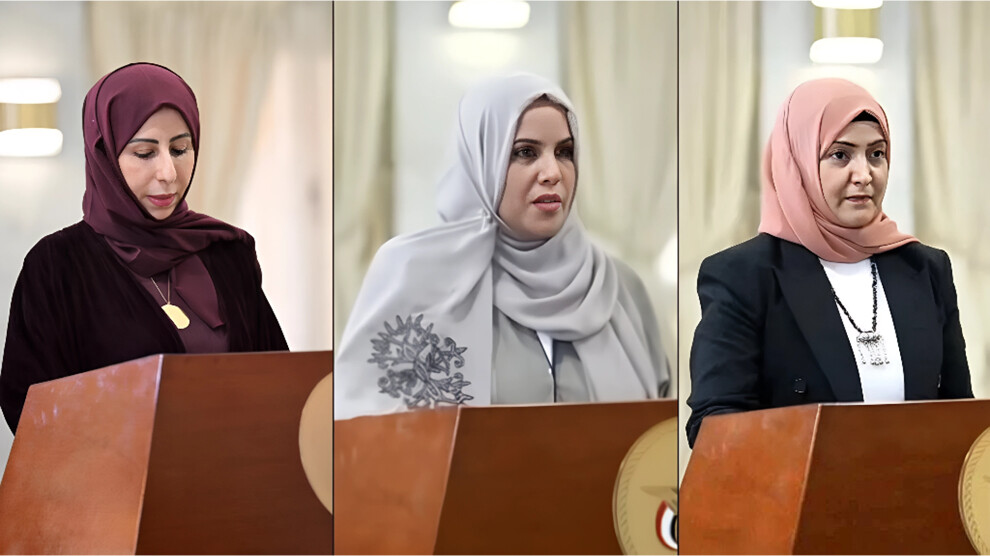
Due to Yemeni women's struggle for decision-making roles, three have been appointed to sovereign ministries, but this remains below the 30% target advocated internationally.
Rania Abdullah
Yemen-The outcomes of the comprehensive National Dialogue Conference in Yemen stipulated allocating no less than 30% of ministerial appointments and decision-making positions to women, as a transitional empowerment tool.
In recent years, Yemeni women have been excluded from representation in successive governments, as governments within the internationally recognized system in southern Yemen appeared devoid of any female representation.
However, in February of this year,the new government was formad,and women were granted three ministerial portfolios in this cabinet.Afrah Abdel Aziz Al-Zawba was appointed Ministerr of Planning and International Cooperation,Judge Eshraq Fadl Al-Maqtari was appointed Minister of Legal Affairs, and Ahad Mohammed Salem Ja’soos was appointed Minister of State for Women’s Affairs.
A Long Struggle for Women.
Despite various praises for the appointment of three women to three important ministries, many believe that the 9% representation of women in the government does not fulfill women's right to access decision-making.
Meanwhile, a number of activists considered these appointments to be a result of the struggle and efforts of Yemeni women in demanding access to decision-making, viewing this step as an important development in the path of Yemeni women's political empowerment, while emphasizing that the ambition remains directed towards expanding women's participation to no less than 30% in decision-making positions.
Activists also expressed that participation should be based on competence and merit, in order to achieve fairness in the distribution of opportunities and participation in decision-making, so that the field becomes open to women.
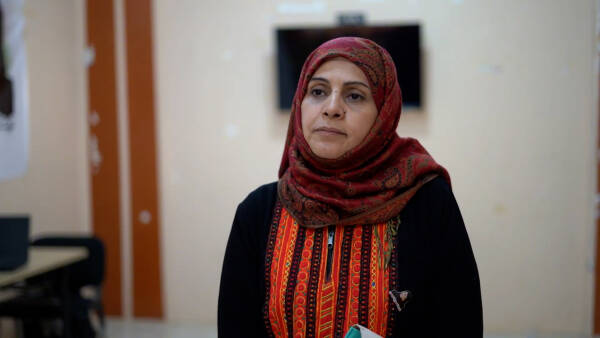
Commenting on this, Amal Al-Shamiri, Protection in Social Protection Projects Sector Officer at the Social Fund for Development, said that women received the news of the appointment of three female ministers with "intense joy and a boundless feeling of victory," considering that this reflects the government's conviction of the importance of women's participation as a national necessity rather than a formalistic participation.
She affirmed that "the struggle of Yemeni women has been ongoing since the September 26 Revolution, through the phases of stability before 2011, and despite that, a full conviction has not been firmly established within the state that women deserve to assume ministerial portfolios as an inherent right, not a grant or gift."
She pointed out that previously confining women to specific ministries, such as Social Affairs or Human Rights, was an indicator of a traditional view of women's role, noting that the new appointments represent a breaking of this pattern, especially with the selection of competent women who have garnered broad popular and partisan support.
Selecting competent women, as Amal Al-Shamiri explains, constitutes a significant gain, but she emphasized that women's ambition does not stop at three portfolios. She called for adhering to the 30% quota as a minimum, and for opening the field for women to submit their CVs and select the most competent away from any formalistic considerations, considering that this represents "a genuine recovery for state institutions and contributes to correcting the national path towards development."
Ambition to Reach Sovereign Ministries
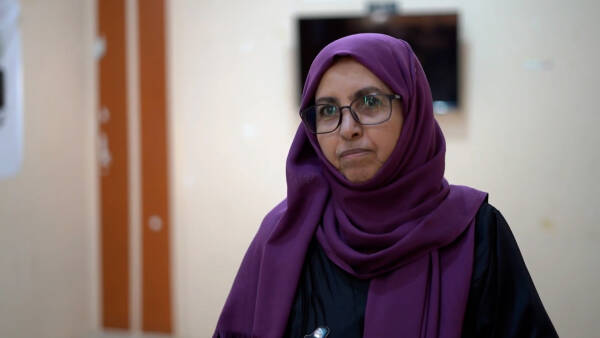
For her part, Samira Al-Anzi, Head of the Yemeni Women's Union in Ash-Shamayatin District, stated that the appointment of three women to ministerial portfolios is "an achievement" credited to women, but it "does not rise to the level of aspirations of the feminist movement, which demands no less than 30% representation for genuine female participation."
She called for expanding the scope of participation to include young women leaders at various levels, from the new generation to top leadership positions: "The next stage must witness a broader female presence in the state's institutions."
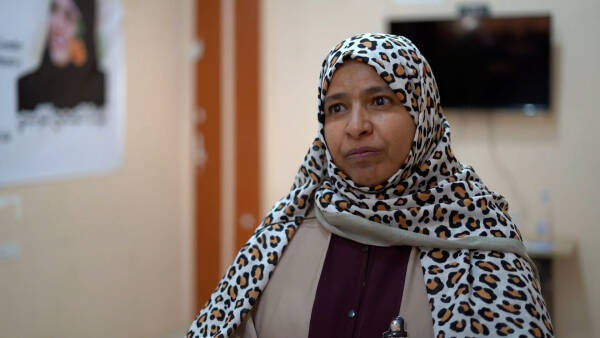
Huda Al-Haidari, Advisor to the Office of Education and member of the Central Committee of the Nasserist Unionist Popular Organization, considered the appointment of three women to important ministerial portfolios as "a qualitative shift in the history of women's participation in Yemen." She pointed out that appointing a woman to ministries that society is not accustomed to women holding represents "an important development" and the fruit of a feminist struggle that has continued for over three decades in the Yemeni arena for fair representation in state institutions at the highest levels.
She also called for empowering women to take over sovereign ministries, including the Ministry of Foreign Affairs, noting the existence of outstanding women's competencies in the fields of dialogue, negotiation, and peacebuilding.
Huda Al-Haidari concluded her remarks by stating that the new phase should witness genuine representation exceeding 30%, in order to enhance women's role in shaping transition and change, and achieve a comprehensive national breakthrough that benefits various age groups in society.