
The International Vacuum in Syria: A Breeding Ground for Mass Atrocities Against Civilians
As violations continue across North and East Syria and no credible international deterrent in place, fears are growing that the situation could evolve into an arena for large-scale crimes civilians.
Asmaa Mohammed
Qamishlo – The absence of international will and the restriction of accountability mechanisms grant perpetrators of violations de facto impunity and threaten human and political security in theregions of Rojava, amid growing calls for urgent legal action to enforce justice and prevent the recurrence of massacres
A profound structural crisis has created an enormous international and political vacuum in Syria, manifested in the absence of any effective central authority capable of enforcing the law and protecting civilians, as well as in the lack of sufficient international will to implement international legal provisions.
This political vacuum has created fertile ground for multiple interventions by international and regional powers. These included Russia and Iran at the beginning of the conflict, followed later by the United States, the United Kingdom, France, Saudi Arabia, and Turkey — each pursuing its own political, economic, and security interests. This has led to the emergence of multiple centres of influence on the ground and to an escalation of violations against civilians, particularly the Kurdish people.
Over the past year, a vast gap has become evident between international legal texts and their actual capacity for implementation. This has driven major powers to compete for dominance in conflict zones, whether through direct support for the interim government or through military and political interventions in areas under the Autonomous Administration, producing a complex reality marked by violations and crimes against humanity.
Legal Risk Analysis and Violations
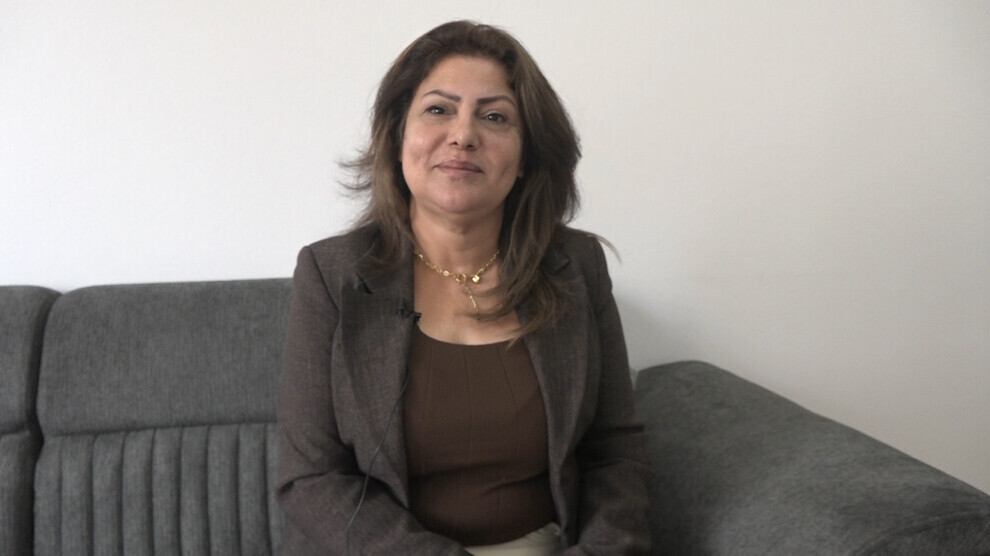
In this context, lawyer Nada Malki from the city of Qamishlo provided an in-depth legal reading analysing legal risks and ongoing violations, and clarifying the responsibilities incumbent upon the international community in addressing this reality. She stressed the need for urgent action to curb violations and protect civilians.
She stated that the international vacuum in Syria represents “an unprecedented case of the absence of central authority,” which has led to overlapping international interventions and the exploitation of violations against civilians in pursuit of narrow political interests. “This vacuum has enabled militias linked to major powers and foreign forces to carry out massacres against the Kurdish people and other minorities in areas such as Afrin, Serekaniye, Kobani, the coast, and Suwayda, without any real accountability.”
Despite the existence of the four international conventions known as the Geneva Conventions, which aim to protect civilians, the wounded, women, and children, “the implementation crisis remains the main obstacle.” The absence of international political will and the use of the veto by some major powers in the Security Council, she noted, “allow perpetrators to evade responsibility and grant them partial or full impunity.”
Malki explained that the International Criminal Court “faces enormous difficulties in prosecuting perpetrators of crimes in conflict zones.” Organisations such as the Red Cross, the Red Crescent, and human rights groups are prevented from accessing areas where violations occur in order to collect evidence. In addition, “the political immunity enjoyed by certain leaders and the non-accession of some states to the Rome Statute limit the Court’s jurisdiction and obstruct the achievement of justice.”
The legal and criminal record, she affirmed, “shows that militias of the Assad regime, some militias affiliated with the transitional government, and Turkish-backed mercenaries in the occupied areas have committed widespread massacres and violations against civilians.” These violations include mass killings, abduction, rape, deprivation of essential food resources, and the starvation of civilians — acts that constitute crimes against humanity and genocide under international law.
She pointed out that crimes committed in areas such as besieged Kobani, where access to food and water was blocked, led to the slow killing of children and women. This represents a flagrant breach of the Fourth Geneva Convention on the protection of civilians and indicates the failure of the international community to enforce the law and ensure the protection of the population.
The continuation of genocide and the absence of accountability “pose a major security threat to the region,” as jihadist groups such as ISIS may exploit this vacuum, threatening all the peoples of the Middle East and increasing the likelihood of broader conflicts that could reach regional or even global dimensions.
Multiplicity of Powers and the Erosion of Law
The Kurdish people today are not confined to Rojava alone; they are spread across Iraq, Turkey, Iran, and throughout the world. Any new massacre against the Kurds “could evolve into a major international crisis.” The international community is therefore required to act immediately to implement international law, hold perpetrators accountable, ensure the restitution of individual rights to land, property, and economic resources, and enforce agreements on the safe return of the displaced. “Any failure to act means the continuation of violations and poses a threat to regional and international peace and security.”
Lawyer Nada Malki affirmed that major powers, through their political and military interventions, bear full responsibility for the implementation of international law and the protection of civilians. “The Security Council, the International Criminal Court, and human rights organisations must assert their authority and close the legal loopholes that allow violations to continue, including reconsidering the veto mechanisms that obstruct the enforcement of international justice.”
She explained that holding heads of state and political leaders accountable for war crimes and genocide, and imposing strict legal sanctions on them, “constitutes a deterrent step that prevents the recurrence of violations and protects civilians and minorities.” All states must also “cooperate in facilitating access for international organisations to conflict zones in order to collect the evidence necessary for prosecutions.”
She further noted that international law — through the Geneva, Rome, and Vienna conventions — provides the legal foundation for holding all perpetrators of crimes against humanity accountable. “The international community is obligated to ensure the implementation of these laws, protect civilians, restore their rights, and demonstrate that international justice is capable of enforcing the law even against the most powerful states.”
She stressed that holding perpetrators accountable, lifting the political immunities that protect implicated leaders, and facilitating access for international organisations to gather evidence “are not optional but binding obligations upon all UN member states, the Security Council, the International Criminal Court, and international human rights organisations. Any delay or leniency in applying international law exposes civilians to greater danger, fuels the escalation of conflicts, enables the spread of terrorist groups, and threatens regional and global stability in its entirety.”
To ensure the protection of civilians, she emphasised the need for “immediate international action to implement international conventions, ensure the safe return of displaced persons, restore their rights to property, land, and economic resources, thereby achieving justice and preventing the recurrence of massacres and violations. International justice, if applied firmly and rigorously, will constitute an effective deterrent against anyone who seeks to violate the lives and dignity of innocent people.”
Malki concluded by stating that the situation in Syria and the affected regions represents a unique challenge to international justice and international humanitarian law, and that the ongoing violations against the Kurdish people and other minorities — including mass killing, starvation, abduction, and rape — constitute a flagrant breach of all international laws and conventions and place the international community before an urgent moral and legal responsibility.