
Moroccan politician:Women’s presence in decision-making requires competence and gradual progression in politics
Moroccan politician Nadia Anibat believes that women's political participation in Morocco should be measured not by numbers alone, but by competent women reaching decision-making through gradual progression, experience, and fieldwork.
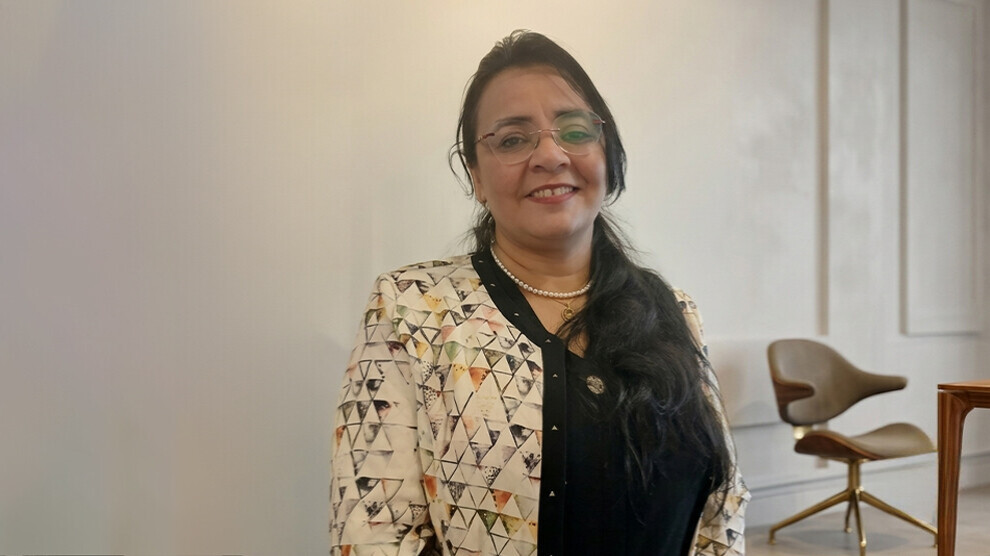
HANAN HART
Morocco — The presence of women in Moroccan political life is witnessing continuous development, driven by reforms and achievements that have strengthened their participation in the management of public affairs. However, this path still raises challenges and stakes related to consolidating the principle of equal opportunities and enhancing women's access to positions of responsibility and decision-making.
In the following interview, politician Nadia Anibat reviews her experience spanning from the late 1990s, discusses the most prominent challenges she faced as a Moroccan woman in political work, and presents her vision for strengthening women's presence in decision-making positions, affirming that the real challenge lies in investing in competence and quality of performance.
As a woman, and through your experience, what were the most prominent difficulties you faced during your political journey?
I began my political journey in 1997, when I was a student, and continued to progress through party responsibilities until I became one of the founders of the Authenticity and Modernity Party (PAM) in the Hay Al-Hassani area of Casablanca. This experience gave me the opportunity for direct communication at various stages of political work, but it was not without challenges.
Among the most prominent difficulties I faced was the persistence of certain patriarchal mentalities that still view women's participation in political life as an exception, making women's access to decision-making positions more complex.
At some stages, opportunities were not available to women to the same extent as they were to men, which required us to make double efforts to prove competence and the ability to shoulder responsibility.
Despite this, I believed that political work is based on perseverance and commitment, and that a woman who chooses this path must defend her convictions, be faithful to the trust of women and citizens who have placed their hopes in her—through field work, listening to their issues, and contributing to finding solutions for them.
Today, the debate in Morocco is no longer limited to women's participation in politics but has shifted to their presence in leadership and decision-making positions. How can this presence be strengthened?
I believe that strengthening women's presence in decision-making positions begins with the quality of selection. Political work is not merely numerical representation but a responsibility that requires competence, experience, and the ability to manage public affairs.
From this perspective, I believe in the importance of gradual progression in political responsibilities, because the experience a woman gains at the local level gives her deeper knowledge of citizens' issues and the mechanisms of elected institutions, which subsequently qualifies her for greater responsibilities at the regional and national levels.
Therefore, it is not enough to demand an increase in the number of women in decision-making positions; we must ensure that the women who reach these positions have accumulated political experience, possess awareness of public affairs, and are capable of contributing to decision-making and serving citizens with competence and responsibility.
Do women receive the same support as men during endorsements and electoral campaigns?
It cannot be said that women always receive the same level of support as men. In some cases, forms of favoritism still affect their opportunities during the endorsement stage or during electoral campaigns.
For this reason, I believe that the selection criterion should be competence and political experience, and that opportunities should be given to women who have accumulated genuine experience in party and field work.
I also believe that women are called upon to support one another, because we sometimes observe that competition among women becomes an obstacle to strengthening their presence in decision-making positions. If we want to strengthen women's representation, we must consolidate a culture of solidarity and prioritize competence and the ability to serve the public interest.
In my view, politics is not a means to reach a position, but a responsibility that requires listening to citizens and working to address their issues. I borrow here an expression from my profession as a doctor: political work requires "political medicine"—that is, an accurate diagnosis of society's problems, followed by an effort to address them with a spirit of responsibility, compassion, and closeness to citizens.
When a woman succeeds in bringing about this change, she presents a positive model that strengthens trust in women's ability to manage public affairs and encourages more women and young people to engage in political life.
Women's political participation in Morocco has witnessed notable progress, with the number of women parliamentarians rising from near complete absence before 1993 to 96 deputies after the 2021 elections. How do you assess this path, and what is the challenge in the upcoming elections?
There is no doubt that this progress reflects significant advancement in the path of strengthening Moroccan women's political participation, and it is the fruit of years of work and accumulation. Nevertheless, we still have much to achieve in order to reach representation that reflects women's status and capabilities.
I look forward to seeing the number of women in parliament rise to at least 120 deputies in the upcoming elections. However, this goal must be accompanied by the quality of representation. What matters most is that women with competence, experience, and the ability to shoulder responsibility reach elected institutions.
To achieve this, I believe it is necessary to invest in women's training, especially at the local and regional levels, because gradual progression in responsibilities contributes to building a solid political experience and qualifies women to assume greater roles.
The voter's responsibility is equally important, because voting for a candidate is a choice that extends for five years. Therefore, it should be based on trust in competence, the program, and the ability to serve citizens, free from any other considerations. The upcoming phase requires ambition and genuine will to bring about positive change that strengthens women's presence in decision-making positions and serves development.
What message would you like to convey to girls and women who wish to enter political work and run in the upcoming elections?
Today we live in the age of artificial intelligence and digital transformation, which requires women to continuously develop their knowledge and skills and to take advantage of all available opportunities for training and gaining experience. I also urge them not to pay attention to all the negative opinions circulated through social media if their aim is to diminish their abilities or frustrate their ambitions.
To every woman who aspires to political work, I say: believe in yourself, define your goals clearly, and do not hesitate to take on responsibility if you believe in your ability to serve citizens. Political work requires ambition and will, but it also requires patience, commitment, and a readiness for continuous learning.
I believe that Moroccan women today have greater opportunities to participate in managing public affairs, in light of royal directives supporting the strengthening of women's representation in various positions of responsibility. However, these opportunities will only bear fruit if they are accompanied by competence and gradual progression in political work. I hope that women who have accumulated genuine experience will receive trust and support, because the quality of representation is what makes the difference and serves the interest of society.