
Forming a Democratic Government Could Bring the Kurdistan Region Out of Its Crises
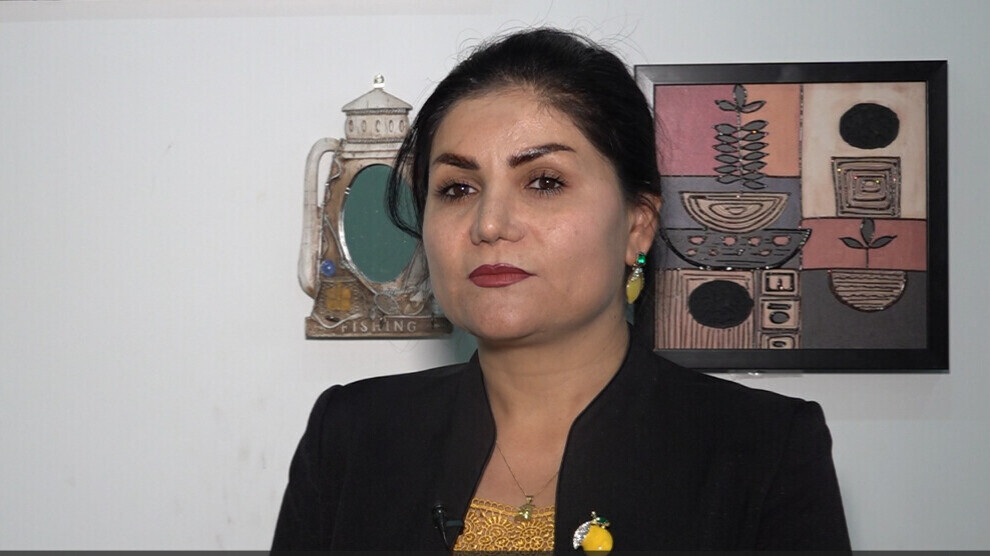
Amid political stagnation in Kurdistan Region, activist Robar Ahmed urges political forces to overcome differences, respond to Abdullah Öcalan's call, and form a democratic government with broad participation.
DARIN RAHIM
Sulaymaniyah – At a time when the Middle East region is passing through a sensitive phase, the absence of consensus and the failure of political forces to agree on forming a government and activating the work of parliament has become a serious danger to the entity of the Kurdistan Region.
In his last meeting, which took place on 2 August 2026 with a delegation of the Peoples' Equality and Democracy Party, which included Pervin Buldan, Midhat Sancar, and lawyer Faik Özgür Erol, leader Abdullah Öcalan directed a message to the Kurdistan Region, saying: "In light of these unstable conditions and conflicts aimed at redesigning the Middle East, the issue of the Kurdistan Region, the failure to form a government, and the lack of unity among the parties stand out as a fundamental issue. If action is not taken to address it, this will reflect negatively on the Kurdish people and their gains. There is a need for a solution represented by a democratic unity government that implements the demands of all the people, not just two families."
"The Failure to Form a Government Has Weakened the Status of the Kurdistan Region"
Commenting on this, activist Robar Ahmed said that leader Abdullah Öcalan's message included various parts of Kurdistan, including the Kurdistan Region, amid a state of political stagnation and paralysis of the political process in the Region, including the continued suspension of parliament and the delay in forming the new government after the elections.
She pointed out that the complexities of the situation in the Middle East and Iraq, alongside regional interventions, increase pressures on the Kurdistan Region, calling on Kurdish political forces to move with caution and awareness to keep pace with the accelerating changes in the region.
She confirmed that the ongoing peace process should not be confined to northern Kurdistan or within the framework of a single political party, but its repercussions extend to various parts of Kurdistan, including the Region. The process, as it has become clear, has contributed to opening new political opportunities and protecting the Kurdish people from what she described as existential risks.
She added that leader Öcalan calls for forming a government in the Kurdistan Region based on participation and democracy, including various political forces, ensuring the distribution of power and preventing its monopoly by specific parties or families, and helping the Region overcome its political, economic, and administrative crises.
"Enemies Are Trying to Eliminate the Kurdistan Region"
Robar Ahmed stressed the necessity of unifying the position among political parties in the Kurdistan Region, amid the state of fragmentation and division, noting that "enemies are making great efforts and using different methods to eliminate this entity and weaken it, while the parties are preoccupied with internal disputes and struggles over positions."
She explained that attempts to bring political parties to the dialogue table and form a government with a broad base have stumbled due to external pressures, noting that "until now the new government has not been formed, despite the holding of elections," and stressing the necessity of respecting their results and forming the government on their basis.
Robar Ahmed called on the political forces in the Region to respond to the call of leader Abdullah Öcalan and set their differences aside, confirming that overcoming divisions "will prepare a very good ground for achieving Kurdish unity," and give them greater ability to take joint positions and decisions regarding various parts of Kurdistan.
"A Democratic Government Is the Solution for the Kurdistan Region"
Robar Ahmed explained that leader Abdullah Öcalan's call could constitute an incentive to overcome differences and political knots between the parties in the Kurdistan Region and various parts of Kurdistan, whether resulting from ideological difference or party and regional affiliations.
She said that responding to his call and forming a government in which all parties participate would contain political and social diversity, confirming that "forming a national government, or what we can call a democratic government that includes all the foundations and principles of democracy," will contribute to facilitating the management of the Region and reducing its political and administrative problems.
She pointed out that a government based on a democratic basis will allow all parties to participate and feel represented, so that competition turns from a struggle for power into "who can provide the best service to citizens and implement the best projects and plans, enhancing stability and prosperity in the Region."
Robar Ahmed confirmed at the end of her interview that "a democratic government is the first and last solution for the Kurdistan Region," considering that building an institutional government based on law and democracy will give the Region greater ability to face changes in Iraq and the region and speak with one voice. She noted that "when there is an official institutional government, and a government based on law and democracy, it becomes easier to take steps to obtain rights."