
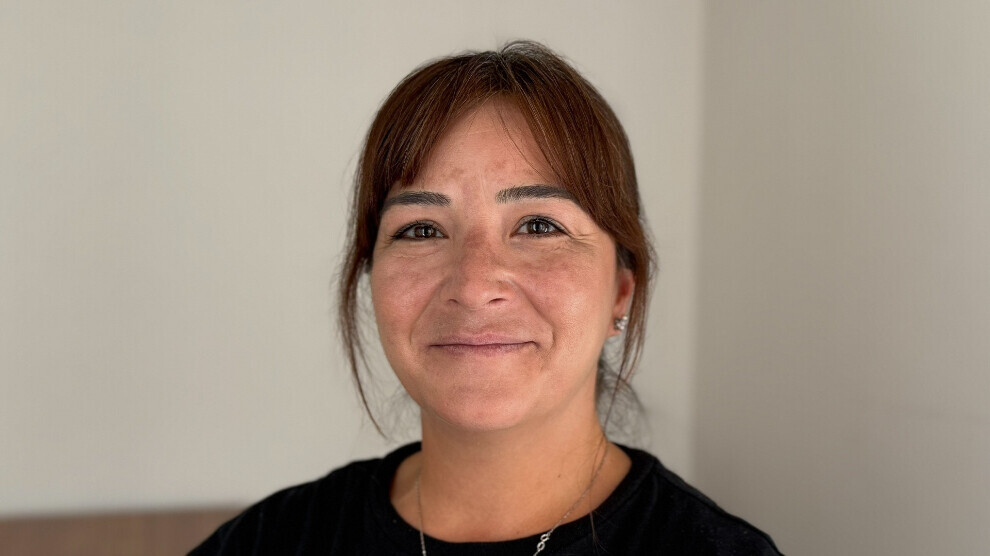
Didem Yılmaz:The Framwork Law Must Go Beyound Security Concerns and Establish a Democratic Foundation
The Peace and Democratic society process saw an important development in recent days, marked by the submission of the framework law _ described by leader Öcalan as the "basic law"_to parliament.
Elif Akgül
Istanbul_Contacts in Ankara have intensifled over the past two weeks regarding the framework law expected to be dragted as part of "resolving the Kurdish issue and the democratic transformation process."In meeting with political parties, Speaker of the Grand National Assembly of Turkey Numan Kurtulmuş held consulatations to discuss the legal framwork within parliament, while negotiatiions over the scope of this legislation have intensified.
Political circles suggest the proposal is taking shape as a text of roughly 15 articles, including provisions forming the legal ingrastructure for the Kurdistan Workers ' Party (PKK)laying down its arms and dissolving its organizational structure, amendments to penal and enforcement law, provisions concerning the legal status of Freedom Movement fighters, and mechanisms for managing the process.
In recent days, discussions have centered on the law's scope and the provisions relating to the status of leader Abdullah Öcalan, though uncertainty persists, and the questionof whether the issues of return and democratic participatiion will be addressed remains a source of curiosity and interest.
"The Law Must Meet Expectations"
Didem Yılmaz, spokesperson for the Democratic Peoples' Congress(HDK)in Istanbul, explained her expectations for the law to our agency, saying that this law_which leader Abdullah Öcalan described as the "basic law"_ must be a text that defines not onlythe current process but also the future social structure.
She noted that after a very long break in meetings, a delegation from the Peoples' Equality and Democracy Party (DEM Parti) met with leader Abdullah Öcalan on İmralı, with the main topic of that meeting being the currently anticipated framework law: "We all witnessed many contradictory statements about this framework law during that period without meetings; there were many contradictions — that it wouldn't include senior leadership figures, that there would be no amnesty, or that there would be no development regarding Mr. Öcalan's status. But after the meeting, and after we also read the notes from İmralı, we now expect a framework law — or in other words, a basic law — that can meet expectations at a certain point, even if not fully. There are expectations that discussions on the articles will take place in the coming days, and as far as is known, it can be said that the earlier contradictory statements have now been replaced by provisions that carry more hope and inspire more confidence."
"The Framework Law Must Carry the Character of a Document That Guarantees the Process”
According to Yilmaz, the framework lawshouldn't be "just an ordinary legal regulation,"but must carry the character of foundational text that guarantees the integrity of the process.For this reason, she noted, the legislation shouldn't be limited to provisions with a purely security dimension, stressing the importance of including headings such as the sociallization of peace,equal citizenship, and democratic transformation within this law.
She explained that the status of leader Abdullah Öcalan in particular is one of the specific and decisive issues in terms of public trust: "This is a framework law, and above all, being a framework law, it needs to carry the character of a document that guarantees the integrity of the process. After all, there is already a constitution for the Republic of Turkey, and there are specific laws and legislation — and within a structure where even rulings issued by the European Court of Human Rights are not implemented, we expect a comprehensive set of provisions that push to overcome these obstacles."
She added: "We expect a framework law that makes clear this process does not aim solely at disarmament, and that it is not a project that merely feeds into or revolves around security policies."
In the meetings the party holds across multiple platforms and with very different groups, the first question always raised concerns the law itself, our source said, along with questions about the "wakils" (those holding the reins of local councils), and how the return of guerrilla forces will be secured: "As understood from the İmralı notes, the framework law will place the historic Kurdish-Turkish alliance in Anatolia on legal footing."
She believes that the greatest current expectation — indeed, the most important one capable of providing social trust in this process — is the legal status of leader Abdullah Öcalan, attributing this to his ability to manage the process himself and to hold his meetings in conditions that allow him to live freely, which she affirms would significantly help support and advance the process.
"Mr. Öcalan Is the Chief Negotiator in This Process"
Didem Yılmaz noted that the process has not yet been backed by concrete steps, which has weakened public trust, and stressed the importance of granting legal guarantees to the role leader Abdullah Öcalan will play in the process, explaining that expanding the possibilities for meeting and communicating with him is vital for the process to move forward.
She explained this by saying: "The process has now passed a year and a half since it began, and above all, this needs to be properly characterized. Looking at it from the state's side, we can say very clearly that no concrete step has been taken_ and on the other hand, we're actually witnessing a process moving in reverse, such as disarmament, the burning of weapons, and the dissolution of the organization."
She continued: "Mr. Abdullah Öcalan's legal status matters, because this is not a process that can be managed within a reality where the state intervenes to impose a two-month break in meetings whenever it wishes, or says 'you can meet today but not tomorrow.' From the PKK's perspective, there is a necessity for Mr. Öcalan to be personally present in these meetings and in this process, and he needs a legal status for that purpose. This legal status would first open the way for meetings, and at this point Mr. Öcalan should be able to communicate with academics, journalists, parties, and various societal actors."
She noted that this would make an important contribution by allowing leader Abdullah Öcalan to first express himself, since there are preconceived judgments against him within society: "With these preconceived judgments in place, it's not realistic to say this process can be led largely on a social basis — nor is that practical. So Mr. Öcalan must be able to explain his own ideas himself: what kind of social structure is he talking about regarding the future? What is the historic Kurdish-Turkish alliance? What purpose does it serve? And where should the branches of this alliance extend in the future?"
"We Must Be Able to Talk About the Future Now"
In closing, Didem Yılmaz, Spokesperson for the Democratic Peoples' Congress (HDK)in Istanbul, stressed that society now wants to see concrete steps regarding the future: "Based on that, its important for the framework law must, of course, include securing the return of politicians currently abroad, and those making efforts in the field of democratic politics, so they can once again participate in politics here, as well as determining what the guerrilla forces will do.