
Amine Oussi: Women’s Sacrifices Are Non-Negotiable, Their Rights Must Be Enshrined in the Constitution
Amine Oussi, a member of the Star Congress Diplomatic Relations Committee, affirmed that the January 29 agreement does not resolve the Kurdish or women’s issues, and the process lacks a clear vision.
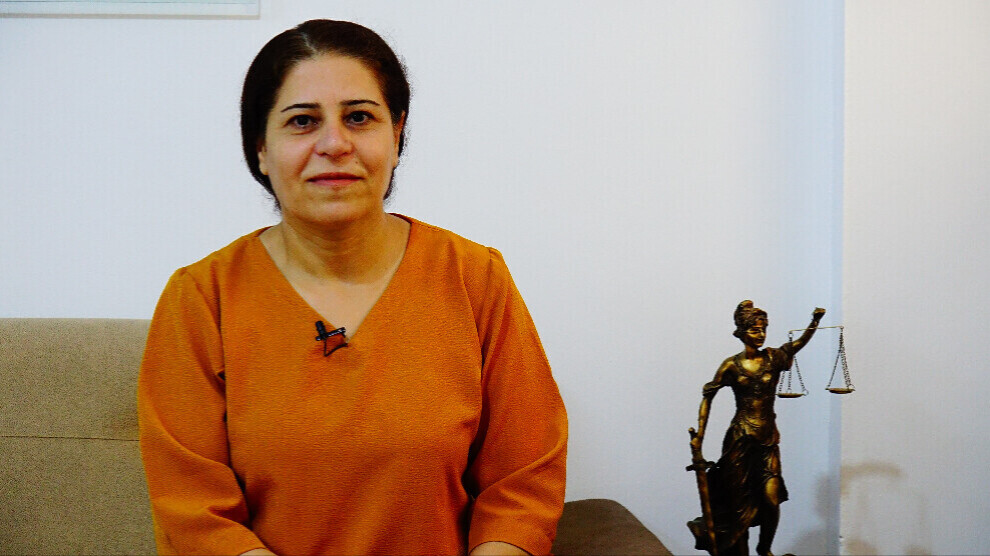
SORKEL SHEIKHO
Qamishlo_Syria is passing through a phase of change and transformation, while women’s rights and their role in the next phase still lack clear guarantees or practical steps to consolidate their presence. Nevertheless, they continue their struggle to secure their constitutional and legal rights and to participate in shaping the country’s future.
Despite discussions about the integration path, the issue of women remains present in debates, especially after the role women played during the years of the Rojava revolution in political, military, diplomatic, social, and organizational fields, amid ongoing debate over their participation in military institutions and the position of the women's movement in the new Syria.
"There Is No Clear Vision"
Amine Oussi, a member of the Diplomatic Relations Committee of the Star Congress, spoke about the January 29 agreement between the Syrian Democratic Forces and the interim government, based on military, administrative, and political integration. "There is a difference in understanding perspectives. The fundamental criteria that would lead Syria toward substantive changes remain unclear. For example, how will Syria be recognized as a multi-component, multi-national, multi-cultural, and multi-religious country, and how can it embrace this reality and welcome everyone? How can Syria move from rigid centralism to a concept of equal citizenship based on partnership and cooperation? There is no clear vision on these issues. Therefore, women's organizations and movements, foremost among them the Star Congress, are taking a stance on this."
"Women's Participation in Politics Must Stem from Belief in Them"
She attributed the concern of women's movements and the Syrian street to the absence of a clear vision for women's place and role in Syria, and the future of their rights after years of struggle against the Ba'ath regime and injustice. She said: "This ambiguity does not give women a sense of security or guarantee them the rights of citizenship, political participation, and building the country."
She added that "the presence of some women in the interim government is not enough if it is the result of international or societal pressure," affirming that what is required is genuine belief in women's capabilities and role, and the consolidation of their political participation as a right and a fundamental partnership in building the new Syria.
Sacrifices Are Non-Negotiable
Amine Oussi highlighted the step of integrating the Women's Protection Units (YPJ), considering that this represents one of the difficulties facing the integration path. "If there is a force that has fought terrorism for years, gained extensive military experience, and was a fundamental component within the Syrian Democratic Forces, and its status is still under discussion, then this in itself is a message to all of us women that the government views our issue from a different perspective."
She added: "The failure to treat this force as an experience and expertise that can be utilized in the army and in building Syria in general raises many concerns. Even if this issue is still under discussion, it should not have become a subject of negotiation and bargaining, given the sacrifices made by the Women's Protection Units."
"Integration Does Not End the Kurdish Issue"
Amine Oussi pointed to the necessity of dealing wisely with the Kurdish people, considering that the mentality that sees Kurds as an authentic people with rights, identity, and distinctiveness has not yet been entrenched in Syria. "The interim government's approaches in military, political, and administrative fields exist and are positive, but they do not represent an agreement on genuine integration between the government and Kurds that would ensure addressing the Kurdish people's issue."
She affirmed that "the Kurdish people's issue has not been resolved through integration within the framework of the January 29 agreement, and we cannot say everything has been settled. This is administrative, political, and military integration, and it does not mean the Kurdish issue has been comprehensively resolved."
What Should the Government Do?
Amine Oussi identified what the interim government should do regarding the Kurdish issue, affirming that its essence lies in recognizing Kurds as the second nationality in Syria and guaranteeing their right to political partnership. She called for the Syrian constitution to entrench this status, with Kurdish rights clearly established, and for the scope of Decree No. 13 to be expanded.
She warned against reducing the Kurdish issue to a security framework, emphasizing the need to separate the integration path from the resolution of the Kurdish issue, and to open direct dialogue with the Kurdish representative, because "military, political, and administrative integration in itself does not represent a comprehensive solution to the issue."
Syrian Women Must Struggle Together
Amine Oussi said that achieving equality and women's participation still faces obstacles, most notably the mentality that marginalizes their role and questions their ability to assume active positions, considering that confronting this is a shared responsibility among all Syrian women, not limited to Kurdish women.
She called for the development of a unified women's strategy, and for strengthening women's knowledge of their rights and citizenship laws, enabling them to participate effectively and influence future legislation, and contribute to shaping their own future. "There is a need for a struggle involving all Syrian women."
A Women's Strategy and Support for Parliamentarians
Regarding the strategy women should adopt, Amine Oussi called for monitoring legislation and strengthening women's presence in law-making to ensure the protection of their rights and the consolidation of their participation in public life. She emphasized the need to unify women's positions against policies and approaches that undermine women's rights.
She also called on women's organizations and movements to support Syrian women parliamentarians and their voices, affirming that unified efforts give women greater ability to influence and bring about change, and to contribute to building the new Syria.
Joint Activities and Strengthening Coordination and Solidarity
Amine Oussi affirmed the necessity of benefiting from the Star Congress's experience in defending women's rights, and making it a tributary for women's rights and their cause in Syria. She explained that the Congress is open to cooperation with women's movements and organizations, and is working to implement joint activities and strengthen coordination and solidarity among women in various Syrian regions.
She added: "The Star Congress is making serious and important efforts for change and transformation. At its tenth conference, it will rebuild its organizational structure. Discussions are currently underway with women in society and women's organizations about the nature of our strategy from now on and in the future, and discussions are also being held with Syrian women about how we will move within all regions."
Regional and International Support for Women's Struggle
Amine Oussi noted that the issue of women in Syria is receiving increasing regional and international support, despite the persistence of mentalities that confine women's role to the home and belittle their ability to participate publicly. She considered that the efforts of women's organizations and women working in state institutions, along with this support, enhance the chances of changing this view.
She affirmed that women's struggle over 14 years has shown they possess the will and ability to face challenges, emphasizing that what is required is not merely accepting or rejecting women, but empowering them to participate, influence, possess the tools of change, and build Syria's future.