
Amal Jalal:Women’s Political Participation Still Faces Deeper Challenges
Despite women’s growing political presence in Kurdistan, their decision-making role still faces obstacles, raising questions on how to boost their representation.
HELEN AHMED
Sulaymaniyah_ Women around the world have played a key role in social, cultural, and political development, yet formal and systematic participation in power structures has always faced serious and structural obstacles.
Meaningful representation of women at the decision‑making level has become a reason for improving government performance, reducing corruption, enhancing social justice, and achieving sustainable development. However, women's political participation in most countries still faces deeper challenges, including legal discrimination, gender stereotypes, patriarchal structures, political threats and violence, and lack of economic support.
These obstacles not only limit women's political participation but also weaken the foundations of democracy. To address these barriers, appropriate policies must be adopted, legal reform implemented, gender education promoted, and a safe space created for women's political activity.
"Women Must Struggle for Their Rights"
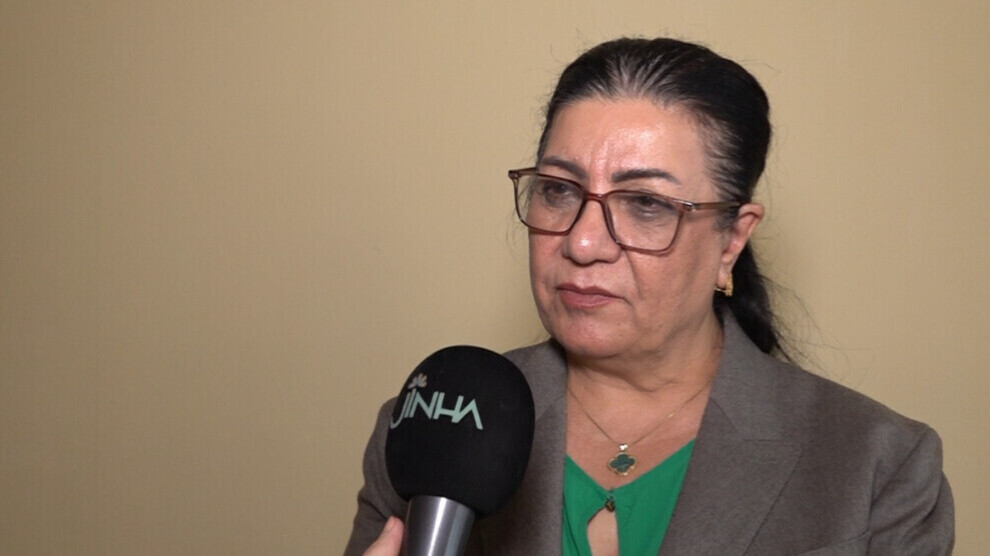
Amal Jalal, responsible for the Committee of Organizations of the Kurdistan Democratic Party (KDP), noted that after the 1991 Spring Uprising, women in the Kurdistan Region left a role and impact on other women. The women's revolution in Rojava and the establishment of the Women's Protection Units also had an important and rapid influence on women in the Middle East.
She said: "Our goal is to ensure women's rights to progress. Women have played an important role in both old and new struggles, and we women must have clear programs, plans, strategies, and a feminist vision. Women themselves must carry out a more effective legal, constitutional, and civil revolution. However, the lack of a relationship between powerful women and political parties has caused fragmentation, leading to intellectual disintegration among women, or to clinging to existing gains and feminist vision."
She added: "In the past, there was no public opinion regarding women's political participation. The tradition was that women's work was limited to raising children, preparing food, and managing the household—and this is a human duty. But women must have a strong personality and a strong political and humanitarian role."
She believes that "there was a transitional phase from armed struggle and women's participation in armed issues, and we must move beyond this and take more important steps toward political issues." She added: "We must create public opinion. Currently, women are seen within political parties and in parliament, but this power has not fully transcended the existing system, because the issue is not an institutional one."
She recalled: "When I was in the Supreme Council for Women, we submitted a draft law to parliament for the participation of all political institutions, so that all political institutions would guarantee, according to the quota criterion, women's participation in political work. To increase women's gains, power must be subject to questioning, pressure, and investigation. In the absence of power in political positions, women themselves bear the responsibility."
Enhancing Awareness and Political Participation
Amal Jalal affirmed that women must struggle for their rights, and that their concern should not be limited to themselves but should also extend to defending the rights of other women. She believes that achieving this requires enhancing women's awareness of themselves, of women's issues, of the importance of political participation, its motives and goals, and the role they can play in the political sphere. Their participation should also move toward achieving real political representation that secures important gains and rights for them.
She continued: "It is the responsibility of all media professionals and organizations to conduct investigations within parties and political parties to reveal whether these programs have been fully reflected or not. We women must start from here, because political parties are the ones that shape parliament and decision‑making."
Currently, Amal Jalal is working to ensure that women's representation reaches 25 percent in all unions and organizations, and not less than that, because "there is a gap for women within unions and in some organizations, and therefore women must work themselves to fill these gaps."