
Ahead of the Legislative Elections... Moroccans Await a Female Representation Capable of Making Change.
Human rights activist Imane Ghanmi said Morocco needs strong female presence in institutions; women's representation is a democratic issue central to political trust.
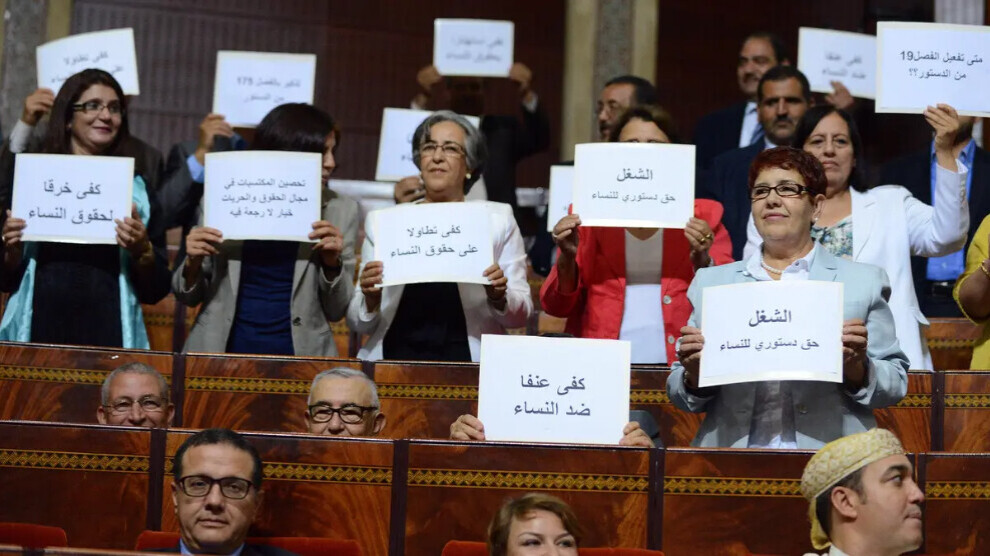
Rajaa Kheirat
Morocco – Amidst social transformations and the increasing role of active women in Morocco, a fundamental question arises... Will the upcoming electoral events succeed in producing a female elite capable of bearing the expectations of citizens and defending their issues within the legislative institution?
With the approach of the legislative elections in Morocco, scheduled for this coming September, the debate over women's presence in parliament and their ability to influence public policies is renewed. Moroccan society now considers that any genuine political reform must involve empowering women in decision-making positions, especially within the legislative institution.
Human rights activist and President of the Working and Entrepreneurial Women's Organization, Imane Ghanmi, believes that understanding the limited participation of women in elections requires a deep reading of the political and cultural context. She considers that the phenomenon is not merely "female abstention," but rather the result of historical and structural accumulations that have made the conditions for participation themselves unfair. She pointed out that the stereotypical image presenting politics as an arena of conflict makes many women feel that this field does not align with their working methods based on dialogue and quiet work.
She affirmed that a large part of the problem is linked to political parties that have not succeeded in building real pathways for qualifying female leaders. Women are often integrated in a limited way, without being provided political or organizational training that allows them to play leadership roles. Furthermore, the logic of kinship and personal loyalties remains influential in the nomination process, leading some women to reach positions of representation as "relatives" of influential figures, rather than as a result of a struggle-based path or political competence. This creates frustration for female activists who have accumulated field experience.
She explained that a growing number of women are working quietly to build their political legitimacy from the grassroots, through associations, union work, and local initiatives. She considered that this effort sometimes collides with what she calls "token empowerment," which harms not only women but the entire democratic project, as it deepens the crisis of trust and makes representative institutions seem closed and not based on merit. She indicated that Morocco is abundant with female competencies in various sectors, but the absence of bridges between professional experience and party nomination mechanisms prevents them from reaching decision-making positions.
Growing Female Awareness
She pointed out that many women today are questioning the added value of running for office in a political landscape that does not link responsibility with accountability, nor does it provide a tangible impact of parliamentary work on citizens' lives, making political participation a high-cost venture with low symbolic return.
Regarding the expectations of the Moroccan public, she affirmed that the current phase is characterized by a growing female awareness of the importance of presence in the public sphere, alongside an awareness of the challenges of political engagement. She noted that women no longer accept token representation; rather, they demand participation based on competence, merit, and a clear political project. The Moroccan public also expects representation that goes beyond numbers towards meaning, wanting female parliamentarians capable of bearing people's daily concerns in education, health, employment, and social protection, and capable of holding public policies accountable and defending affected groups.
She highlighted that the active forces in society expect female politicians to act as a bridge between society and institutions, to maintain their field sense, and to make listening to citizens part of their daily practice. "What is required today is a female representation that embodies a new model in political work; a model based on integrity, closeness to people, quiet work, and presenting realistic alternatives. Because the Moroccan public is tired of grand speeches, and now wants female political actors who possess vision, a program, and the ability to advocate within and outside institutions."
Imane Ghanmi believes that women's role is not limited to defending women's issues, but includes contributing to restoring trust in political work itself. She considers that a strong and independent female presence can serve as a lever to restore credibility to politics, provided that this presence is based on competence, independence, and commitment, not on unannounced appointments or formal representation. "In short, the Moroccan public does not want women who fill seats, but women who make a difference. It awaits a female representation capable of transforming daily suffering into legislative and oversight initiatives, and of transforming trust into action, and presence into impact. This is the equation today: moving from numerical representation to qualitative representation, and from formal participation to genuine partnership in shaping public policies."
Transforming Participation from a Legal Facade into Political Action
Regarding the electoral law, she affirmed that evaluating women's participation should not remain captive to numbers, because the legal framework, despite its importance, is not sufficient on its own to ensure effective participation. She pointed out that the debate around the quota system re-raises the issue of exploiting this mechanism to reproduce the same elites, instead of empowering qualified women. Moreover, many women still face organizational obstacles within parties that limit their chances of running on local lists, making their participation confined to positive discrimination mechanisms with limited impact.
She believes that the frustration experienced by many female activists is linked not only to the absence of legal mechanisms, but to the political process losing part of its value-based and moral dimension, which affects women's desire to engage. She emphasized that no matter how advanced the law is, it cannot effect change if its impact is not reflected in the political sphere and in people's daily lives, because when political work is subject to the logic of loyalties and clientelism, the law becomes just an empty framework. "This general frustration, which is not limited to women, directly affects their participation; when a woman does not see in politics a moral commitment or service to the public good, she loses the desire to engage, even if the laws allow her to run and participate."
Human rights activist Imane Ghanmi affirmed that evaluating women's participation in the upcoming elections must consider the law as part of a broader system based on values, trust, and effectiveness. She considered that women expect their participation to be a real gateway to decision-making, not just symbolic representation. "An increase in participation rates, even if it seems important on paper, loses its meaning if there is no political climate that values competence and allows everyone to freely express their visions and programs. Without a spirit of values, ethical commitment, and a genuine ambition to serve society, numbers remain mere items in a law that does not change reality. Here lies the greatest challenge: transforming participation from a legal facade into political action that impacts people's lives. Otherwise, any percentage, no matter how high, will remain incapable of restoring trust and passion for political practice."