
Turkish procrastination threatens strategic peace balances
Between PKK's historic steps and Turkey's procrastination in the peace process, indicators show politics prevailing over human rights in achieving peace.
Silva Ibrahim
News Center – Human rights and political figures have warned of the extension of the influence of Turkey's exclusionary mentality into Syrian territory, affirming that Ankara's rejection of the legal path targets Kurdish identity and culture. They called on the international community to pressure for the activation of the "right to hope" for leader Abdullah Öcalan as an essential entry point for implementing peace on the ground.
Popular and human rights reactions among Kurds are escalating in condemnation of Turkish procrastination regarding the peace process and the means of achieving a democratic society. They consider that the absence of legal and practical steps on the part of the Turkish state reflects a desire to impose a "political surrender" rather than formulating a genuine and sustainable peace, and that the lack of Turkish seriousness undermines regional de‑escalation efforts and targets Kurdish identity and culture.
Leader Öcalan's philosophy and critique of Turkey's "formal democracy"
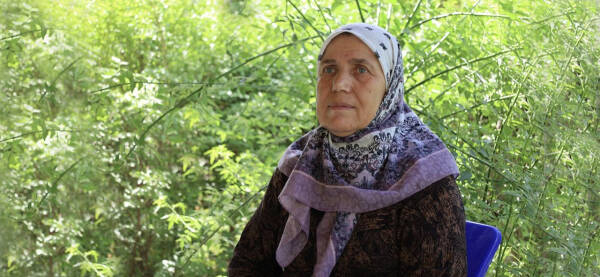
In the context of reading the social dimensions of peace initiatives, Wahida Sayed Ahmed, one of the women who met leader Öcalan in the 1990s, began her speech by explaining the impact of Öcalan's thought on women's reality. "For a long time, women lived under the authority of father and brother. The leader came to put an end to this mentality and succeeded in opening the horizons of freedom for women. Women relied on his philosophy to lead their society toward freedom."
She believes that the stage of the peace and democratic society call is of great importance for the Kurdish people and the peoples living alongside them. In contrast, she pointed out that "the Turkish state has not taken any legal steps regarding this stage to this moment. We as Kurds favor peaceful and diplomatic solutions on the democratic dialogue table regarding the Kurdish issue, and we support the cessation of bloodshed on both sides, because we have offered many martyrs." She considers this call a positive step toward building a democratic society in which all peoples enjoy their rights and freedoms without exclusion.
She considers that the Turkish state's procrastination in taking practical peace steps is due to its mentality that does not accept democracy. "Turkey is unable to take bold steps in this process because of its dictatorial approach. Although it formally pretends to be democratic, its reality shows the opposite. If it were serious in its response to the peace process, it would have taken legal steps." She noted that "Turkey fears this process, which confronts it with its unjust reality and its historical violations against Kurds and other peoples."
Wahida Sayed Ahmed expressed her solidarity with the peace and democratic society process, calling on all peoples to contribute to the success of this stage so that all components obtain their legitimate rights.
"Surrender peace" and international position balances
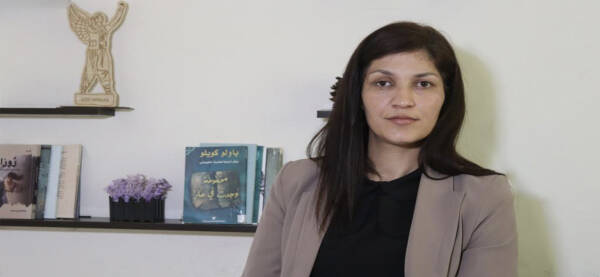
From the legal side, human rights activist Salwa Osman believes that the Turkish state "is taking the political side rather than the legal side in the peace process. That is, it does not wish to take any step in return for the historic steps taken by the PKK, and it boasts about this as a victory for itself. This indicates that Turkey wants a peace accompanied by imposing surrender on the Kurdish issue, not a peace accompanied by legal steps granting Kurds their constitutional rights in Turkey."
She pointed to the repercussions of this Turkish procrastination: "The Turkish side's failure to take any legal step weakens the chances of the process's success, because it cannot succeed with unilateral concessions." She added, "Although leader Öcalan is in prison, he is leading the peace process, while Turkey has not initiated any step despite a year having passed since this call. This shows the level of seriousness of each side in this process."
She explained that "denying leader Öcalan the right to hope shows the weakness of the European Court of Human Rights' position on this issue," considering that the deadline set by the European Court for implementing the peace and democratic society process steps – "this period set for June is to achieve regional balances in the region. The success or failure of this process is part of this balance."
She noted that "leader Öcalan deserves the right to hope, because according to international human rights law, he should be released." She stressed the need for the committee formed by the Turkish state to follow up on the process to announce, through a press conference, the level of progress achieved, reveal the reasons for the delay in peace steps, and grant leader Öcalan the right to hope so that the process turns into a tangible reality.
Salwa Osman warned of the continuation of Turkish procrastination, affirming that the success or failure of this process will affect the four parts of Kurdistan.
Dimensions of cultural hegemony and the impact of Turkish intransigence on Kurds in Syria

Biman Aloush, coordinator of the Star Congress in Kobani, criticized Turkish procrastination in dealing with the peace and democratic society issue, considering that the Turkish state's policy reflects "rigidity and insistence on imposing one color, one flag, one nationality, one language, and one culture, without recognizing any other difference or diversity." She pointed out that Turkey's delayed steps and its arbitrary policy against other parties clearly embody this trend.
She explained that despite more than a year having passed since the launch of the peace and democratic society call, Ankara has not taken any concrete legal step in this regard. In contrast, she affirmed that the Kurdistan Freedom Movement has presented historic initiatives, including the dissolution of the PKK's organizational structure and the destruction of its weapons, stressing that the continuation of unilateral initiatives cannot establish a real phase of peace and democracy.
She also noted that the Turkish state's efforts not only aim to undermine the Kurdish issue within its borders but also cast a negative shadow on the course of the Kurdish issue in Syria. She added that the Turkish state is a direct cause of the current obstacles, especially regarding women's rights issues, linguistic and cultural rights in the integration process.
Biman Aloush concluded by focusing on leader Abdullah Öcalan's latest message, in which he affirmed the need for the Turkish state to expedite the implementation of its legal obligations to move forward with the peace process.
The peace and democratic society call remains suspended between unilateral historic Kurdish initiatives and Turkish rigidity that refuses to make any legal or constitutional concessions. Anticipation remains the dominant stance for what the coming months will bring in terms of regional balances, which may determine the fate of the peace process and the future of the legitimate rights of the peoples of the region.