
Young women at the heart of the struggle... challenges of feminist presence in the public sphere
The presence of young women in feminist and human rights activism is central to struggle for justice and equality, amid restrictive social legal structure that limits women's public participation.
Asmaa Fathi
Cairo – The issue of empowering young women within the human rights and feminist field raises many questions related to the ability of institutions and societies to provide fair opportunities for new generations, especially given the continuing challenges linked to the traditional view of women, the dominance of patriarchal structures in the public sphere, in addition to unjust laws that still directly affect the lives of women and girls in the Arab region.
This debate is also linked to a wider reality experienced by women in several Arab countries, where forms of violence, legal and social discrimination intersect with the impact of wars and armed conflicts, making women and girls among the most vulnerable and targeted groups.
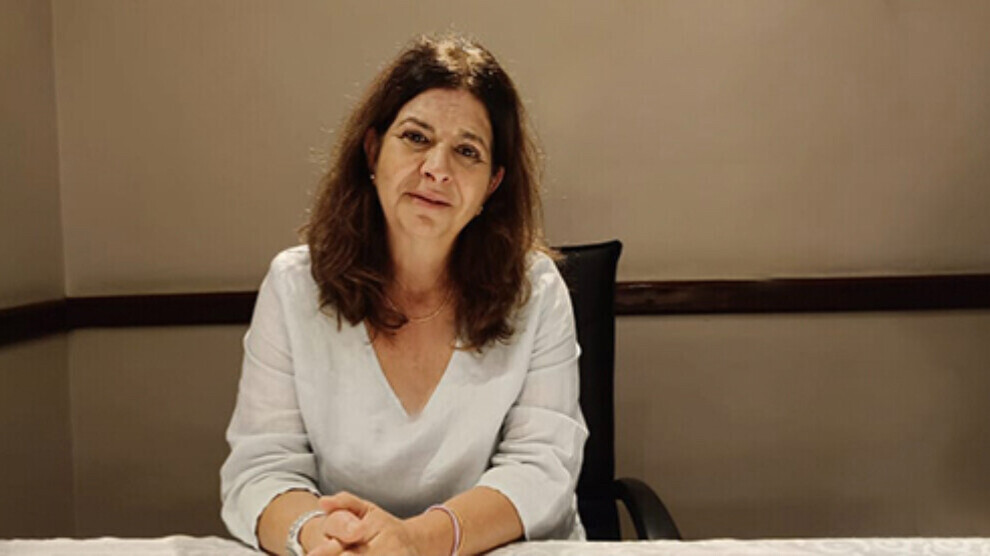
Feminist and human rights activist Suad Abu Diya speaks about a long journey that spanned decades working with women and girls in Palestine and Jordan, accumulating extensive experience in following up on their legal and social issues and defending their rights within environments where political, cultural, and legal challenges intersect. Through her field work and participation in institutions concerned with equality and women's empowerment, she has developed a critical vision of the reality of young women, the obstacles that hinder their participation in public life, and the impact of discriminatory laws, wars, and conflicts on their daily lives.
In this dialogue, our agency presents Suad Abu Diya's reading of the feminist movement scene in the region, and the role of human rights institutions in building a new generation of women leaders capable of continuing the struggle for justice and equality, based on her long experience in defending women and girls.
In light of the increasing talk about the importance of young leadership in the public sphere, how do you see the importance of empowering young women within feminist and human rights work?
Focusing on young leaders is very important, not only for girls but for youth in general, because any real change in societies will not happen if we do not start working with new generations and transfer to them the experiences, knowledge, and accumulated expertise from years of struggle and human rights and feminist work.
When we work with young women and young men and give them information and experience related to advocacy and defending women's rights, this creates a new generation capable of continuing the journey and demanding fairer laws and less discriminatory social practices.
I believe that the change we aspire to, whether regarding laws, societal views, or issues of equality between women and men, will not be achieved without young women and men who believe in these issues and are able to carry them and defend them in the future.
Therefore, I see that working specifically with young women is extremely important and must be an essential part of the work of civil society organizations, especially feminist organizations, because these institutions must think about the future and who will continue this path later.
With the escalating debate about the exclusion of certain age groups of women and young women from the public sphere, how do you see the reality of integrating young women into feminist and human rights institutions?
Based on my experience and expertise, I believe that there has indeed been exclusion for long periods of young women within human rights and feminist work. Perhaps some institutions are now beginning to realize the importance of integrating young groups, but for a very long time, the scene relied on the same people and the same faces present at conferences, events, and discussion circles.
This for me is a real problem, because any human rights or feminist movement cannot continue if it remains closed to the same circles and the same people. Therefore, I believe that there is an awakening beginning to happen within some institutions about the need to involve young women and young men in human rights and feminist work, and perhaps the steps are still fragile or limited, but they remain a positive step.
One can say that my mere presence here today in Cairo among a group of young women and young men I consider an important indicator of a growing awareness of the importance of the participation of new generations, but we still need more than just symbolic or formal representation. The presence of young women as followers or as part of the image only is not enough. What is required is to give them real space to influence, participate, and make decisions, and for them to be seen as active partners in this work, not just complementary presence.
How do you see the impact of this structure on women and young women in light of the continuation of patriarchal structures in Arab societies?
We still live in patriarchal societies, where men dominate at many levels, whether within the family, in the labor market, or even in the public sphere. Women in general, and young women in particular, are still largely marginalized, in addition to discriminatory laws that women suffer from in several Arab countries, whether personal status laws, penal codes, or other legislation that need radical amendments to become more fair and just.
This environment affects young women because when a young woman tries to enter the public sphere or human rights or feminist work, she finds herself facing a societal view that belittles her role or ability or considers her not yet qualified to participate and influence. Therefore, I believe that confronting this male mentality is not only through laws, but also through community and awareness work and enhancing the participation of women and young women in the public sphere.
I also believe that voluntary work is very important at this stage, because in previous periods, especially in the 1980s, voluntary work was an essential part of the feminist movement and public work. But over time, the focus has shifted more to paid institutional work.
Everyone needs a source of income, but at the same time, we need to re‑strengthen the idea of community engagement and voluntary work among young women so that they gain experience and awareness of various societal issues.
With many similar laws and crises in the region, how do you see the reality of women in different Arab countries, especially in light of wars and armed conflicts?
Women in the Arab region share a great deal of suffering related to violence and discrimination, whether this violence is legal, social, economic, or even in the labor market. When we look at penal codes or personal status laws in a large number of Arab countries, we find that they are very similar, as if they are "repeated copies" with very slight differences from one country to another. This reflects that the dominant male mentality is still strongly present in most Arab societies.
Women in Egypt, Jordan, Palestine, or Syria suffer from similar forms of discrimination, whether through laws, daily practices, societal violence, or violence in the labor market.