
March 8th… Moroccan Women's Demands on the Negotiating Table
Lawyer Aicha Kellaï urges a family code based on equality and dignity, stating ignoring domestic work's economic value creates violence against women. Rajaa Khairat
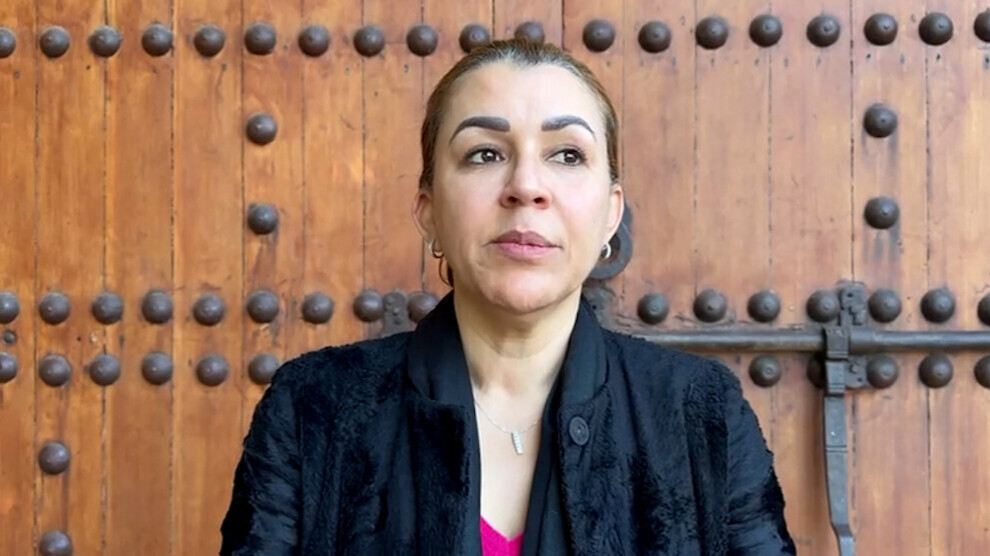
Morocco — As on previous years when International Women's Day arrives, certain demands of the Moroccan feminist and human rights movement return to the forefront. What has been achieved in the field of women's rights? And how can the pace of women's economic empowerment be accelerated, considering it the sole guarantee of their independence and attainment of freedom?
In an interview with our agency, activist and lawyer Aïcha Kellaï affirmed that women's economic empowerment cannot succeed through government-set plans, but rather through a comprehensive approach to advancing women's rights, because achieving equality and ensuring dignity is linked to combating poverty and violence among women and enacting legislation that guarantees women's political, social, economic, cultural, and environmental rights.
How do you assess the noticeable regression in rights and freedoms in Morocco, given the arrests that have targeted activists and journalists and the growing concern this raises?
There is no disagreement that Morocco has witnessed a profound political and human rights transformation, especially since the alternation government led by Abderrahmane El Youssoufi and with the Equity and Reconciliation Commission, which King Mohammed VI called for establishing in order to turn the page on the past.
Although some instances of excess in the use of power may appear when dealing with certain forms of public protest, this raises questions about the limits of exercising freedom of expression and the right to demonstrate.
This matter remains in need of a broad public debate to strengthen the legal and institutional guarantees capable of protecting these freedoms, within the framework of respect for the law and international human rights standards.
Furthermore, consolidating trust between institutions and society requires expanding spaces for dialogue and ensuring conditions for exercising civil and political rights in a balanced manner, in addition to reviewing laws to enable citizens to exercise their right to protest legitimately and in an organized fashion.
What are the most prominent expectations of the human rights and feminist movement from the upcoming revision of the Family Code, coinciding with International Women's Day?
The democratic feminist movement, as well as Moroccan society as a whole, awaits the issuance of the Family Code after a comprehensive revision based on the principles of the 2011 Constitution, which stipulated equality, non-discrimination, and open interpretation (ijtihad).
Given the importance of family law as a text framing all laws related to guaranteeing women's rights in harmony with Morocco's international commitments, the economic and social transformations experienced by Moroccan families necessitate a comprehensive revision of a Family Code that respects equality and constitutes a break with certain concepts and provisions that have been overtaken by the reality of Moroccan women and families.
After the participatory approach adopted by the body tasked with revising the code, the democratic feminist movement awaits answers consistent with the Kingdom's Constitution on various issues, among which I can mention: women's right to legal guardianship over their minor children, marriage of minors, division of assets acquired during the marital relationship, removal of children from the custody of the mother if she remarries, granting children the right to filiation to their biological fathers, and reconsidering the inheritance system, particularly concerning ta'sib (residuary heirs) and wills (wasiyya), which are fundamentally derived from jurisprudential interpretation.
In conclusion, the Moroccan family today needs a code based on equality, dignity, and the principle of the best interests of the child, in a clear consolidation of the state of law, rights, and institutions.
The abolition of the Family Solidarity Fund represented a major human rights setback, given the role it played in providing support to some divorced women. What were the reasons for this abolition and how did it affect the family?
In 2010, the law determining the conditions and procedures for benefiting from the Family Solidarity Fund was issued under Law No. 41.10. This mechanism was created years after the implementation of the Family Code, which revealed difficulties in guaranteeing the rights of women and children regarding the execution of judicial rulings on alimony.
This fund was intended to support specific categories, including impoverished wives, divorced mothers in vulnerable situations, as well as children in custody and foster care. Despite the procedural complexities that limited these categories' access to its allocations, it represented an important legal and social mechanism to ensure a degree of family stability in cases where executing alimony-related judicial rulings proved impossible.
However, since 2023, the legal framework governing this fund was abolished, and the beneficiary categories were reintegrated into the body responsible for social support, according to what was published in the Official Gazette No. 7253-20 dated December 4, 2023.
With this measure, the current government is far removed from any rights-based approach, and the "social state" is nothing but electoral slogans it raises, while reality says the opposite, because depriving the target groups of this fund strikes at the very heart of the concept of the social state. It confirms the absence of any clear vision by the government in dealing with the situations of vulnerable groups in society, especially women and children for whom executing judicial rulings issued to grant them their legal rights has become impossible. It deprives them of these rights by crowding them among other groups within the framework of the social protection project, while these are two different subjects that must be addressed with two different approaches.
Some bodies have demanded the valorization of domestic work as a type of "care economy." What is the fate of this demand?
Global statistics indicate that women bear more than 76% of unpaid care work. The High Commission for Planning has confirmed that Moroccan women spend approximately 4 hours and 46 minutes daily on domestic work, and the economic value of this work reaches 513 billion dirhams.
The failure to recognize the economic value of domestic work remains a political choice governed by a mentality that perpetuates traditional roles within the family and reinforces the stereotypical image of women's roles, which constitutes economic violence against women. Valorizing domestic work as a rights demand requires a national policy in its legislative and institutional aspects, in addition to awareness-raising to change stereotypical social representations of women through media and all institutions of socialization. Before and above all, this endeavor requires political will from public policymakers, governed by a rights-based vision framed by a Constitution that stipulates equality and non-discrimination.
The government has launched several papers and programs to empower Moroccan women economically, but reality does not reflect that the goals of these programs have been achieved. How do you view this situation?
Despite the transformation in the situation of women at the political level, their economic empowerment still faces several obstacles in which political, economic, and socio-cultural factors intersect.
Given this situation, women's participation in the national economy remains weak, not exceeding 20%, without overlooking territorial disparities where rural women remain victims of difficulty accessing basic services and education. Because women's economic empowerment cannot succeed through government-set plans, but rather through a comprehensive approach to advancing women's rights, as achieving equality and ensuring dignity within the framework of the social state is linked to combating poverty and violence among women and enacting legislation that guarantees women's political, social, economic, cultural, and environmental rights.
While the 2011 Constitution established the general framework for undertaking legislative and institutional reforms to activate gender equality and combat all forms of discrimination against women and girls, and despite all the plans put in place in this direction, their impact on the reality of women, especially at the economic level, remains weak. This is observed, for example, through the low access of women and girl entrepreneurs to public procurement contracts, as well as the scarcity of regional development plans that include programs responsive to gender needs.
Given the multitude of factors hindering women's contribution to development, overcoming this situation and strengthening efforts towards gender equality obliges Morocco to adopt integrated and cohesive policies to achieve development goals