
Women at the heart of public policies... a feminist reading of the Tunisian reality
Public policies in Tunisia toward women remain unintegrated and weak in applying a gender approach, reflected in the persistence of disparities in employment, political representation, and multiple social and economic difficulties.
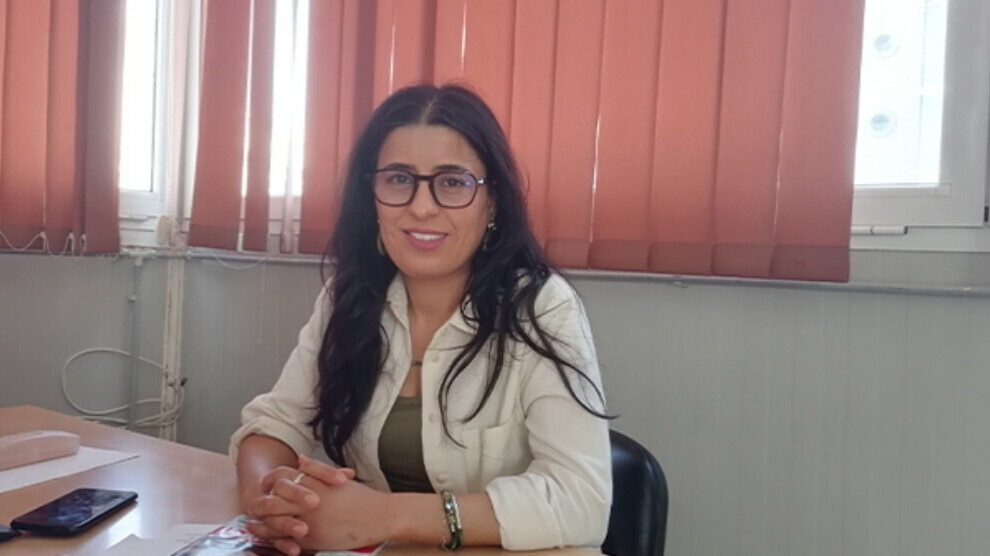
Ikhlas Hamrouni
Tunis – Women in Tunisia face a number of economic, social, and political challenges that reveal, according to observers and researchers, the limitations of public policies in responding to issues of equality and social justice. Between high unemployment rates, precarious work, and weak political representation, calls continue for the adoption of a more comprehensive approach that takes into account women's needs and their diverse social and economic situations.
In this context, academic researcher and economic journalist Soumaya Maamouri offers a critical reading of public policies in Tunisia, considering that the absence of a gender approach explains a significant part of the persistence of inequalities between women and men, and the government's inability to transform the principles of equality into concrete, tangible policies.
She affirms that there is near consensus in Tunisia on the existence of a deep flaw in public policies in general, whether at the level of planning, implementation, or even evaluation. She adds: "This flaw is reflected not only in major economic and social files but also extends to specific issues, foremost among them women's issues, as groups suffering from discrimination or special social conditions need policies that respond to their specificities."
She stresses that adopting a gender approach in public policies requires genuine political will, because the issue is "primarily a rights issue," related to combating discrimination, unequal opportunities, and violence against women. However, she considers that this will is not available today, which explains, in her estimation, the absence of clear, planned public policies that actually adopt women's issues.
She explains that "Tunisia, on the contrary, is witnessing a regression of some of the gains women achieved after the revolution, especially at the political level, where the principle of parity has been abandoned, women's representation in elected bodies has declined, in addition to what she describes as 'political violence' practiced against women, whether because of their opinions or their political and organizational activity."
Absence of an integrated development policy
Soumaya Maamouri believes that one cannot speak today of public policies that adopt a studied, systematic gender approach, because this approach is not based on isolated measures or circumstantial decisions, but on an integrated methodology that begins with monitoring women's reality and needs in different groups and environments, then planning, implementation, and evaluation to continuously correct policies.
In this regard, she says: "Tunisia lacks an integrated development policy that responds to the concerns of women in different regions and groups," considering that this approach is fundamentally based on understanding the diverse needs of social groups and responding to them through comprehensive, interconnected policies.
She considers that the economic field is the area where forms of discrimination against women are most visible, as most indicators of deterioration are linked to the economic situation. She points out that unemployment in Tunisia is structural, but women are the most affected group, as the unemployment rate among women is almost double that among men.
She says: "The gap becomes wider among higher education graduates, where women's unemployment rises significantly compared to men, reflecting the size of the economic gap and the difficulty of women's access to the labor market despite their high levels of academic qualification."
She considers that these indicators also reveal that "precarious work in Tunisia has become feminized," as women are concentrated in the least stable and lowest‑paying sectors, while the gap between women and men widens when it comes to jobs requiring high competence and qualification.
She points out that Tunisian women face increasing difficulty in achieving economic independence, especially in the private sector, where low wages and high living costs prevail. "Some women find themselves forced to choose between work and childcare, due to the high cost of nurseries and kindergartens compared to wages, which pushes many to stay at home instead of joining the labor market."
The problem does not stop at high costs; it also extends to a shortage of nurseries and kindergartens, especially in major industrial areas, whereas these services should be available near workplaces, and private institutions should contribute to providing them, as is the case in several international experiences.
A gender reading
Soumaya Maamouri explains that adopting a gender approach in public policies, including financial policies, is still not activated as required, considering that the finance laws specifically for 2026 and 2025 did not bring about a substantial transformation toward integrating women's issues into public policies, as a clear, systematic approach based on integrating gender into financial planning has not been adopted.
She adds: "What is observed is the continued handling of women's issues through partial or sectoral measures, without including them in a comprehensive, integrated vision, even though financial policies were supposed to be a fundamental tool for consolidating gender equality within public policies."
She points out that the absence of any supportive measures for women in the 2026 Finance Law confirms that women's issues are not a priority, and that the gender approach is absent from planning, monitoring, implementation, and evaluation. This absence prevents taking into account the differences between rural and urban women, between different sectors, and their needs related to health, education, and social protection.
A Higher Council for Equality
To give women greater importance in future public policies, Soumaya Maamouri calls for the creation of a Higher Council for Equality with financial and administrative independence, whose task would be to monitor and evaluate public policies from a gender equality perspective. She considers that the existence of such an institution would give women's issues a central place within the government instead of keeping them scattered across sectors.
In conclusion, she affirmed that achieving economic and social equality also requires reopening the debate on equality in inheritance, as an essential step toward achieving economic justice for Tunisian women.