
Tunisian activists call for women's empowerment and changing mentalities to combat violence and enhance their safety
Amid escalating violations against women in the Middle East and North Africa, two Tunisian rights activists say laws alone aren't enough, urging mentality change and economic empowerment for real protection and safety.
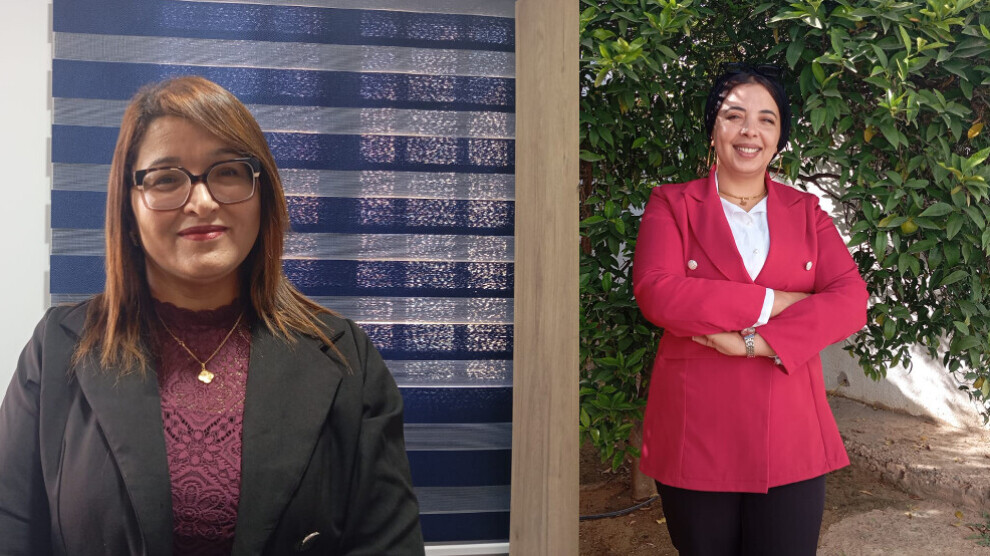
IKHLAS AL-HAMROUNI
TUNISIA— Forms of violence practiced against women continue in the Middle East and North Africa region despite the multiplicity of initiatives and legislation aimed at reducing it, as women still face assaults within the family, exploitation at work, and economic, social, and political discrimination, in addition to new forms of digital and electronic violence. Faced with this reality, calls are escalating to move beyond the stage of condemnation and preoccupation with diagnosing the phenomenon toward an actual and comprehensive resistance that guarantees women their right to a safe and dignified life.
In this context, two Tunisian rights activists affirm that confronting violence against women no longer tolerates being content with slogans or relying on the existence of laws, but requires changing mentalities, enhancing social protection, and empowering women economically, alongside expanding circles of feminist and societal solidarity, so that women can confront violence and wrest their right to safety at home, work, and in public space.
Resisting violence begins with confronting its causes
Rights and feminist activist Hayat Al-Qadri says that women in the Middle East and North Africa are subjected to multiple forms of violence, most notably spousal, domestic, and economic violence, which spreads particularly in rural areas, in addition to political violence manifested in women's exclusion.
She explained that these violations also include moral, material, and verbal violence, alongside new forms of digital and electronic violence, pointing out that domestic and family violence, especially physical, remains among the most widespread forms of violence in the region.
She added that manifestations of violence differ from one country to another, citing the spread of forced marriage and female genital mutilation in some countries, alongside sexual violence, repeated assaults, blackmail, and gender-based hate speech in Tunisia.
She indicated that the continuation of these forms of violence is also linked to a social structure that entrenches the dominance of patriarchal society and imposes on women living patterns that push them to waive their rights, despite bearing great responsibilities within the family.
Manifestations of violence are not limited to the family and social sphere but extend to workplaces, especially the agricultural sector, where Hayat Al-Qadri spoke about the exploitation of women, pointing out that women workers in the agricultural sector in Tunisia and Morocco face similar violations and problems, including the absence of safe transportation, weak social and health coverage, and the absence of adequate social protection guarantees.
She stressed that violence against women in several countries is not a personal matter or an individual problem concerning a particular woman, but is a societal phenomenon affecting the family, children, and society as a whole, affirming that its danger lies in being a flagrant violation of human rights and a direct assault on women's right to life.
From this standpoint, Hayat Al-Qadri called for moving from slogans and discourses condemning violence to actual and tangible measures, beginning with prevention, awareness, and raising new generations on a culture of anti-violence, and educating children to respect women and human rights in general, stressing the need for women's economic empowerment, especially in fragile situations, through training them and supporting their own projects to achieve self-sufficiency and confront dependency.
Women are a force capable of making change
For her part, rights activist Nisreen Ayouni shed light on the gap between the existence of laws and ensuring actual protection for women, wondering about the reasons for the continuation of their suffering in the region despite the existence of legislation against violence.
She said: "Most women have not yet reached actual protection, despite the existence of laws," explaining that the first reason is the continuation of the gap between legal texts and reality, as some countries still need to make more efforts to implement anti-violence strategies, provide the necessary resources and mechanisms that ensure the application of laws and women's access to their right to protection.
She added that the second reason is linked to the economic situation of women victims of violence, as the absence of financial independence is negatively reflected in a woman's ability to exit the cycle of violence and change her circumstances, which makes economic empowerment an essential part of efforts to resist the phenomenon.
She stressed the importance of changing societies' view of violence in the region, stressing that it is "not a family matter or an issue concerning women alone," but a societal responsibility requiring the engagement of individuals, institutions, and society, each according to their specialization and role, in order to provide protection.
She also called for getting rid of stereotypes associated with women and men, especially those that present women as weak beings who can be subjected by violence and pressure to men's desires, stressing the need to combat negative masculinity in Eastern societies, from children to adults.
Despite the challenges that women still face, Nisreen Ayouni expressed her confidence in women's ability to make change and defend their rights, based on the growing awareness and feminist and women's movements witnessed in the region, alongside the increasing complaints submitted to security and judicial authorities.
Regarding the most prominent strengths that women possess to confront violence and wrest their right to safety, she indicated: "What I have touched through my dealings with victims of violence is their great ability to transform suffering into strength, and their belief in the necessity of changing their circumstances in order to reach a safe life, in addition to their ability to build solidarity bonds and form an effective collective force that helps them demand their rights and exit the cycle of violence."
Between women's will to change and the responsibility of institutions and society, the bet remains on transforming the struggle for rights into a daily reality in which women enjoy safety, dignity, and freedom.