
The Roadmap to Gaza Reveals the Need for a Women's Partnership in Peacemaking
The Gaza roadmap’s success hinges on binding implementation, international guarantees,and comprehensive national participation,especially women’s representation in decision-making.
NAGHAM JAJAN
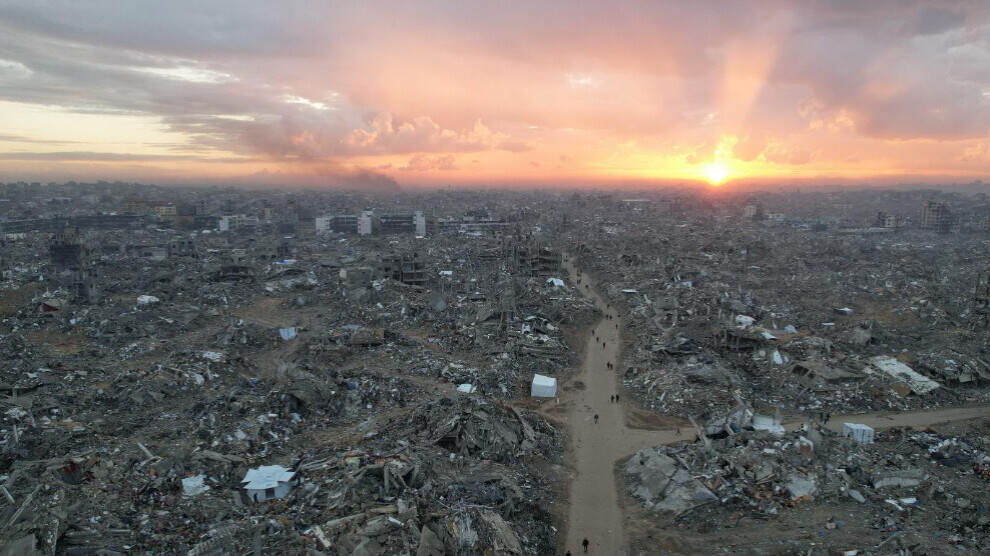
Gaza — Understandings regarding the Gaza Strip are no longer measured by the written clauses they contain, but by their ability to withstand the complexities of political and field realities. After a series of agreements that collapsed at the first test of implementation, talk has resumed about a "roadmap" that links a ceasefire, withdrawal, the entry of humanitarian aid, security arrangements, and eventually the management of the transitional phase and reconstruction.
Despite what this formula contains in terms of an attempt to move from temporary solutions to a more comprehensive approach, its success remains contingent upon the availability of genuine international guarantees, effective monitoring mechanisms, and political will capable of overcoming a long legacy of mistrust between the parties.
The Roadmap's Success Depends on Implementation and International Guarantees
Political analyst Tamara Al-Haddad believes that the proposed roadmap represents an attempt to move from a temporary ceasefire to a more comprehensive settlement, as it combines humanitarian, security, and political dimensions within a single framework. However, previous experiences have proven that the problem was never in the formulation of agreements, but in how they are implemented and ensuring compliance with them.
She says: "The roadmap represents an attempt to move from a temporary ceasefire to a more comprehensive settlement, because it links humanitarian, security, and political aspects. However, all previous experiences confirm that the problem was not in the formulation of agreements, but in implementation mechanisms and binding international guarantees."
She adds that the absence of clear international oversight, the lack of a binding timeline, and the agreement's lack of tools to address potential violations may lead it to face the same fate as previous understandings—especially given the continued disagreements over Gaza's future and the lack of mutual trust between the parties.
She explains that linking the files of ceasefire, withdrawal, aid entry, and security arrangements carries both advantages and challenges simultaneously. It prevents selective implementation of commitments and forces all parties to proceed within an integrated framework, but at the same time makes the agreement more sensitive to any setback.
She points out: "This interconnectedness prevents selective implementation of clauses and binds everyone to an integrated path, but at the same time makes the agreement more fragile, because failure in one clause could lead to the disruption of the rest. Therefore, the success of this model requires phased management, a clear timeline, and an international guarantor capable of intervening in the event of any dispute."
She notes that the upcoming phase will not be governed only by the cessation of military operations, but by the extent of the parties' ability to maintain the sequence of implementation without disruption, as any failure in one stage could reflect on the entire political and humanitarian path.
Regarding the management of the Gaza Strip during the transitional phase, she believes that the provision for forming a national committee to manage the sector is an important step, but it faces a wide range of political, security, and administrative challenges—beginning with the need to achieve Palestinian consensus that grants this committee legitimacy, and ending with its ability to manage an extremely complex reality.
She affirms: "The first challenge is achieving internal Palestinian consensus that grants the committee political and popular legitimacy. The second challenge relates to the security situation, arms management, and the nature of relations with different factions, in addition to the economic and administrative challenges resulting from the scale of destruction and the need to restart institutions and basic services."
She adds that the committee's success will depend not only on its formation, but on the volume of Palestinian, regional, and international support it receives, in addition to the provision of necessary financial resources, and not allowing it to become a new arena for political tensions that could disrupt its core functions.
Alongside political and security discussions, the issue of women's participation emerges as one of the most absent issues from the decision-making table, despite women being among the most affected groups during the war, bearing double social, economic, and psychological burdens, in addition to the role they played in protecting their families and maintaining social cohesion under exceptional circumstances.
Tamara Al-Haddad points out that the limited participation of women reflects the continued dominance of traditional security and political approaches at the expense of involving different societal groups in shaping the sector's future. She says: "Women were not merely victims of war; they played a pivotal role in maintaining social cohesion and managing family affairs during the crisis. Yet their presence in decision-making positions has remained limited, revealing the need to develop the Palestinian political process to become more inclusive and representative, in line with international standards on women, peace, and security."
She explains that "the absence of women from decision-making centers may lead to the neglect of many social and humanitarian priorities, such as family protection, child support, mental health, women's economic empowerment, and care for the most vulnerable groups. Transitional justice will also be less comprehensive if it does not include the documentation and redress of violations suffered by women."
She believes that ensuring women's genuine participation requires practical measures that go beyond slogans—starting with the representation of women within the Gaza Strip Management Committee and in negotiation and reconstruction committees at an influential ratio, not merely through symbolic presence that does not reflect on decision-making.
She emphasizes the necessity of involving feminist institutions and civil society organizations in policy formulation, providing programs that support women's leadership, and linking international funding to inclusive governance standards and balanced participation. Women's participation is not just an equality issue, but an essential element for strengthening stability and building more sustainable peace. International experiences have proven that agreements based on broad societal participation are more capable of resilience and implementation.
Women's Participation Is a Fundamental Pillar for Gaza's Recovery and Reconstruction
Regarding the future of the Gaza Strip after the war, feminist activist Hanan Siyam affirms that any recovery or reconstruction process cannot be comprehensive unless women are placed at the heart of the planning and implementation phases—as they are closest to the details of families' daily lives and most capable of identifying the social and humanitarian needs left by the war.
She believes that ignoring women's participation in formulating plans for the next phase represents a fundamental flaw in any path toward rebuilding society. "The parties that have dealt most deeply and closely with women are feminist institutions and women's leaderships, because they are most knowledgeable about women's needs and the details of their reality. Therefore, involving women in the recovery and reconstruction planning process is not an additional option, but a fundamental necessity for achieving genuine and sustainable recovery."
She criticizes the continued operation of the technocratic government within the Gaza Strip without actual women's presence in the phases of planning and decision-making, considering that this exclusion represents a setback for the concept of societal participation and threatens to produce plans that do not reflect the actual needs of half of society.
She adds: "The continued operation of any body to manage the next phase without involving women in planning is a catastrophe, because women must be partners in preparing recovery and reconstruction plans, not merely beneficiaries of these plans after they are formulated. Their absence means the absence of an essential part of the knowledge and experience related to society's needs."
She explains: "When we talk about reconstruction, we are not only talking about rebuilding stone and concrete; we are talking about rebuilding people's lives—about psychological recovery for families, supporting the economic and social situation, and addressing the needs of all sectors affected by the war."
She notes that women bear increasing roles and responsibilities during crises, especially in female-headed households, where they have become in many cases responsible for providing basic needs, child care, and managing family affairs under harsh economic and humanitarian conditions.
She affirms that women's presence within planning and decision-making committees will ensure that future policies are more responsive to reality and reflect the needs of the most vulnerable groups, rather than adopting general approaches that may overlook the social and humanitarian differences among affected groups.
Hanan Siyam concludes her remarks by emphasizing that women's participation must not begin after decisions are made, but from the earliest stages of planning, and should extend to implementation and follow-up—because building Gaza's future requires the participation of all components of society.
Between the stakes of success and fears of failure, the roadmap appears as a new test of the parties' ability to translate political commitments into tangible reality. However, previous experiences suggest that the sustainability of any agreement will not be achieved through texts alone, but through a clear implementation system, binding international guarantees, and comprehensive Palestinian participation that places people at the forefront of priorities and makes rebuilding society a goal no less important than reconstructing what war has destroyed.