
The Continued Killing of Women in the Kurdistan Region Raises Questions About the Effectiveness of Laws
Tanya Tahir, law professor at University of Sulaymaniyah, affirms circulating figures on rising femicide and disappearances of women in Kurdistan Region reveal a deep social and political crisis beyond laws and institutions.
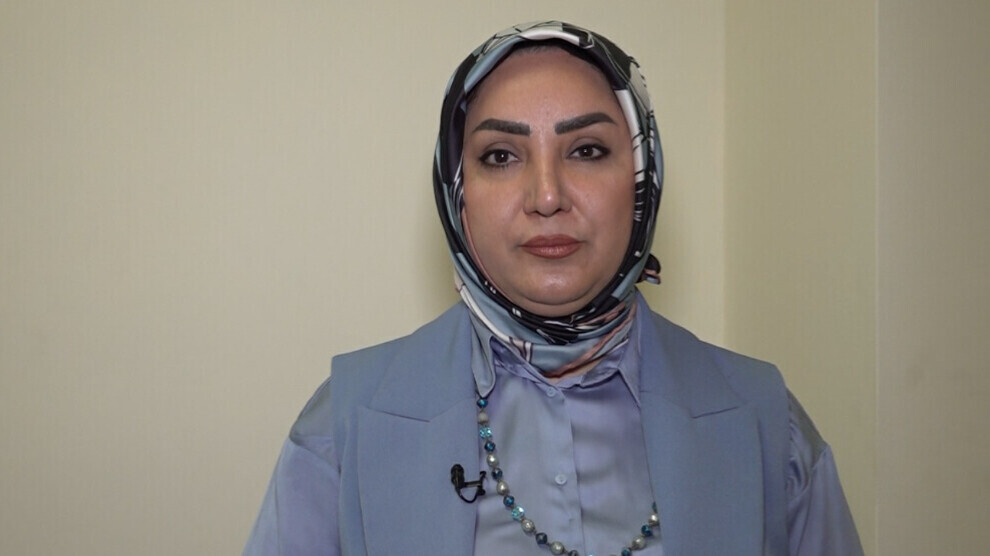
HELEN AHMAD
Sulaymaniyah_Despite the existence of institutions and laws specifically addressing violence against women,statistics from the first months of this year in the Kurdistan Region show that the phenomenon of femicide and disappearances of women continues.
According to compiled data, 10 women were killed and 12 women went missing under suspicious circumstances between January and the end of April this year. In April alone, three killings and two disappearances were recorded, while women’s rights activists confirm that many cases are not reported or adequately investigated due to family and social pressures.
According to our agency’s statistics on crimes committed against women in the Kurdistan Region,the crimes were distributed follows:
During January, eight women disappeared or were killed under suspicious circumstances.
February was more detailed: on the first day of February, a woman between the ages of 18 and 20 was transferred to Ranya Emergency Hospital, but according tio doctors, she had already died before arriving at the hospital, as a bullet wound was found in her head.
Only one day later, in the Darbandikhan district of Sulaymaniyah province, a 35-year-old young woman died after falling under suspicious circumstances into the Sirwan River. The third day of the month did not pass peacefully: in the village of Tasluja, in the Sayyid Sadiq district of Sulaymaniyah province, a young woman was shot dead by her brother.
On February 26, in a mysterious incident in the Khabat district, a woman fell from an old bridge and died of her injuries, while eyewitnesses reported a quarrel before the incident between the woman and a person inside a taxi.
March witnessed no crimes, but at the beginning of April, a 35‑year‑old woman named "R.J." was shot dead near her father's home in a residential complex in the town of Shorsh, by two brothers. The following day, in the Sayyid Sadiq district, a woman was shot dead and another woman was injured. On the same day, a woman's body was found in the Zîyi Kure area within the boundaries of Khabat district.
About two weeks later, a woman from the Sinkesar region named Hazan Rasul died after a stove caught fire inside her home, an incident whose true circumstances remain unclear to this day. On April 20, a 30‑year‑old woman died under suspicious circumstances in Erbil. At the end of the month, another woman's body was found in the village of Serbêr Berda.
In May, specifically on May 19, three bodies of women who had died brutally were found in Kirkuk. On May 23, a 13‑year‑old girl in the Sayyid Sadiq district died after being shot in the head under suspicious circumstances, succumbing to her injuries last night.
While these figures are presented as official or recorded statistics, the real number is likely higher, as some cases are recorded as suicide, unclear accident, or suspicious death without full disclosure of the true causes to the public.
Legal experts confirm that evidence collection and witness protection are not carried out adequately in many cases, leading to some cases being closed without clear results. Moreover, the Kurdistan Region adopted the Law on Combating Domestic Violence in 2011, yet activists affirm that the problem is not limited to the legal aspect alone; social, economic, and cultural factors still play a major role in the continuation of violence against women.
The scarcity of shelters, weak psychological and legal support for victims, and delays in processing certain cases are also among the most prominent obstacles. Compiled statistics indicate that 51 women were killed or went missing under suspicious circumstances last year in various cities and areas of the Kurdistan Region.
"The Revival of Tribal and Clan Decisions in the Region Has Led to an Increase in Femicide"
Commenting on the issue, Tanya Tahir, professor of law at the Faculty of Human Sciences at the University of Sulaymaniyah, stated that the women of the Kurdistan Region, thanks to their efforts and struggle, have managed to some extent to achieve successes in reaching their goals, but the figures circulating through the media cause psychological and intellectual shock in society and reveal a large gap at the intellectual, social, and political levels in the region.
She added that the prevailing political and social culture has become a reason for the continued killing of women, as these crimes are justified under the banner of honor or family protection, which makes it necessary for relevant institutions, laws, and political bodies to take a serious stance to improve the situation of women and reduce killings committed under the pretext of honor.
She stressed the need for government institutions, which possess full administrative authority in the region, to take action, affirming that dealing with this phenomenon requires a firm and serious stance.
She also pointed to legal problems, particularly in the Iraqi Penal Code No. 111 of 1969, especially Article 409, which deals with so‑called honor crimes or marital adultery, where sentences are often reduced or legal justifications are granted that lead to a reduction in punishment, sometimes not exceeding three years, which weakens justice and distances perpetrators from true accountability.
Regarding the legal aspect, she noted that some legal provisions are sometimes used to reduce the punishment for perpetrators or to find legal loopholes that lead to a reduction in the length of the sentence, which in some cases results in criminals being kept from true punishment, as the penalty in some provisions does not exceed three years.
She added that in the Kurdistan Region, Law No. 5 was abolished in 2002, which had allowed impunity for femicide under the pretext of honor under Iraqi law. The region also has a domestic violence law. Nevertheless, she believes that these laws, although good for their time and containing many positive provisions that have benefited the family, still face challenges in actual implementation.
She also pointed out that there is a political trend to re‑emphasize the role of tribes and clans, considering that this trend has led to an increase in their influence in society, where women are sometimes treated as a tool or means to protect family "honor" and "dignity," while human dignity and rights are linked to the individual themselves and are exercised through their freedom and rights.
She affirmed that the revival of the tribal structure represents a major problem produced by existing policies in the region, and it also creates problems even in the functioning of courts. Political systems throughout history have not succeeded in eliminating the patriarchal structure, as women have often been treated as a tool within this system, which has restricted their participation in various areas of life and weakened their ability to demand their rights due to tribal and male dominance.
In the context of her remarks about the media, she said that a large part of the media falls under the influence of parties and political authorities, which sometimes leads to the distortion of customs and traditions. Some media outlets present women in a commercial manner within a capitalist system, or present them in a misleading way that undermines their status. She stressed the need for professional media standards and controls, and for enhancing its awareness‑raising role instead of spreading distortion and errors within society.
At the conclusion of her remarks, Tanya Tahir, professor of law at the Faculty of Human Sciences at the University of Sulaymaniyah, affirmed the necessity for relevant authorities and women's rights activists to take serious stances toward these issues, and for the governing authorities to assume their responsibilities if they wish to build a free and prosperous society. She stressed that this cannot be achieved while women's rights are marginalized, especially in light of the continuation of killings under the pretext of "honor" and the growing role of tribes in justifying them, unless serious work is undertaken to guarantee the freedom and rights of women.