
Human right lawyer: The new constitution must guarantee women’s rights and enshrine genuine equality
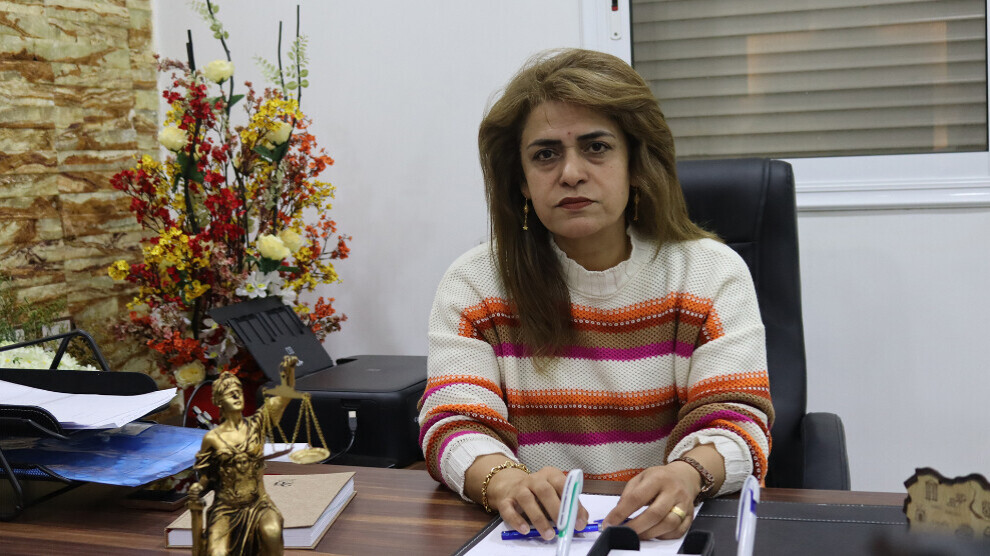
Lawyer Shakria Yousef affirmed that Syria's transitional phase requires constitutional texts ensuring women's participation in decision-making and reformulating personal status laws with justice and equality.
Asma Muhammad
Qamishlo _ During its transitional phase, Syria is witnessing extensive discussions about the future of the constitutional and legal system, amid growing demands for drafting a new constitution that does not merely rely on general slogans but establishes a fair legal stage that guarantees the fundamental rights of all citizens, foremost among them women's rights as essential partners in building society and decision-making.
According to lawyer Shakria Yousef, the constitutional declaration is by its nature a temporary phase aimed at organizing the transitional period until a permanent constitution is reached. She stressed that any texts related to women's rights must be clear, binding, and not open to interpretation or fragmentation, so that rights do not remain mere general principles that are not applicable.
She explained that talking about equality between men and women in constitutional texts is not sufficient unless it is translated into detailed laws that guarantee women's personal rights, especially in issues of custody, guardianship, and family decision-making. She considered that the current or general legal framework does not rise to the level of effective protection of these rights.
She pointed out that Syria, emerging from long years of crisis and the accompanying social changes, damage to the social fabric, and increased burdens on women, needs more robust and clearer constitutional texts, so that equality does not remain a mere rhetorical phrase but becomes a binding legal obligation.
She mentioned that among the most prominent issues that the constitution must address is the question of "women's quota." She explained that women's representation in decision-making positions remains low in some institutions, in some cases not exceeding 7%, while the minimum required, according to human rights standards and social reality, should not be less than 30% to ensure genuine and effective participation of women in political life. Previous experiences have proven women's ability to achieve higher percentages of representation and participation, making the quota a necessary tool in post-conflict societies to ensure balance in decision-making positions, not just a formal option.
She added that enhancing women's presence in political institutions is not only linked to formal equality but is an essential step towards building a balanced democratic society based on genuine partnership in decision-making. She affirmed that this issue must be presented as a comprehensive national struggle in which women from all Syrian regions participate, not from just one region.
Personal status laws must consider diversity
Regarding personal status laws, Shakria Yousef indicated that they directly and sensitively affect women's daily lives, which calls for reconsidering them within the framework of modern civil law that considers the social, religious, and cultural diversity in Syria. She noted that issues such as polygamy need strict and clear legal regulation, either by requiring explicit consent or restricting this practice to specific and necessary exceptional cases, citing experiences that adopted stricter legal approaches on this issue.
She also considered that arbitrary divorce represents one of the serious legal problems, because in some cases it occurs without the woman's knowledge, notification, or opinion, which constitutes a direct violation of the principle of justice and human rights. She affirmed that any genuine equality cannot be achieved in the presence of texts that allow a clear imbalance in the balance of rights and duties between the two parties. She stressed the need to reorganize this issue in a way that ensures justice for both parties and preserves women's dignity and legal rights.
In a related context, she emphasized the importance of addressing guardianship and custody issues in a way that ensures the best interests of the child first and foremost, while enhancing the mother's role in family decisions due to her role in childcare and upbringing, in addition to the need to address sensitive issues and prevent children from being deprived of their legal rights due to family disputes, social circumstances, or legal conflicts.
Criminalizing all forms of violence without any exceptions
Shakria Yousef pointed to serious gaps in some penal laws related to violence, indicating the need to criminalize all forms of violence without any exceptions that might lead to reduced or dropped penalties under any pretext. She considered that any text allowing the perpetrator to escape punishment contradicts the concept of justice and the protection of women and humans alike, and weakens society's confidence in the law and institutions.
She affirmed that building a new Syria requires a comprehensive social contract that guarantees the rights of all components without exception, and establishes the principle of equal citizenship before the law, so that everyone is equal in rights and duties away from any discrimination based on religion, nationality, or social affiliation. She stressed that this contract must clearly enshrine the principle of the rule of law and the separation of powers, ensuring that no entity interferes in the work of other authorities, especially in legislative and judicial matters.
Regarding implementation mechanisms, she affirmed that the existence of laws alone is not sufficient unless accompanied by effective and binding implementation mechanisms that ensure the application of justice on the ground. She pointed to the importance of having independent and capable judicial and executive bodies that can hold perpetrators of violations accountable without exception. She stressed the need to adopt a clear transitional justice path that ensures accountability for all violations that occurred during the years of conflict, which enhances trust in the law and institutions and restores dignity to victims.
Lawyer Shakria Yousef concluded her speech by affirming that any legal system, no matter how developed, remains incomplete unless it is applied fairly and effectively on the ground, in a way that ensures the protection of both human rights and women's rights, and establishes a society based on justice, equality, and the rule of law.