
Run Over by Cars,Physical and Digital Viiolece…Sudanese Women Journalists Face Targeting
Sudanese women journalists face arrest,enforced disappearance, and physical/digital vioilence amid war.The Journalists Syndicate documents violations,seeking protection,accouuntability,and justice fort them.
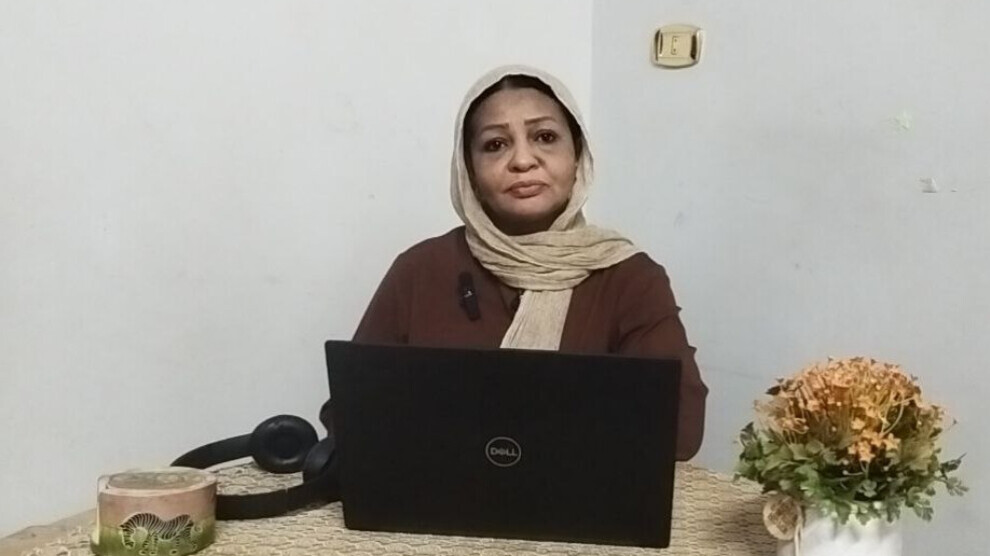
MERVAT ABDEL QADER
Sudan — Amid the ongoing conflict in Sudan, dozens of tragic stories have been told, while hundreds more remain untold. Behind every story and piece of news, there is a woman living the details of tragedy, and another trying to convey them to the world despite grave risks, becoming herself part of the story.
Violations to Kill Truths
Since the outbreak of the conflict in mid-April 2023, journalists have become a clear target for obscuring facts and preventing their reach to the global public opinion. Women journalists in particular have been subjected to various forms of violations to silence their voices and marginalize them. The incident of the killing of journalist Halima Idris, who was run over and killed by the Rapid Support Forces while covering events, stands as a stark example of this targeting, in addition to the arrest of a number of women journalists on charges of "collaborating with the other side," followed by their suspension from work and revocation of their licenses.
A joint report by the Sudanese Journalists Syndicate and the Committee to Protect Journalists documented widespread violations, including killing, arbitrary arrest, enforced disappearance, torture, and sexual violence against women journalists, in addition to information blackouts and the criminalization of journalistic work.
In March of last year, the Rapid Support Forces arrested a number of women journalists for their participation in a workshop organized by women's organizations on women's rights in the city of Nyala, with three of them still in detention to date. Despite the Journalists Syndicate's repeated condemnation of these arrests and its demands for their immediate release, detention continues without formal charges or appearance before the judiciary—a flagrant violation of justice principles and human rights.
The Role of the Journalists Syndicate in Protecting Women Journalists
In an exclusive interview with our agency, Iman Fadl Al-Sayed, Secretary of Freedoms at the Sudanese Journalists Syndicate, revealed the scale of violations committed against women journalists and what the Syndicate has documented in its protective role.
She explained that journalists in general have been subjected to systematic targeting by both sides of the conflict, forcing them to conceal their identities while moving in search of safety for themselves and their families, noting that a large number have lost their lives inside detention centers immediately upon identification at checkpoints.
Regarding violations against women journalists, she affirmed that they have been subjected to grave violations including assassinations, enforced disappearances, and long-term arrests, in addition to short-term arrests and detentions.
She added that detention conditions are extremely poor and lack the minimum health and environmental standards, with the spread of epidemics and diseases, compounding the suffering of female detainees.
Iman Fadl Al-Sayed noted that since the outbreak of the conflict, the Syndicate has begun monitoring and documenting violations by both conflict parties, issuing detailed reports confirming at least 680 cases of violations, including assassinations, detention, enforced disappearance, threats, in addition to cross-border violations affecting refugee journalists in neighboring countries through restrictions and raids on media platforms.
She spoke of a journalist who was assaulted while attempting to enter her home, where her phone and tablet were seized, in addition to threats and blackmail, as well as a broken hand. The threats were not limited to the journalist alone; personal photos of her and her children, stored on her phone, were used in blackmail and threats, and the threats extended to other individuals whose data and information were on her phone.
Regarding digital violence, she affirmed that there are many digital threats used to pressure women journalists and create self-censorship among them.
Sexual Violations and Physical Violence
Regarding sexual violations, she explained that a number of women journalists have been subjected to harassment and sexual assault, with the Syndicate documenting some of these cases. However, the true scale of these violations is far greater than what has been documented, due to victims' reluctance to disclose for fear of social stigma or security repercussions. Some media outlets have limited their coverage to mentioning these incidents without naming names, to protect the safety of the journalists.
Regarding Sudan's Cybercrime Law, she stated that the law is now being used to pressure journalists, considering that authorities treat it as a "drawn sword" against those working in journalism. She explained that instead of employing the law in cases of defamation and other digital space-related crimes, it is being exploited, according to her, to restrict press freedom and silence voices, through filing complaints related to publication, particularly against women journalists.
She added that journalist Hajar Suleiman was recently arrested under this law after a number of complaints were filed against her, alongside a raid on her home and her arrest. She considered that the manner of applying the law and the procedures journalists are subjected to under it are harsh, revealing clear and direct targeting of journalists.
Despite the absence of a legislative body and parliament, amendments have been made to this law recently, adding a one-year prison sentence for publication-related cases. The first to be tried under this law was journalist Rashan Oshi, who was sentenced to one year in prison in a publication case.
Regarding the extent to which the Syndicate's documentation contributes to achieving justice, accountability, and greater press freedoms, Iman Fadl Al-Sayed stated that documenting evidence is one of the fundamental elements for achieving justice and ensuring no impunity for crimes and violations committed against journalists.
She explained that the Syndicate ensures precise documentation of violations, including the location, time, and circumstances of the violation, along with details of the case and the journalist subjected to the violation, considering that this information can form important evidence when seeking justice and accountability.
Iman Fadl Al-Sayed affirmed that these documents gain particular importance at the international level, as international bodies and organizations rely on them in preparing their reports on human rights in Sudan, including freedom of expression and press freedoms. She added that the Syndicate's reports on violations against journalists contribute to monitoring the reality of press freedom, freedom of opinion, and publication in Sudan, and help identify press freedom indicators and measure the extent to which they are respected.