
Polygamy… A Losing Attempt in the Face of Tunisian Women’s Will
Tunisian women activists reject proposals to legalize polygamy, viewing them as threats to women’s rights and family stability, and stressing that any reinstatement attempt will face strong resistance nationwide opposition.
Ikhlas Hamrouni
Tunis — A proposal to legalize polygamy has sparked widespread controversy among women’s rights activists in Tunisia, at a time when Tunisians are grappling with multiple crises, including unemployment, poverty, and social violence.
Women’s rights activists have confirmed their total rejection of the polygamy bill proposed by a member of the Tunisian parliament about a month ago. They noted that Tunisian society moved beyond this issue long ago, as it poses a serious threat to women’s gains and family stability in the country. They emphasized that real priorities lie in protecting the family, women, and children, and in developing laws that guarantee the fundamental rights of Tunisian society.
A Losing Attempt
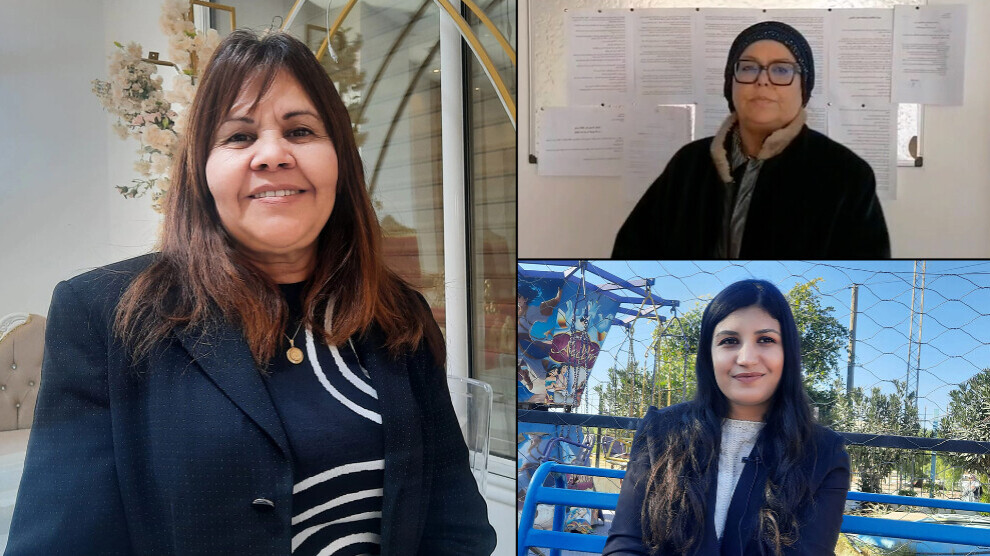
In this context, Hayet Alimi, a member of the founding body of the association Tigar for Citizenship and Parity and an activist in the Tunisian League for Human Rights, said that the proposal of a polygamy law came as a surprise to her, as Tunisian society today is immunized against such issues and has long since moved past them.
She explained: “We are creating a problem out of nothing. The Personal Status Code rejected this issue decades ago. Therefore, this proposal is a losing battle, even if it comes from certain parliamentary parties that do not represent Tunisian society. Reactions to the MP’s proposal were largely rejecting, especially from women’s rights activists who are engaged in real struggles that require advocacy and defense. It is important to stress that this issue has already been practically resolved.”
She stressed that it is the duty of women’s rights activists to remain alert to the danger of such regressive discourse, which is hostile to human and women’s rights and seeks to create a non-existent problem that does not reflect the real concerns of Tunisian society. “The problems facing Tunisians today are clear: unemployment, poverty, the spread of violence and crime. We are in 2025, and it is unacceptable to return to polygamy when we should be working to guarantee the rights of women and children and to develop and strengthen the Personal Status Code.”
“No Going Back”
Hayet Alimi affirmed: “We will confront any attempt in this direction using all legal and societal means. When values become deeply rooted in society’s awareness and culture, there is no longer any fear of passing regressive laws of this kind.”
She explained that protests and marches were organized and communication took place with the Ministry of Women, noting that civil society clearly stood against this proposal. “We consider it an attempt to distract public opinion from its real issues,” she said, stressing the need to address the issue cautiously and to focus on women’s labor rights, combating violence against women, and protecting children’s rights, rather than reopening debates that society has already surpassed.
In concluding her remarks, she called for laying the necessary groundwork to activate Law No. 58 on eliminating violence against women, to implement the CEDAW Convention, and to further develop the Personal Status Code, which still contains some patriarchal provisions. “There is no room for going backward,” she said.
“Sharia Does Not Endorse the Concept of Polygamy”
For her part, writer and specialist in Qur’anic sciences and interpretation Mounjia Al-Sawayhi explained that the issue of polygamy needs to be reconsidered in light of current social and economic conditions. If those calling for polygamy rely on religious justification, she said, then Islamic law in its essence and objectives does not endorse this prevailing understanding of polygamy.
She added that polygamy is often used to justify personal desires in the name of religion, pointing out that Tunisia has one of the most advanced personal status laws in the Arab world, and that the aim of changing it is to strip women of legal protection.
The Need for Policies That Address Family Conditions
Meanwhile, women’s rights activist Rania Nasri confirmed that the polygamy proposal was extremely strange. “In Tunisia, both before and after the revolution, and since independence, polygamy has been prohibited to protect women’s dignity. Today, families are facing severe economic and social crises,” she said.
She stressed that Tunisian children already suffer from psychological and social pressures, and that any proposal threatening their psychological and social balance is entirely unacceptable. “We need policies that address family conditions, protect women, and preserve children’s dignity—not proposals that increase the burden on everyone,” she said, considering civil society the true guardian of women’s rights and citizenship. She concluded that any proposal that undermines these achievements will be met with firm rejection.