
Moroccan Women... From Resisting Colonialism to Struggling for Citizenship
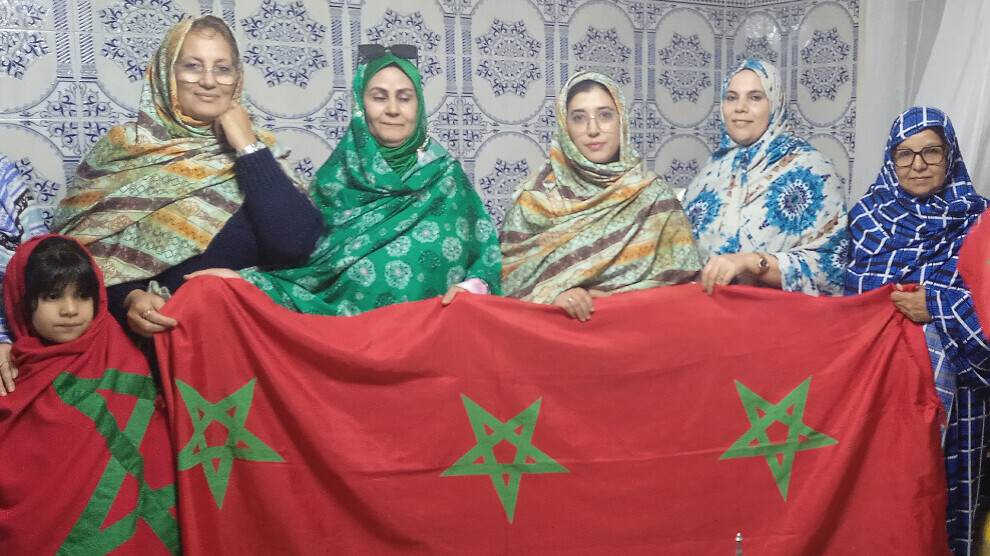
Since the beginnings of French and Spanish colonization until today, Moroccan women have not merely been witnesses to history, but fundamental actors in shaping it, with a prominent presence in public space and civil initiatives.
Hanane Harrat
Morocco – Moroccan women have played a pivotal role in the struggle against colonialism in various forms to protect their rights and dignity, leading up to modern roles that have made them a symbol of strength and resilience throughout history.
The struggle of Moroccan women for the nation was not a path separate from their struggle for dignity and rights; rather, it has historically intertwined with issues of liberation and building citizenship. From the colonial period through pivotal historical moments and collective and rights-based work today, women have played key roles in defending land and people, despite the marginalization that has affected their presence in official narratives.
Hidden Roles in Resisting Colonialism
During the period of French and Spanish colonization (1912-1956), Moroccan women were not just supporters of the resistance, but essential participants in it. In the Rif region, figures like Lalla Khadija Al-Alawiya and Fatima bint Mubarak emerged, involved in transmitting messages, securing supplies, and protecting resistance fighters (mujahideen).
In the High Atlas, Halima Bouhinda and Lalla Malika undertook pivotal roles in mobilization and relaying news, while Amina Benkharzar from Zerhoun embodied the image of a woman who paid the price for her national commitment through imprisonment and persecution. Alongside these prominent names, dozens of anonymous women emerged who took on tasks of care, shelter, and protecting children under extremely harsh conditions.
This hidden effort, which has often been marginalized in historical narratives, formed the essential foundation for the continuation of the resistance. Today, it is viewed as part of the global feminist debate on the necessity of recognizing the unpaid work undertaken by women in conflict contexts.
From Independence to Building Feminist Citizenship
After independence, women's struggle shifted from confronting colonialism to confronting social and economic exclusion. They engaged in education, social work, and literacy campaigns, especially in rural areas, playing an intermediary role between the government and society. This transformation reflects the transition of Moroccan women from actors in national liberation to actors in building citizenship.
In 1975, thousands of citizens participated in the Green March launched by Morocco to complete the territorial unity of the kingdom and recover the southern provinces. Women's participation in it was not merely engagement in a national event; rather, it constituted a pivotal moment that revealed women's ability to be present in public space and contribute through collective action.
However, a feminist-rights-based reading of this presence raises questions about its limits and outcomes. Despite its powerful symbolism and its inclusion within a unifying national discourse, this participation did not translate into direct political or rights-based gains for women, reflecting the gap between symbolic recognition and actual empowerment.
From Memory to Rights-Based Action
Today, many women find the extension of this history in associative and rights-based work. In this context, the president of the Union of Moroccan Women Association, Khadija Ahlil, says that evoking the memory of women's participation in historical milestones should not remain within the framework of symbolic celebration. Instead, it must be coupled with raising questions of justice and rights, linking national memory to contemporary feminist struggle.
She explained that feminist work today focuses on tangible issues that directly affect women's lives, including combating violence against them, providing shelter, legal guidance, and economic empowerment. She considers these areas to be a modern extension of women's roles in defending human dignity.
Khadija Ahlil views the role of Moroccan women in the Green March as an evocation of a continuous path of struggle: "With every commemoration of the Green March, we evoke the role played by Moroccan women in various national milestones, whether through their participation in marches or through their engagement in defending lands that were under colonization."
A Multifaceted Struggle
For her part, associative activist Dalila Msaad believes that "Moroccan women have been and still are present in all the nation's causes, from the Green March to social and economic initiatives. Their presence is not symbolic but a tangible reality manifested in supporting education, empowering vulnerable groups, and participating in social change."
She explained that this presence includes issues related to women's rights and extends to broader societal issues, such as social justice, sustainable development, and the right to a decent life. She emphasized that the experience of Moroccan women shows that the national struggle cannot be separated from the struggle for rights.
She concluded her remarks by affirming that "women have not only been witnesses to history, but makers of it, whether in the time of resistance or in the present."