
Moroccan Feminist Solidarity... When Women's Suffering Becomes a National Cause
In recent years, Moroccan feminist solidarity has extended to support women facing humanitarian crises in distant conflict zones like Syria, Iraq, Sudan, Yemen, and Palestine.
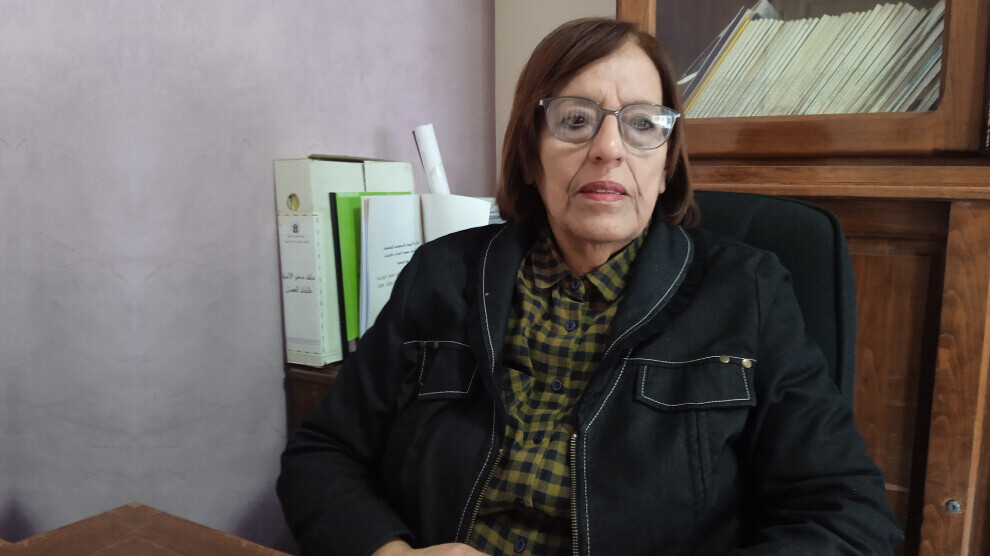
Hanan Hart
Morocco - This openness in solidarity confirms that the Moroccan women's movement views women's rights as a universal cause, as supporting geographically distant women reflects a deeply rooted commitment to justice and equality.
So why do women in Morocco show solidarity with women living thousands of kilometers away, in contexts of war and conflict with whom they have no direct connection?
The question seems simple, but it opens a broader discussion about the nature and limits of feminist solidarity. In recent years, a growing form of legal and symbolic support has emerged in Morocco for women in Syria, Iraq, Sudan, Yemen, Palestine, and other conflict zones, reflecting a shift in understanding feminist struggle as a cross-border issue.
Solidarity is Not Linked to Geography
For human rights activist, lawyer, and former parliamentarian Aicha Lakhmass, the answer lies in the nature of the Moroccan women's experience itself. She affirms that feminist solidarity is not based on spatial proximity but on the similarity of experiences.
She says that women, whether in Morocco or in conflict zones, share multiple forms of vulnerability and violence, even if contexts differ. The feeling for the suffering of others does not require shared borders, stressing that the long struggle of Moroccan women against violence and discrimination "has given them an awareness that makes them realize that what women in conflict zones experience is not a distant issue, but an extension of the daily battle for dignity and justice."
She explained, "We work at the United Nations level, and through multiple networks around the world, including African, Middle Eastern, and Mediterranean networks." This international engagement reflects a conviction that women's issues are interconnected, and that defending rights cannot be confined within national borders.
Women in Conflict Zones Are the Most Affected
Aicha Lakhmass points out that Moroccan solidarity is not limited to women only but includes all peoples living under occupation or dictatorships. However, the focus on women is due to them being the most affected by wars and conflicts. She explains that what is happening in Palestine, Sudan, or Syria cannot be reduced to political equations; it is a daily reality in which women live, losing safety, protection, and basic rights.
She says, "We work through various levels of solidarity, whether through demonstrations and marches or through virtual social media, which has become capable of mobilizing a large audience without enormous effort. Symbolic expressions also have a significant impact; they create reactions and multiple, renewed patterns of organization."
She affirms that the Women's Action Union participates in international networks, holds conferences, and issues joint statements, which contributes to changing the stereotypical image that reduces women to the role of victim only, and enhances societal awareness of the importance of protection and support.
Between the Symbolic and the Practical
For her, solidarity is not just emotional empathy but a legal and political act, stressing that protection during civil wars or conflicts between states is a top priority, pointing out that Palestinian women are at the forefront of victims, in light of what she describes as genocide, where solidarity is manifested through demonstrations, cultural symbols, and community activities.
She believes that popular pressure and international solidarity contribute to exposing violations and supporting paths to justice, especially when laws alone are insufficient to deter violence.
Aicha Lakhmass emphasizes a fundamental principle: that human rights are indivisible, and in her view, one cannot defend women's rights locally while turning a blind eye to grave violations elsewhere. "Solidarity with distant women reflects a universal feminist awareness that rejects selectivity in empathy and believes that dignity is one."
Challenges and Continued Commitment
Regarding the challenges that Moroccan activists might face in this path, she affirms that nothing prevents them from showing solidarity with women in various conflict zones. She acknowledges that direct support can sometimes be difficult, but work through regional and international organizations, and influential women figures, continues.
She links this commitment to the local context as well, noting that more than 50% of women in Morocco experience forms of violence, which necessitates strengthening laws, supporting justice, and empowering human rights organizations. "Thus, external solidarity becomes an extension of the internal battle against violence and discrimination, not an alternative to it."
Law Alone is Not Enough
Aicha Lakhmass explains that national and international laws play an essential role in deterring violations, but they are insufficient if not coupled with effective justice. "Issuing laws alone is not enough; there must be justice that moves to investigate, hold accountable, and implement penalties. Solidarity, pressure, and community mobilization play a crucial role in exposing violations."
She believes that issues of violence against women, especially in conflict contexts, require innovative and sustainable forms of follow-up to ensure impunity does not prevail, pointing out that Moroccan women have participated as UN envoys in conflict zones such as Darfur, and their efforts received international praise, reflecting an active Moroccan presence in peace and justice issues.
She affirms that the goal is to build real women's power at national, regional, and international levels, at a time when women are leading campaigns and demonstrations in Europe, America, and Latin America in support of women in Palestine, Sudan, Libya, and elsewhere.
The human rights activist, lawyer, and former parliamentarian Aicha Lakhmass concludes her remarks by affirming that the solidarity of Moroccan women with women in conflict zones is not a fleeting emotional position but an expression of accumulated awareness and a long struggle experience.