
Media and Women’s Issues… Between Inciting Discourse and Breaking Stereotypes
As media increasingly shapes public awareness, debates grow over its discourse on women’s issues, ranging from narratives that justify violence to those highlighting rights and challenges
Ikhlas Al-Hamrouni
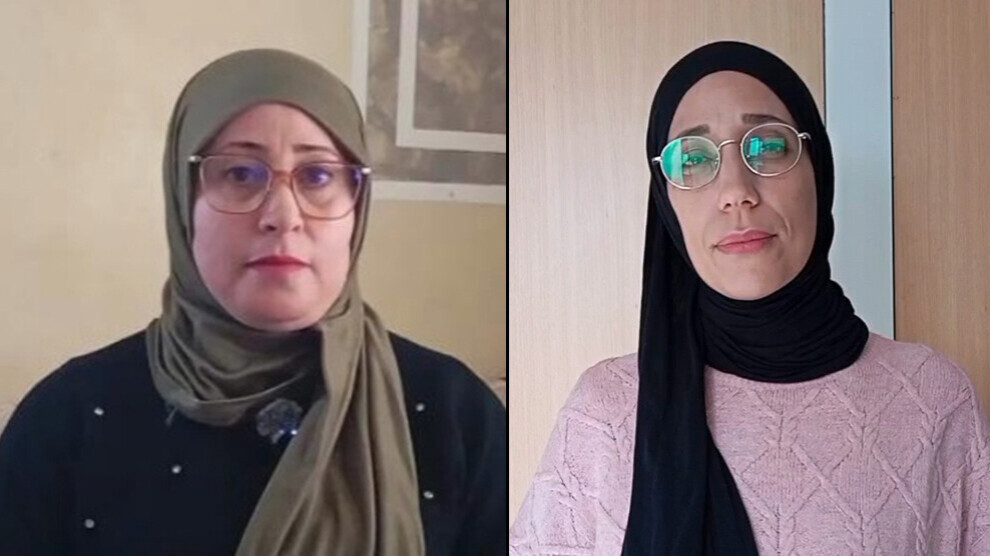
Tunisia — Two Tunisian journalists, Manal Beltayea and Olfa Khaskhoussi, address the role of the media in shaping public awareness from two different perspectives. The first focuses on the broader role of media in addressing women’s issues and the stereotypes associated with them, while the second highlights the dangers of inciting media discourse in the context of events taking place in northern and eastern Syria.
The Role of Media in Women’s Issues and Stereotypes
Tunisian journalist Manal Beltayea spoke about the broader role the media plays in shaping societal awareness regarding women’s issues. She said, “The media actively contributes to highlighting women’s issues and shedding light on the problems they may face, whether they are working women or homemakers, as both face different challenges.”
She explained that working women sometimes suffer from many difficulties and challenges in their professional fields. Therefore, the media plays a central and essential role in highlighting the issues that concern women daily. According to her, the media can help women strengthen their presence in society and support their ability to exercise their freedom and participate effectively in public life.
She added, “The media should also alert society to the shortcomings or problems that women may experience in their lives. It should draw attention to these issues and present them for discussion with specialists from different fields in order to search for appropriate solutions.” She believes that raising societal awareness of women’s issues can greatly contribute to improving their conditions.
She emphasized that the media forms a link between the issues women experience in different fields and the wider community, which may sometimes be unaware of them or may not consider them a priority.
However, according to her opinion, “the media may sometimes play the opposite role, as it can reinforce certain stereotypes about women, either intentionally or unintentionally, often in pursuit of media sensationalism or attracting attention.” She noted that these stereotypes differ from one society to another, as each society has its own perceptions of women, which may negatively affect their status and role.
She believes that the media should highlight successful female role models in different fields so that the image of women is not confined to specific sectors such as education or health, as happens in some societies that believe certain fields belong exclusively to men. She stressed that many women have succeeded in various areas, and the media should highlight these examples to show that women are capable of creativity and success in all fields.
Regarding the challenges faced by female journalists when working on women’s issues, Manal Beltayea said that the first challenge sometimes comes from within women themselves, due to the mindset imposed on them by society or their surroundings. Many women find it difficult to talk about their problems or present their issues publicly, especially when it comes to sensitive matters such as violence or discrimination.
She said, “Some women are afraid to talk about their suffering due to fear of society’s reactions or the exposure of their private lives. Therefore, it can sometimes be difficult to convince them to appear in the media or speak about their experiences.” She added that successful women in their professional fields may also face social pressures that prevent them from talking about their success stories or sharing their experiences, even though these experiences could inspire other women.
Regarding practical steps the media can take to support women’s image, she said, “It is important that women’s issues are not addressed only on special occasions, such as International Women’s Day or other symbolic events. Women should be present in media coverage as active members of society, just like men.”
Manal Beltayea concluded by saying, “When the media addresses women’s issues in this balanced way, it helps reduce stereotypes about women and strengthens their presence in both the media and society in the way they deserve.”
Inciting Media and the Justification of Violence
For her part, Tunisian journalist Olfa Khaskhoussi addressed Arab media discourse regarding what has taken place in northern and eastern Syria, especially concerning women. She explained that coverage differs depending on the media outlets and their political backgrounds, but overall it is characterized by a clear level of selectivity and simplification. The issue is often presented within a narrow political or military framework rather than as a complex social and human experience.
She pointed out that a number of Arab media outlets present the issue of women in Rojava as a political experience linked to the Democratic Union Party. It is often viewed through the lens of conflict and its complexities rather than through the deep social transformations taking place in the region. As a result, women’s image is overshadowed by military headlines and geopolitical analyses, while attention to their daily roles in civil administration, education, work, and social organization declines.
When addressing media discourse that justifies violence against women, Olfa Khaskhoussi explained that several recurring characteristics can be observed that go beyond political positions and touch the deeper structure of media narratives themselves.
One of the most prominent features is the dehumanization of the victim, where violence is presented as a natural consequence of political or military choices rather than as a violation of human rights. She said, “Another aspect involves demonizing the victim and politicizing gender, where women are reframed within an ideological discourse accusing them of representing political agendas, foreign influences, or alien values instead of condemning the assault itself.”
She also explained that “some media coverage uses inciting or suggestive language, employing loaded vocabulary that implies that what women in Rojava are subjected to is a natural price of confrontation. This discourse does not openly support violence, but it creates an atmosphere that justifies it and reduces its moral weight.”
Olfa Khaskhoussi believes that the targeting of women in some media coverage cannot be separated from their role within the political and social experience in northern and eastern Syria, as women’s participation since the establishment of the Autonomous Administration model has been one of the pillars of the project.
She emphasized that “from this perspective, granting media legitimacy to crimes committed against women can be considered a form of indirect participation in them.” She stressed that there is an urgent need for an alternative media discourse based on a balanced journalistic approach that separates political criticism from respect for women’s dignity and rights.