
Lawyer: Women's Participation in Political Life Is an Inalienable Right and an Essential Path to Justice
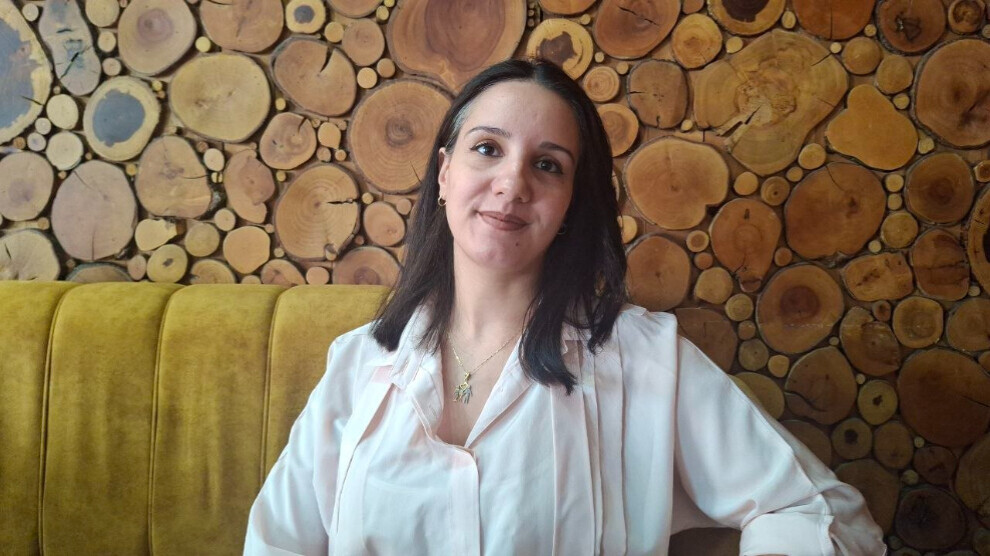
Lawyer Qamar Shalghin affirms that documenting violations in As-Sweida was a crucial step toward protecting women, seeking justice, and ensuring their participation in political lfe and decision-making.
ROSHELLE JUNIOR
As-sweida— The participation of Syrian feminist organizations in the meeting with the UN Secretary-General about a month ago came within the context of ongoing efforts to document violations women have endured, particularly during the events that As-sweidawitnessed in July 2025. The importance of this participation emerges as an extension of rights-based and feminist work that began with documenting violations and gathering evidence and testimonies, leading to conveying the voices of victims to international institutions and demanding their protection and accountability for those responsible for the crimes committed against them.
In this context, lawyer Qamar Shalghin affirms that the presence of a feminist organization from As-sweidaat the meeting constituted an important step to convey the voice of women from the region and the Druze community, and to transmit the truth of the violations women experienced during the genocide campaign, away from marginalization and the political instrumentalization of the rights file.
She explains that the participation of feminist organizations in the meeting was not a separate step, but came as the fruit of ongoing efforts in documentation and report preparation regarding violations that have occurred since the fall of the regime to the present day. She affirms that women's participation in civil and political life is an inalienable right affirmed by international covenants and UN resolutions, particularly Article 25 of the International Covenant on Civil and Political Rights and UN Security Council Resolution 1325 on women, peace, and security.
She believes that the arrival of reports documenting violations and the marginalization women have faced made it necessary to hold the meeting with the UN Secretary-General to discuss the reality of women and its alignment with international commitments, and to affirm the necessity of women having a genuine presence in civil and political life, and in paths of justice and decision-making.
Qamar Shalghin notes that the meeting included the participation of a number of organizations, including one from Suwayda, considering that the presence of a representative from the region was a necessity, because someone who lived through the violations, massacres, and genocide campaign is able to convey the message more accurately than anyone else.
She explains that the women and organizations who experienced what happened in As-sweidaduring the genocide campaign in July 2025 were best able to explain the details of the events and convey victims' testimonies to international bodies, affirming that conveying these facts from those who experienced them differs from conveying them through sources distant from the event.
Participation in Civil and Political Life
She notes that Article 25 of the International Covenant on Civil and Political Rights affirms the right to participate in public affairs, while UN Security Council Resolution 1325 forms an international framework affirming women's role in peace and security issues and the necessity of integrating women into decision-making and strategies related to justice and peace.
According to Qamar Shalghin, the importance of the meeting lies in affirming these principles, particularly after reports emerged speaking of women's marginalization or the provision of merely symbolic representation, making it essential to study women's reality and the extent to which they receive genuine representation.
Documentation... The First Step Toward Protection
She explains that documentation efforts involved people from Suwayda, in cooperation with external organizations and the Druze diaspora in various parts of the world, working to document crimes as soon as possible and according to international law standards.
She affirms that documenting evidence was not an end in itself, but was the first step toward reaching the stage of demanding protection, as protection for victims cannot be demanded without proving and documenting the crimes. She notes the existence of a documentation committee specific to As-sweidathat confirmed violations against women, including sexual violence, abduction cases, and multiple forms of crimes.
She adds that international law, in conflict situations, provides protection for civilians, particularly women, and that proving and documenting crimes was the basis for moving from discussing violations to demanding protection and accountability.
The Investigation Committee's Report and Confirmation of War Crimes
Qamar Shalghin notes that the report of the Investigation Committee specific to As-sweidaconfirmed the existence of violations against women, including sexual violence and abduction cases, noting that the report confirmed that these violations fall within war crimes and crimes against humanity.
She expresses surprise at the continued denial by some of these crimes, despite the existence of precise documentation and evidence confirming their occurrence. She believes that what happened in As-sweidacannot be reduced to individual crimes or isolated incidents, but represents a continuous pattern of crimes and violations that occurred during the genocide campaign, with a large number of violations recorded within a period not exceeding 72 hours.
She notes that the next phase requires continuing discussion with the Human Rights Council, explaining that documenting violations, proving their occurrence, with specific numbers and criteria, could—given international seriousness—lead to the files being transferred to the Security Council or international courts, opening the way for achieving justice for victims who suffered the most heinous forms of violations.
Continuing Feminist Work Is a Necessity
Qamar Shalghin affirms that the organization that participated in the meeting has followed the file from its beginning, corresponded with international organizations, and worked to document various violations, considering that these efforts formed the first step that resulted in reaching the meeting with the UN Secretary-General.
At the same time, she emphasizes that the UN does not operate in isolation from the efforts of organizations and civil society, and that continued advocacy and feminist work are essential to achieving tangible results.
She affirms that women's rights do not concern a minority or a specific region, but affect women in various societies, especially as women are often among the groups most exposed to violence during conflicts.
Survivors' Testimonies and Data Protection
Regarding the testimonies documented for women who were raped during the genocide campaign, Qamar Shalghin explains that each victim documented the incident she experienced, with an explanation of the legal path of the file and clarification of the associated procedures.
She affirms that protection was provided to the victims, along with data encryption, with the aim of preventing the information of the documenters or victims from being exposed to any danger, and maintaining data confidentiality and protecting its owners.
Regarding legal gaps, Qamar Shalghin says that Syrian law has taken a step backward, and that current demands focus first on implementing existing laws that can provide protection for women, noting that Syrian law still lacks a clear legal text criminalizing harassment.
At the same time, she affirms the necessity of strengthening penalties for crimes related to women, in light of the increase in incidents during recent times, and imposing additional penalties that would deter society from committing crimes.
In concluding her remarks, lawyer Qamar Shalghin expressed hope of reaching a stage where women's rights are prioritized, moving beyond phases of violence against them, and working on a genuine recovery program that includes the entire society and women in particular, affirming that women's recovery represents a complete recovery for society.