
Lawyer: We Need A Legal Revolution and for Women to Have a Role in Drafting Laws
Syrian women endure forced marriage, pregnancy, sexual assault, and unregistered unions amid war and displacement, increasing legal and social barriers to justice.
SORKEL SHEIKHO
Qamishlo — The issues of forced marriage and forced pregnancy in Syria remain unresolved, constituting in themselves a clear violation of fundamental human rights. According to the Rome Statute of the International Criminal Court, these crimes and other similar crimes are classified at the international level as crimes against humanity and war crimes committed in armed conflicts.
Despite being classified as human rights violations, they have not yet become a fundamental item on the agenda of the Security Council or human rights institutions, to enable work on preventing them through various means and mechanisms. Even the issue of gender‑based violence remains at its most dangerous levels.
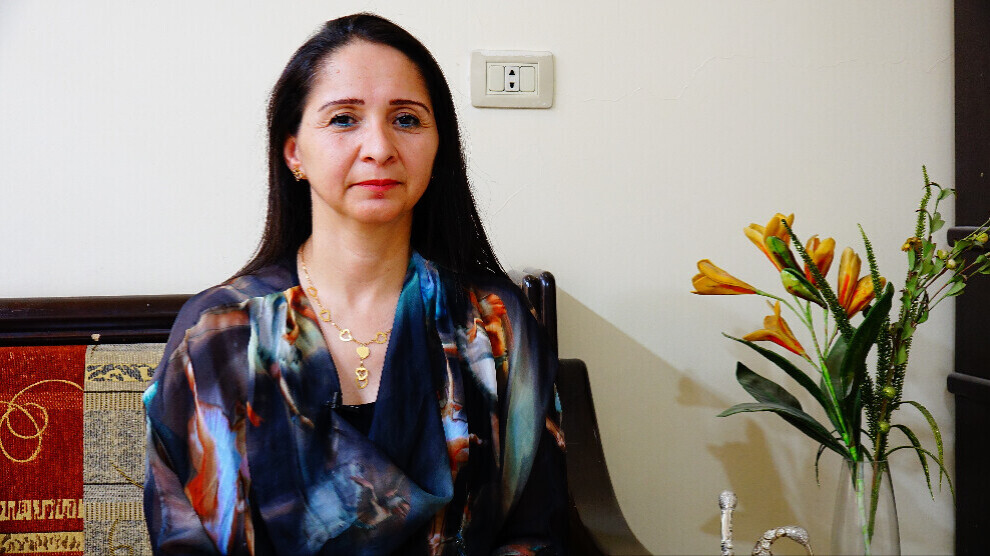
To learn more about the causes of this phenomenon and ways to address it, our agency conducted the following interview with lawyer Rovand Khalaf from the city of Qamishlo, Rojava.
Why do issues of forced pregnancy, forced marriage, and gender‑based violence in Syria persist to this day? What are the most prominent obstacles to protecting and providing justice for women, especially given the lack of criminalization of sexual assault within marriage and the possibility of the perpetrator evading punishment through marriage to the victim?
These issues are not separate from one another—forced marriage, gender‑based violence, forced pregnancy, and similar crimes that follow are all interconnected.
There are three main factors: first, the law; second, societal culture; and third, access to justice and the services provided by courts and administrative institutions under the government.
The reasons are many, but the primary reason is the law. When these issues are addressed through laws, the next step is changing the culture of inequality between women and men, as well as the attitude that diminishes women when crimes of this nature are committed against them.
Moreover, when these crimes are committed, a woman is not only seen as a victim but may also be viewed as guilty. Even when the crime is committed without any intent or consent from her, she may still be punished accordingly. It is very important to redefine these crimes and find new solutions to them.
When a woman is assaulted or raped, her right to seek justice and punish the perpetrator must be protected, whether she marries him or not. In such cases, a woman faces social pressure, and to preserve her reputation, she may be forced to marry the perpetrator. This is an image of injustice that cannot be accepted. How can a woman marry a man whose first experience with her was assaulting her? How can she imagine a married life with such a person?
We must also not forget other factors contributing to these situations, such as poverty, lack of economic independence, chaos, war, and displacement. Many families find themselves victims of these circumstances and are forced to endure these crimes simply to survive.
Why are these problems increasing in our societies in the Middle East? What are the main causes and factors behind them?
In our Middle Eastern societies, these crimes increase due to the wars and multiple chaos created by ruling regimes, and due to the failure to recognize women's independent status.
Outdated societal culture is one of the main causes of these crimes, and this forces us to focus on changing old cultural attitudes toward women.
Marriage is a family institution, and understanding family cultures and how they treat women is crucial. But why is there discrimination between men and women, particularly in areas of guardianship, inheritance, and many personal status issues? All of this is linked to societal cultures and the conditions in which individuals live within Middle Eastern societies.
Why has the phenomenon of unregistered marriage—relying only on a religious or informal contract—spread? How can women's deprivation of their legal rights in cases of divorce or the husband's death be addressed?
Recently, the phenomenon of unregistered marriage has spread. One reason is the inability to register these marriages with government institutions due to the disruption of these institutions as a result of the crisis between the Autonomous Administration and the government.
The closure of these institutions has worsened the situation. Another problem resulting from non‑registration is the loss of rights related to guardianship and obtaining necessary documents, in addition to low legal awareness.
Other reasons include financial difficulties, the inefficiency of legal procedures, and a lack of awareness of the consequences of non‑registration.
It is important to raise awareness of the risks involved and to provide legal assistance to unprotected women who cannot afford the costs of registering their marriages.
Legal procedures should also be simplified, and awareness centers should be established to educate women about the importance of their right to legally register their marriages.
With many women continuing to face social and family pressure for repeated childbearing, especially male children, and the resulting effects on their physical and psychological health... Where is this problem heading, and how can women protect themselves from these pressures?
This situation stems from patriarchal authority and the perceived need to preserve family authority and legacy, which inherently carries a demeaning view of women.
The law also criminalizes abortion, thereby depriving women of the right to make decisions about childbearing. When the law criminalizes abortion, it sides with men on this social issue. Here, we women must struggle to change the prevailing coercive laws that impose patriarchal culture on women's rights.
When the law automatically criminalizes these acts, patriarchal culture becomes stronger. A man, simply because he desires male children, violates the sanctity of marriage; he effectively ends and destroys the bond of marriage and its essence as a shared life based on equality, respect, and mutual trust. The man, or husband, places this entire relationship at the service of his own desires and the enhancement of his status within the family and society.
With the escalation of gender‑based violence, particularly against women and girls in Syria, what legal means are available to protect them from various forms of violence?
Social media, economic crises, poverty, displacement, chaos, the absence of laws, the absence of judicial institutions, demographic changes in most areas that have experienced wars, neighbors not knowing each other, and the collapse of moral values—all of these factors have significantly contributed to the spread of these crimes.
The disintegration of the family has also made children themselves, even before their mothers, targets of these crimes. Therefore, addressing this phenomenon and these crimes cannot be achieved with one or two legal provisions. It must begin with reforming societal thought, then move to customs and traditions, and finally to the law itself.
This reform should include laws that severely criminalize these violations committed against children and women, in order to address these violations and protect women's rights.
It is important to establish shelters for women who have been exploited, and to provide them with legal assistance and psychological counseling, so that they can recover from the effects of the crimes committed against them.
Awareness must also be instilled in them that they are victims, not perpetrators, and that it is their right to regain their dignity through legal procedures and holding perpetrators accountable.
The family and society should be a source of support for women, not a wall against them because of a crime of which they themselves were victims.
Do the laws in Syria protect women? If the laws do not protect them, where can they turn?
When laws are written, women's specific needs are not taken into account. When there is discrimination between men and women, we face a legal problem.
The constitution states that citizens are equal in rights and duties, but when we examine the details of laws and crimes, we find that they discriminate in women's rights.
The law has not been fair to women, whether they are victims of rape and assault, or in cases of inheritance division and marriage consent. Here, we need a legal revolution and for women to have power in drafting laws, so that women's voices and life realities are integrated into the legal system.