
Lawyer: Enhancing legal awareness is necessity to protect women’s right to inheritance
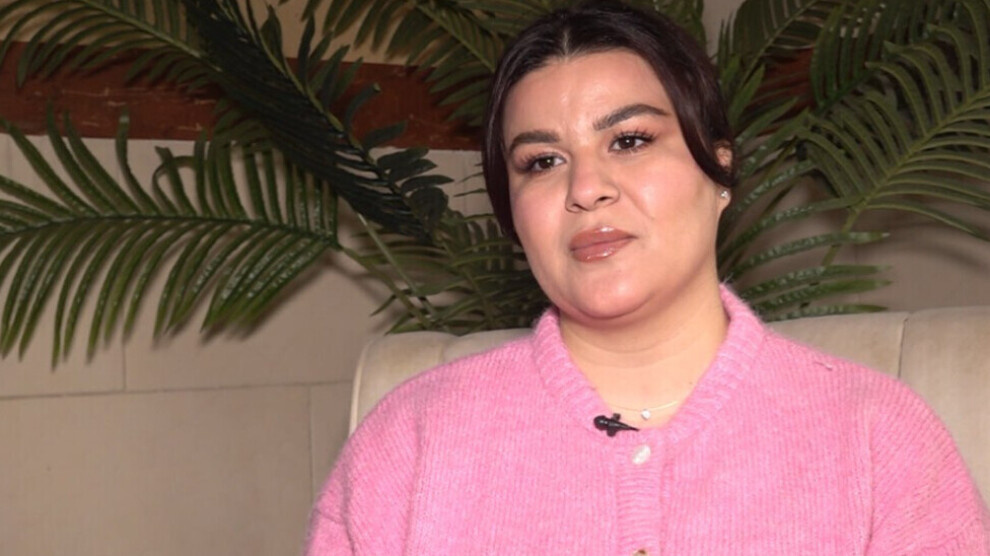
Lawyer Piyam Khalil affirmed women's inheritance deprivation in Kurdistan Region isn't law alone—clan customs, social pressures, and weak legal awareness intertwine—stressing the need to protect this right.
DERIN RAHIM
SULAYMANIYAH_Although inheritance is an authentic legal right for women, clan customs and social legacies in some areas of Kurdish society still stand in the way of women obtaining this right. Many women are pushed to waive their shares under the weight of family and social pressures, or are deprived of it as a result of weak legal awareness and the concealment of information related to property.
Confronting this phenomenon is not limited to women demanding their rights, but requires shared responsibility between the family, legal institutions, women's organizations, and the media, to ensure the transition of equality from discourse to application, and to put an end to depriving women of their rights because of their gender.
The law is an umbrella for all, and there is no place for discrimination
Commenting on this, lawyer and activist Piyam Khalil affirmed that the right to inheritance is a legal and societal responsibility. "When we talk about the issue of inheritance in Kurdish society, we find ourselves before two basic obstacles; the first is the law and the legal articles in force in the courts, and the second is the customs, traditions, and culture prevailing in society."
She pointed out that the multiplicity of religions and sects in Kurdish society, which includes followers of the Hanafi and Jaafari schools and Christian citizens, makes it necessary to deal with the issue of inheritance within a legal framework that takes into account the rights of all citizens, away from confining it to a single sectarian view.
She stressed that the law must be a comprehensive umbrella for all, without discrimination on the basis of gender, religion, sect, or social affiliation, affirming that customs must not turn into a tool for wresting legal rights from women. "We must all gather under a unified legal umbrella; because inheritance is a legal right, and its protection must be based on the principles of justice, equality, and respect for the rights of all members of society."
She pointed out that the rights of agricultural lands subject to the state-linked usufruct system are subject to different provisions, as sons and daughters, according to the legal clarification she provided, receive equal shares of 50 percent each. She believes that these cases confirm that determining shares is linked to the type of ownership, the legal status, and the circumstances of the heirs.
Clan customs place women before a harsh choice
The matter does not stop at adult women, but extends to minor girls, who may be threatened with being expelled from home or abandoned if they refuse to waive their rights before the court, which pushes some of them to submit under the weight of fear and the lack of alternatives, as she explained.
She added that some girls, after reaching the age of eighteen and gaining awareness of their rights, face another form of pressure. "In one case, when the woman reached the age of eighteen, she became aware of her rights and demanded to obtain her inheritance, but her paternal uncles' family disavowed their responsibilities toward her, and ignored her in various ways; they did not provide her with living necessities, study expenses, or the rest of her basic needs. They even told her, on the pretext that she had obtained her inheritance: 'Now let your inheritance take care of providing your living expenses.'"
Waiving under coercion is a crime, not a family agreement
Piyam Khalil pointed out that a proportion of women in Kurdish society waive their inheritance under pressure from brothers who use phrases such as "it is shameful for a sister to take her inheritance" or "the money will transfer to a strange family after her marriage," explaining that this mentality entrenches in the woman a feeling that demanding her right violates customs, even though inheritance is a legal right that should not be subject to social bargaining.
She stressed that waiving inheritance must be based on free will and genuine consent, not on threats or psychological coercion, and that forcing a woman to waive her right may entail legal accountability and penalties, including imprisonment or a fine, in accordance with the relevant legal provisions.
She believes that the essence of the problem lies not in the absence of legal protection for women's rights in inheritance, but in weak legal awareness and the dominance of some social customs that prevent women from resorting to the judiciary to demand their rights.
Concealment of property is another obstacle to recovering rights
Lawyer Piyam Khalil said that patriarchal mentality is still present in society, and that some of those around women do not wish to enable them to access their legal rights. She believes that achieving social balance is not limited to raising women's awareness of their rights, but also requires raising men's awareness through religious platforms and social institutions, and entrenching that protecting women's rights, especially in inheritance, is a legal and societal responsibility.
She stressed the need for women to possess sufficient legal awareness to know their rights and resort to the judiciary when they are violated, but she pointed out another obstacle represented in some women's inability to prove the existence of lands and properties left by their fathers, due to their lack of the necessary legal documents and papers, especially in cases of properties that do not carry real estate registration deeds (tapu).
She explained that concealing information related to lands and properties from mothers, daughters, and sisters constitutes one of the most prominent social and legal obstacles to women obtaining their inheritance, and limits their ability to demand their rights easily.