
Jordan: Women Between the Struggle for Rights and the Tyranny of Tradition
Empowering women in Jordan is not achieved by laws alone; it requires confronting entrenched customs and stigma so legislation becomes lived reality, protecting dignity and ensuring every woman’s right to a safe, just life, equal.
Bara’a Ma’ayeh
Amman – While human rights advocates in capital cities refine laws on paper, women in marginalized and peripheral areas see little real change. Well-crafted legislation often fails to affect communities where rigid tribal customs continue to shape and restrict women’s daily lives.
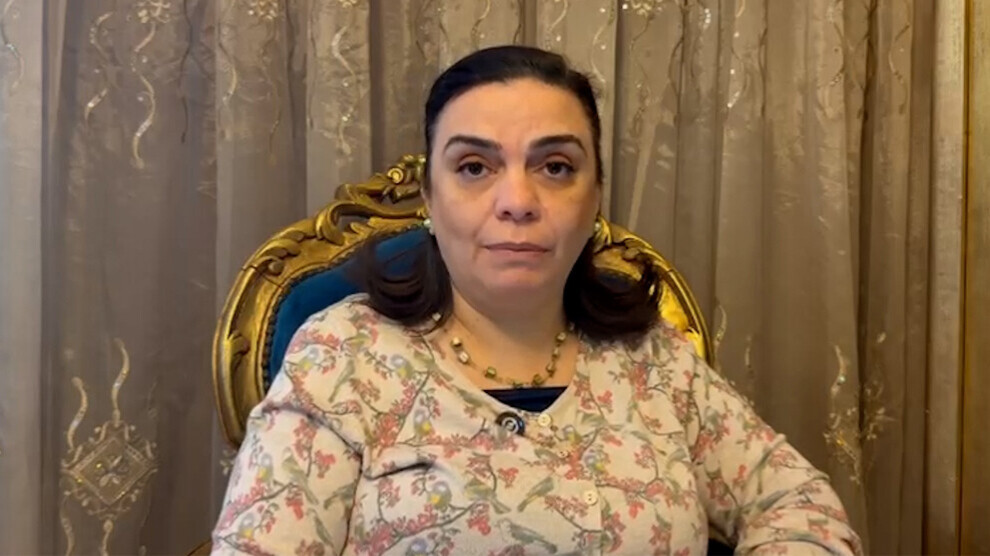
This gap is not merely technical, but existential, where social stigma transforms into a silent tool of oppression, pushing women to suppress their rights for fear of the family structure. To delve into the depths of this reality, NuJINHA conducted an interview with Lana Abu Suneineh, Projects Director at the Land of Peace Foundation for Development and Human Rights, who analyzed the complexities of the situation between the laws on paper and the lived reality.
From the field, how do you perceive the gap between the laws on paper and the lived reality of Jordanian women, especially in areas far from city centers?
The gap between the laws and the reality on the ground is enormous. In Jordan, we have laws that we might consider exemplary and excellently written on paper, but the real problem lies in the procedures, the implementation, and what lies beyond the law.
When we go to the outskirts of remote villages and marginalized areas, we find a significant gap. Women there often don't even know their rights, and it's difficult to talk to a woman about rights she doesn't know about. Jordanian society is tribal by nature, and this reality often overshadows the law, causing legislation to back down in the face of the power of customs, traditions, and family pressures.
Do current development projects in Jordan actually contribute to breaking down the patriarchal mindset, or do they sometimes merely cosmetically improve the reality of women within the existing system?
Development projects fall into two categories. There are projects that genuinely work to change awareness, a cumulative process whose results don't appear overnight but require years of continuous effort to change stereotypical and patriarchal mindsets regarding sensitive issues like child marriage. On the other hand, there are other projects that merely cosmetically improve the existing reality, addressing only the surface of the system without tackling its root causes.
True change is that which touches women's lives and empowers them to defend their rights. Sustainability is key. Any project whose impact disappears once funding ends is merely cosmetic. Only a project that leaves a lasting impact on societal awareness creates genuine change.
Violence is not just physical assault; it's a complete system. How do you address the stigma faced by women who decide to break the silence and report domestic violence, especially given the pressures of family discretion?
Social stigma is the silent violence and danger women face. It's a double stigma: the stigma of the violent act itself, and the stigma of the woman who decided to break the silence and report it. In our society, the concept of discretion is revered, becoming a tool of oppression and coercion, forcing women into silence. Family and those around them pressure them with the phrase, "Endure it for the sake of your home and children." Society always tries to hold the woman responsible for the violence inflicted upon her by asking, "You must have provoked him." There is no justification for violence, whatever the reasons. Breaking the silence remains the biggest challenge because women fear societal judgment and scandal.
Do you believe that shelters and support services for victims of domestic violence in Jordan contribute to protecting women, or do they sometimes reinforce the stigma of the victim by isolating her from society instead of punishing the perpetrator?
Shelters are a "necessary evil" as a temporary protection measure, but in their current form, they represent a "punishment for the victim," while the perpetrator remains free, boasting about his actions. The woman is isolated and her freedom restricted in the name of her protection. Historically, the situation was even harsher, with women being transferred to prisons (reform centers) under the guise of crime prevention laws for their protection—a devastating and cumulative stigma. Despite improvements and the existence of shelters like Al-Wefaq, we still punish the victim with isolation. The real solution is not to increase the number of shelters, but to change the system that allows the perpetrator to escape punishment and forces the victim to sign meaningless pledges, only to return to the cycle of violence.
We live in a complex situation due to consanguineous marriages and tribal relationships. Often, the husband is a cousin, and reporting the abuse is not just against the husband, but escalates into a conflict with the entire tribe. The survivor is then accused of destroying her family home. This pressure forces many women to relinquish their rights. Therefore, we don't need mere shelters, which can sometimes perpetuate the stigma. Instead, we need a comprehensive protection system that ensures perpetrators are held accountable and provides psychological and economic support to survivors so they can return to society strong and reclaim their rights, without being forced into silence under the threat of stigma or family scandal.
When launching advocacy campaigns to change discriminatory laws against women, what are the biggest obstacles you face?
The biggest obstacle is the "politicization of stigma" to demonize feminist activism. As soon as we mention CEDAW or "gender," these terms are used as a stigma to obstruct change. At Ard Al Salam, we employ a different tactic; we work with the real influencers in tribal communities (sheikhs and mukhtars) to transform the tribe from an instrument of oppression against women into an instrument of support and protection. Through advocacy campaigns, we have succeeded in amending laws that were considered impossible, such as the Social Security Act and the repeal of Article 308. This proves that the law can be an entry point to social justice if it is coupled with real field pressure.
There is always criticism leveled at civil society organizations that they are beholden to donor agendas. How does Ard Al Salam (Land of Peace) impose its vision, which stems from the needs of the people on the ground?
We don't wait for donors to dictate what we need. We rely on continuous needs assessments on the ground in Jordan. At Ard Al Salam, we are proud of our partnership with the local private sector and the local community, who are the biggest supporters of our projects, such as the Ammar Youth Empowerment Project.
We use funded agendas as a complementary tool to address our core needs, and we impose our vision by offering realistic and sustainable solutions that stem from our deep understanding of the tribal and social specificities in Jordan. This ensures that the dignity of the beneficiaries remains our guiding principle, not the wishes of the donors.
In the digital age, how can advocacy campaigns succeed in confronting cyberbullying and the online armies targeting Jordanian activists?
The digital space is not inherently a battleground, but it can instantly become a battleground where activists are worn down by attacks and psychological pressure. Therefore, when discussing cyberattacks targeting women activists, psychological support becomes a priority no less important than any other measure, alongside providing a clear legal framework. In Jordan, several legislative frameworks exist, most notably the Cybercrime Law and other laws that provide protection and accountability. However, the real challenge often lies not so much in the existence of legal texts as in the effective monitoring and enforcement of laws. Hence, the need arises for an integrated system that supports women activists psychologically and legally, ensuring practical support when they are subjected to such attacks.
With 25 years of experience in community development work, I work directly with women on the ground and have dealt with marginalized groups in various locations, including correctional and rehabilitation centers in prisons. We were among the first organizations to work on aftercare programs and support women after their release, reintegrating them into their communities. Our work has extended to remote areas such as the villages of Eil and villages in the far south of Jordan, where we have implemented interventions in economic and social empowerment, in addition to providing psychological and social support. We have dealt with cases of violence in all its forms, with both victims and perpetrators, which reinforces my conviction that psychological and legal support is not a luxury, but a necessity to protect individuals and ensure their continued presence and participation in both the digital and social spheres.
What message do you have, based on your field experience, for every woman facing violence in its various forms?
The single, fundamental message I would give to every woman facing domestic violence, workplace violence, harassment, or even unsuitable working conditions is, "Silence is not the answer."
It is important to realize that silence does not protect you; rather, it gives the abuser more space to continue and may even become an opportunity to harm others. If you don't consider your own situation and the psychological and social impact it has on you, think about the other women who might find themselves in your position. If you remain silent today about the physical or psychological violence you are experiencing as a wife, your daughter or daughter-in-law might experience it tomorrow.
Violence that goes unpunished is among the most harmful forms of violence because it allows the abuser to escalate and become more emboldened, and to extend their behavior to other areas. Therefore, there are no excuses or justifications for violence; no reasons can excuse it. Justifications like "You provoked him" or "Endure it for the sake of your home" are unacceptable. This is your home too, and you have the right to live in it with safety and dignity.
Confronting violence in Jordan is not merely a battle over legislation in the halls of parliament; it is a battle for awareness that begins within homes to ensure that women's dignity does not become a permanent sacrifice on the altar of false modesty and traditions that refuse to embrace the right to life.