
Imposing the New Authority’s Ideology Strips Syria’s Education Sector of Its Neutrality
Changing school names and symbols with each ruling authority forces students into its ideology, shaping compliant followers instead of innovators, and turning schools from neutral learning spaces into political and ideological tools.
Rochelle Junior
As-Suwayda — The Syrian interim government, through the Ministry of Education, has rushed to change the names of schools in line with its ideology. While it claimed that the changes targeted names associated with the Baath Party, the reality is that the process has extended to erasing national and cultural symbols that represent an integral part of Syria’s history.
Amid the political transformations Syria has witnessed over the past year, several issues have emerged that hinder the development of education in the country. These include introducing changes to curricula that give them a religious character, dismissing thousands of male and female teachers, and most recently, the issue of changing school names.
These changes raise a societal question: which should take priority—changing the names of schools that bear historical and national symbols, or repairing the deteriorating infrastructure of these schools?
The issue of renaming schools has sparked widespread controversy, as it carries implications that go beyond an administrative decision into a symbolic struggle that touches on national identity, collective memory, and the future of coming generations.
Activists, civil society members, and teachers—particularly from the city of As-Suwayda—have warned of the dangers of these steps, considering them part of a broader politicization of education and the imposition of religious and political ideologies that serve the current authorities, at the expense of the neutrality of the education sector and national unity.
An Administrative Decision or a Symbolic Battle?
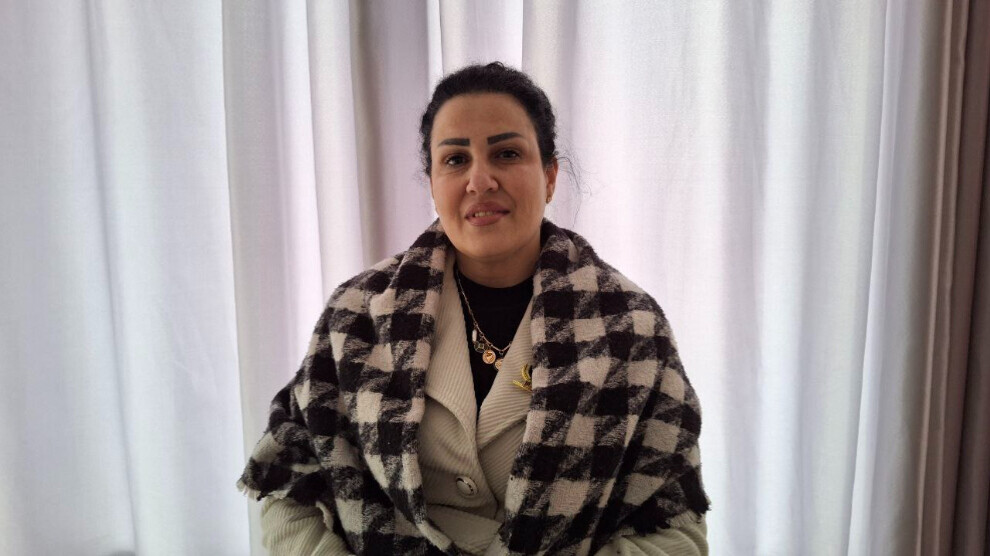
Jihan Al-Awam, a teacher and civil activist from As-Suwayda in southern Syria, explains that “changing the names of schools during the rule of de facto authorities cannot be considered a routine administrative measure. Rather, it is a symbolic battle aimed at imposing an authoritarian and ideological character on the educational institution.”
She pointed out that the main motivations behind these changes lie in “withdrawing symbolic legitimacy from previous governments and replacing it with religious or political symbols that serve the current authority, which contributes to instilling an ideology of subordination among students from an early age.”
She explained that as school names and symbols change, students become more vulnerable to the influence of a specific ideological system that renders them almost entirely subordinate to the new authority, transforming schools from neutral educational spaces into tools of political and ideological indoctrination.
Dismantling the Syrian Mosaic
One of the most dangerous negative repercussions of these policies, according to Al-Awam, is the shift toward religious or single-ideology school names within specific regions. “This trend threatens the unity of Syrian geography and pushes toward dividing society, linking each area to a particular religious or political identity.”
She warned that this path strikes at the heart of Syria’s diversity, which throughout history has formed a rich religious and cultural mosaic, distancing society from the spirit of inclusive citizenship and the foundations of national unity, and negatively affecting social cohesion and civil peace.
An Education Sector That Has Lost Its Neutrality
Over the past decade, Syria’s education sector has suffered greatly due to political conditions and conflicts, despite the fact that it is supposed to remain neutral and removed from political polarization.
Al-Awam noted that education was previously affected by the policies of the former regime and today faces a new form of politicization, whereby political and religious orientations are imposed within schools, stripping the educational process of its essence based on knowledge and critical thinking.
Absent Priorities
Al-Awam believes that the controversy surrounding the renaming of schools distracts from far more urgent issues that strike at the core of the educational process. She identifies three main priorities:
First, developing educational curricula, as current curricula suffer from clear weaknesses and a significant departure from international educational standards and methodologies, in addition to the introduction of ideologically driven modifications at the expense of scientific quality.
Second, restoring and rehabilitating schools, especially in areas where infrastructure has been damaged by the war. Schools need rebuilding and rehabilitation to accommodate larger numbers of students and to provide a safe learning environment.
Third, teachers’ rights. Al-Awam emphasized that teachers are the cornerstone of the educational process, yet they suffer from deteriorating living conditions and delayed or suspended salaries for months. This calls for improving wages and ensuring material and moral rights. “It would have been more appropriate for the authorities to focus on these core issues instead of being preoccupied with changing school names and imposing a religious or political character that threatens to fragment society,” she said.
External Interventions and the Distortion of National Memory
Al-Awam also pointed out that the political changes over the past year have been directly reflected on the Syrian people, stressing that changing school names is no longer merely an internal matter. Regional political axes have become involved, noting that a number of schools in Syria have been renamed with Turkish names. This constitutes a direct infringement on Syrian national identity and negates a long history of struggle and heroism.
She cited the October War as an example—“a confrontation against Israeli occupation in which Syrians offered martyrs”—considering that changing the names of schools bearing the names of those martyrs amounts to erasing history and abolishing national memory.
Manipulating Curricula and Historical Facts
The changes have not been limited to school names but have extended to educational curricula themselves, where historical facts, civilizational achievements, and victories associated with Syria’s ancient and modern history have been altered.
She stressed that this reality necessitates a comprehensive review of Syrian curricula to ensure their alignment with Syria’s true history and civilization, free from distortion or political exploitation.
Education… The Foundation of Building Society
Teacher and civil activist Jihan Al-Awam concluded by emphasizing that silence in the face of these issues poses a real danger. “Education is the most important sector upon which Syria’s future and comprehensive development process are built. It is essential to organize seminars, open public discussions, and oppose the policies imposed by de facto authorities, in defense of the neutrality of education and in protection of Syria’s identity and the unity of its society.”