
From Ayaat Al Rifai to the Public Sphere... Why Does the Cycle of Violence Against Women Never Stop?
The case of Ayaat Al Rifai reopens the file of violence against women in Syria, amid questions about the effectiveness of the law, the protection of victims, and the risks of the culture of guardianship and violence transferring from the family to society
ROCHELLE JUNIOR
Sweida_Crimes of violence against women in Syria are no longer isolated incidents that end with the crime itself; they now reveal a deeper crisis rooted in a social culture that, in some environments, grants men extensive authority over women, extending to control over their lives, decisions, and even their fate. As murders and domestic violence recur, many questions remain unanswered about the law's ability to deter, and about protecting women and children before violence turns into an irreparable crime.
The case of Syrian young woman Ayaat Al‑Rifai has resurfaced following developments that sparked widespread debate, including her husband Ghias Al‑Hamawi—convicted in her murder case—demanding custody of their daughter Shams, who lives with her mother's family since Ayaat's death. The case dates back to 2022, when Ayaat Al‑Rifai died in Damascus after being beaten inside her husband's home.
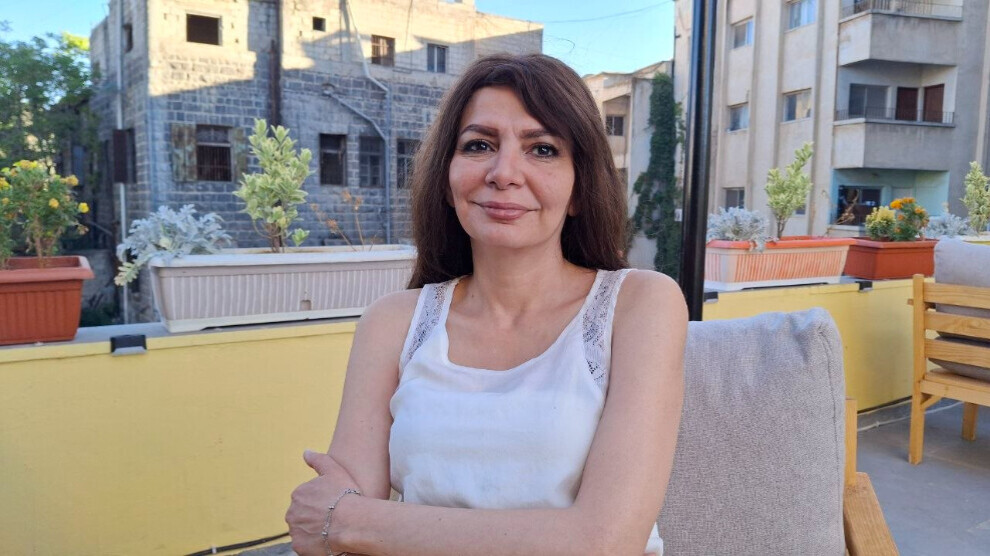
The case of Ayaat Al‑Rifai, which shook Syrian public opinion, was only one of many cases that brought this issue back to the forefront, as Daren Azzam speaks of broader fears of continued violence, and of society moving toward greater religious and social conservatism, which could impose additional restrictions on women, threatening to transfer the culture of guardianship and violence from within the family to the public sphere.
Daren Azzam sees the case of Ayaat Al‑Rifai as not an isolated incident, but one link in a long chain of violence against women within the family, which can also extend to children. Children who grow up in a violent environment or witness violence against their mothers do not emerge from such experiences unscathed; they may themselves become psychological and social victims of violence they did not commit.
She says the root of the problem lies in a mentality that gives one party—often the man—the feeling that he has the right to control others' lives and dominate them, merely because he believes he is the stronger and more authoritative party, and that a woman's disobedience or deviation from his will can justify violence.
She notes that this mentality does not stop at physical violence; it sometimes begins with control, threats, insults, and psychological abuse before escalating to physical assault, and in some cases, to murder.
The Law... Does It Actually Deter the Perpetrator?
These crimes raise fundamental questions about the effectiveness of Syrian laws in dealing with domestic violence—not only regarding the existence of legal texts, but their application on the ground.
Daren Azzam believes that having deterrent laws is not enough if there are still loopholes, exceptions, or ways to reduce sentences to a degree disproportionate to the crime's severity. She also points to the influence of social, family, and tribal relations that can sometimes interfere in case proceedings, as well as the potential use of medical and psychological reports to mitigate the perpetrator's responsibility.
She stresses that what is needed is a comprehensive review of legislation and its implementation mechanisms, so that legal loopholes do not become avenues for impunity, and so that perpetrators of violence feel that committing a crime will have real and decisive consequences.
The Case of Ayaat Al‑Rifai and Questions After the Crime
The case of Ayaat Al‑Rifai serves as a clear example of questions that are not only about the crime itself but also about what happened afterward.
Daren Azzam questions the sentence issued against Ayaat's husband—which she notes reached seven years—and the legal basis on which this sentence was based, particularly given what she considers the clarity of the crime's circumstances and nature.
She also raises the issue of the convict's escape from prison and his subsequent access to Ayaat's daughter and family, threatening and assaulting them, considering that these facts reveal a larger flaw in the protection system for victims and their children.
The child who witnessed her mother's murder did not receive enough space to recover from the trauma; instead, she found herself facing new threats linked to the same person associated with her most painful experience.
Here, the responsibility of security, judicial, and social institutions to provide protection for the child emerges—not only to prosecute the perpetrator. Justice should not mean merely issuing a verdict; it should also mean ensuring that the perpetrator cannot reach the victim or her children again and threaten their safety.
Syria Toward More Religious Extremism and Restrictions on Women?
Daren Azzam believes that the danger may extend beyond domestic violence to the public sphere, especially given what she describes as Syria's shift toward greater religious and social conservatism, and the possible accompanying increase in restrictions on women's freedom in appearance, behavior, and public life.
The problem becomes even more dangerous when this tendency coincides with weak laws or their inconsistent application, because imposing specific notions about how women should dress or behave can shift from social opinion to guardianship practice, and then to justification for violence.
She warns that the mentality that allows a man within the family to control a woman because she is his wife, daughter, or sister, may find extension in the street, when a man feels he has the right to hold a woman he does not know accountable for her clothing, appearance, or behavior.
It may start with a comment, an insult, or verbal harassment, but it could escalate to physical assault—especially if the perpetrator feels that society or the law will not hold him accountable. Daren Azzam believes that protecting women does not mean imposing more restrictions on them, but protecting their right to life, safety, and choice—whether inside their homes, at work, or in the street.
Silence Protects the Criminal
Daren Azzam does not hold the law solely responsible for confronting this phenomenon; she believes society and families bear a fundamental part of the responsibility. Many cases of violence do not reach the judiciary or media due to fear of gossip, shame, family pressure, or because the woman blames herself for what happened.
She believes that families who decide to stand by their daughter are not defending just one woman; they are sending a message to society that violence will not pass in silence, and that the victim is not the one who should pay the price for the crime.
In contrast, forcing a woman to remain silent or return to the abuser under the pretext of preserving the family may place her in greater danger, and may ultimately lead to a more serious crime.
Victims of Violence Do Not Always Have a Place to Go
One of the most prominent problems facing abused women is the lack of safe places to turn to when the home itself becomes a source of danger. A woman may be economically unable to leave her home, may not find a family willing to take her in, may fear retaliation and social pressure, or may worry that leaving will endanger her children.
Therefore, Daren Azzam proposes establishing safe, specialized shelters that receive women survivors of violence and their children, providing them with protection, psychological and social support, and legal assistance until judicial proceedings are concluded.
She believes that establishing these centers should be the responsibility of the state and its institutions, but in the absence or weakness of such services, civil society can launch specialized initiatives, even if they begin with limited resources.
Having a place a woman knows she can turn to, where the abuser cannot reach her, can in some cases be the difference between continued violence and survival.
Children... Victims Who Do Not Appear in the Crime File
The effects of violence do not end when a woman leaves her home or a verdict is issued against the perpetrator. Children who have lived through violence or witnessed the killing of a parent need specialized psychological protection and care.
Daren Azzam points out that a child who watches their mother being killed or subjected to violence may carry this experience for many years. Without proper support, the trauma may become part of their personality and future relationships.
She believes that dealing with this issue should not remain tied only to major crimes that reach the media. Every time a horrific crime occurs, debate begins for days or weeks, then attention fades as other issues and crises emerge—until another crime brings the issue back to the forefront.
But violence does not stop during periods of silence. Therefore, the solution requires an integrated system beginning with clear and deterrent legislation, actual law enforcement, a judiciary capable of protecting victims and holding perpetrators accountable, security agencies that prevent offenders from reaching their victims, and social institutions that provide shelter and psychological and legal support.
If government institutions cannot currently fulfill all these roles, community initiatives can provide a practical start—through establishing safe shelters and support networks for women and children, to be expanded later within a clear legal and institutional framework.
In the end, the issue is not Ayaat Al‑Rifai's case alone, nor one woman's or one family's case. It is the issue of an entire society. If violence remains unchecked, if victims remain unprotected, and if society remains captive to fear of gossip, the cycle of violence will not stop at the home's door—it can expand to the street, the workplace, and the public sphere.
Breaking this cycle requires a law that the criminal cannot escape, institutions that protect victims, a society that refuses silence, and awareness that refuses to turn a woman from a victim of violence into one accused of it.