
Amina Omar: Guaranteeling Kurdish Rights Begins with the Constitution
Lawyer Amina Omar, Women’s Council member in Rojava, said guaranteeing Kurdish rights in Syria’s new constitution is essential, stressing these rights must be officially included under protection and guarantees.
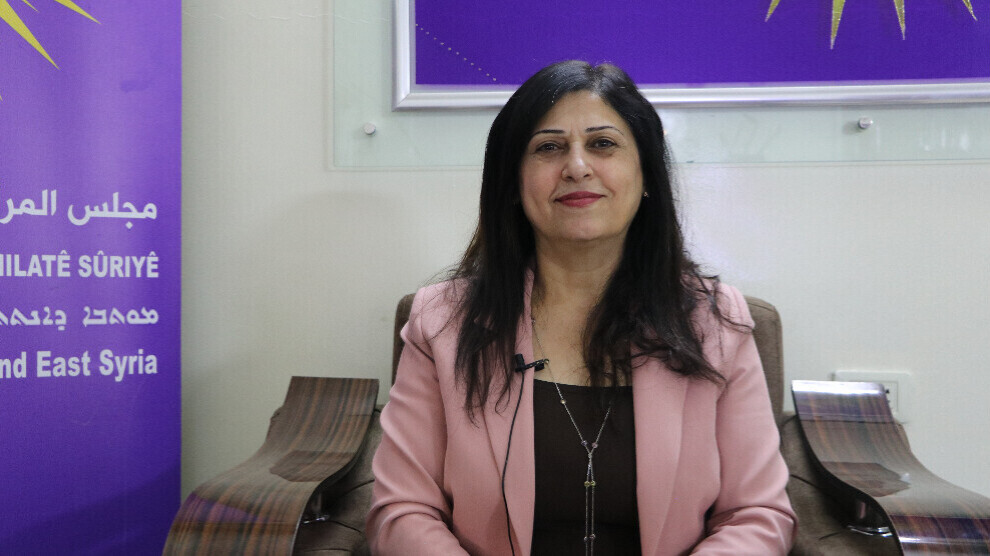
NAGHAM JAJAN
QAMISHLO- Constituional and legal recognition of the rights of the Kurdish people is considered a structural pillar indispensable for building the new Syria on foundations of justice and sustainability. To fortify the national identity and linguistic and cultural specificity of the Kurdish component, these rights must be institutionalized through explicit constitutional texts and effective legislation, ensuring their transfer from the realm of temporary political pledges to the status of legal constants binding on the Syrian state.
Regarding the importance of the Kurdish people's rights in the constitutional framework, our agency conducted the following dialogue with lawyer and member of the Women's Council in Rojava, Amina Omar:
How can the constitutional and official rights of the Kurdish people be guaranteed in the new Syrian constitution so that they do not become subject to political bargaining?
This is the first time in Syria's long history that the Kurdish people have been officially recognized as an authentic component on their historical land. This recognition came pursuant to Decree No. 13 of 2026 issued by the interim government, which we consider a positive step, given that previous governments practiced policies of denial against Kurdish identity, language, and culture. But despite the importance of this step, the decree witnesses serious shortcomings, as official recognition alone cannot guarantee the rights of the Kurdish people sustainably.
What is more important is defining the rights of the Kurdish people clearly in the new Syrian constitution; the right to education in the mother tongue must be guaranteed, Kurdish culture must be protected and developed, alongside real political participation and partnership in building Syria's future as fundamental rights. If serious and practical steps are not taken and these rights are not guaranteed in the constitutional and legal framework, official recognition will remain mere words; therefore it is necessary to guarantee the rights of the Kurdish people in the fields of language, culture, identity, and political participation clearly in the constitution.
What rights and legal guarantees must be defined in the constitution to protect the national identity, language, and culture of the Kurdish people?
The issue of the Kurdish people's rights in the cultural, political, and linguistic fields is an integrated and interconnected issue. Based on that, the Kurdish people must have a status and an active role in all institutions and bodies of the Syrian government, and they must participate genuinely in judicial institutions and in the People's Assembly. It is true that Decree No. 13 has been issued, but it alone is not enough to guarantee our rights sustainably.
To achieve this, political dialogues must continue and practical steps must be taken to guarantee these rights in the new Syrian constitution. We possess a Kurdish identity, but at the same time we have our Syrian identity; therefore the protection of Kurdish rights must be seen within the framework of building a democratic Syria. This responsibility falls on civil society, political forces, and society as a whole. Through the cooperation of these different parties and real political dialogue, we can guarantee Kurdish rights in the constitution.
So that the rights of the Kurdish people are not limited to acceptance in the constitution only but are practically implemented, what legal mechanisms and implementation guarantees must be available?
Practically, the most important thing is that political forces, legal experts, and civil society parties meet to prepare a legal document defining the demands and visions of the Kurdish people in the context of constitutional articles.
This document must clarify Kurdish rights in all fields, including cultural, linguistic, and political rights, in addition to the decentralized system and the Kurdish people's right to administer their areas clearly.
The People's Assembly can also play an active role at this stage and take the necessary steps to develop these demands on the ground. However, the basis is that these rights should not remain confined to documents and petitions, but should be officially guaranteed in the Syrian constitution; because only through clear constitutional guarantees will the rights of the Kurdish people be protected and prevented from being violated in the future.