
After Three Decades Without Execution… Why Is the Death Penalty Still Present in Morocco?
Thirty three years after Morocco's last execution, the death penalty persists in legislation and rulings, while debate continues over deterrence and abolition.
HANAN HART
Morocco — In recent years, the issue of the death penalty has returned to the forefront in Morocco—whose last execution dates back to September 5, 1993—with the emergence of political and legal indicators suggesting a gradual shift in its position on the matter.
In December 2024, Morocco voted for the first time in favor of a UN resolution calling for a halt to executions, while the Minister of Justice announced in June 2026 that the Kingdom would host the Tenth International Congress Against the Death Penalty.
However, this trend coincides with courts continuing to issue death sentences. According to the "Together Against the Death Penalty" organization, 88 people, including one woman, were awaiting execution at the end of 2024, while six new sentences were issued during 2025, without any of them being carried out.
This discrepancy between the trend toward opposing the punishment and the continued issuance of it reveals a debate that has not yet been settled and raises a fundamental question: After more than three decades of a moratorium on executions, does the death penalty still perform a deterrent function, or does its continuation reflect a conception of justice that sees it as an appropriate punishment for the most serious crimes?
Between Deterrence and Protecting Victims
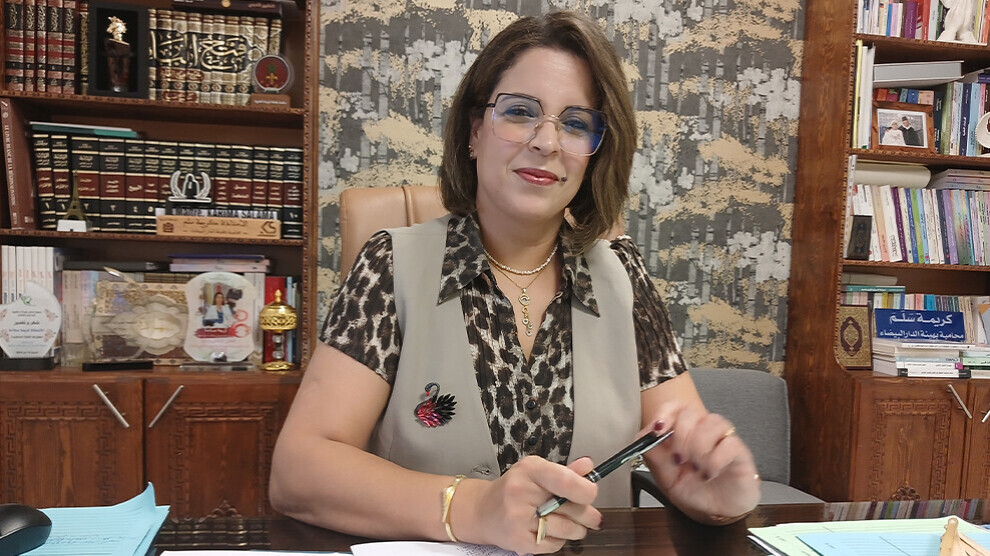
Lawyer Karima Salama also links the debate over the death penalty in Morocco to the development of human rights and legal discussion over past decades, noting the growth of demands for its abolition since the beginning of the millennium, on the grounds of aligning Moroccan legislation with international obligations, particularly those related to the right to life and the international conventions Morocco has ratified.
In this context, she refers to the 2011 Constitution, particularly Article 20, which stipulates that the right to life is the first right of every human being. She considers that the debate in Morocco has come to revolve between a trend pushing toward abolishing the punishment in harmony with the right to life and international obligations, and another trend that believes some crimes, due to their cruelty and gravity, require maintaining the harshest punishments.
She noted that Morocco has not executed death sentences since 1993, and that the sentences issued have become limited. She also said the legal system includes a number of guarantees and procedures specific to this punishment.
She explained that the debate should not be limited to the punitive aspect but must also take into account the rights of victims and their families and the deep effects that committing serious crimes leaves on families.
Moratorium Is Not Enough—Legal Abolition Is the Solution
On the other hand, lawyer Naima Klaf believes that Morocco's halt of executions since 1993 represents an important human rights and humanitarian gain. However, she considers that the continuation of legal texts stipulating the punishment, along with courts continuing to issue death sentences, keeps the door open to the possibility of resuming executions.
She says the actual halt of executions is not enough unless accompanied by amending the criminal code and the military justice code and abolishing the texts stipulating the death penalty. She considers that moving from an actual moratorium to legal abolition would make Moroccan practice more consistent with international obligations and with Article 20 of the Constitution related to the right to life.
She believes Morocco has become closer than ever to abolishing the death penalty, basing this on the passage of more than three decades without executing any sentence and on the development of human rights and official debate around the punishment. She notes that Morocco's vote in 2024 in favor of a UN General Assembly resolution calling for a global moratorium on executions constituted, in her view, an important development in the Moroccan position.
The Ministry of Justice had announced in December 2024 that Morocco would vote for the first time in favor of the UN resolution, after abstaining from voting on the nine previous resolutions related to halting executions.
Naima Klaf considers that the remaining step is essentially the availability of political and legislative will to amend laws and stop issuing death sentences, considering that abolition has become a matter of time if this path continues.
Regarding the argument that the death penalty constitutes a means of deterrence, Naima Klaf says studies that have addressed the relationship between the death penalty and crime rates do not prove, in her view, the existence of a direct relationship guaranteeing a decrease in crimes because of this punishment.
She believes that real deterrence is linked to the effectiveness of law enforcement agencies, the speed of detecting crime, arresting and prosecuting perpetrators, along with addressing social and psychological factors that may contribute to violence.
Regarding femicide crimes, she stresses that confronting these crimes should not start only from the final punishment, but from prevention and protection, by strengthening laws and policies aimed at protecting women, spreading a culture of equality, supporting education and training, enhancing economic and social independence, in addition to the media's role in spreading a culture of human rights and tolerance.
Naima Klaf acknowledges that victims' families suffer deep pain and have the right to justice, but she rejects that justice be based on executing another person, and that the state can protect society and punish perpetrators of serious crimes through alternative penalties, including actual life imprisonment in the most serious crimes, along with compensation and psychological and legal support for victims' families.
She also proposes strengthening mechanisms to support victims and their families, including creating a national mechanism or fund for compensation and accompaniment, along with investing in violence prevention through education, pschological and social support, confronting poverty and marginalization, and spreading a culture of human rights.
İn conclusion, she warned that carrying out a death sentence makes any judicial error uncorrectable, considering that protecting the right to life must include everyone, and that preventing crime and addressing its causes remains, in her view, more important than limiting oneself to the maximum punishment.