
70 Years After the Personal Status Code... Feminists Fear a Rollback of Gains
Feminists in Tunisia are fighting to protect women's gains, particularly the Personal Status Code, given its significance as an influential legislative experience in the region and Africa.
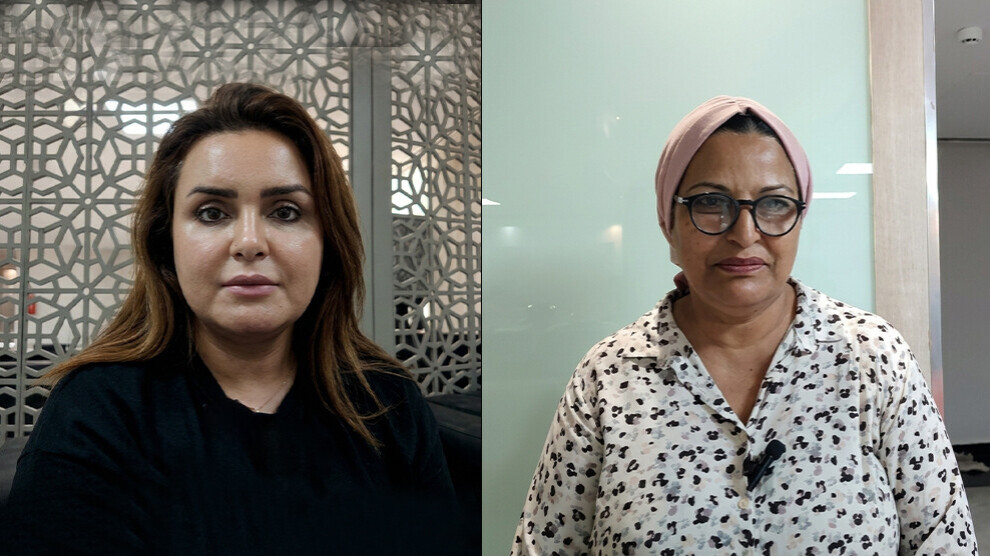
Tunisia — In a difficult situation caught between the legacy of the independence state and a tense political and social reality, Tunisian women ceremonially marked the 70th anniversary of the Personal Status Code, reopening debate on the future of equality and freedoms. Instead of contenting themselves with traditional celebratory rituals for this historic national achievement that formed the backbone of the modern state, feminist movements chose to raise the bar of political and societal accountability.
Women in Tunisia continue to face major structural challenges ranging from domestic violence, the harsh conditions endured by peasant women, and persistent discrimination embedded in both reality and law. These fears are compounded today within a global and local context witnessing the entrenchment of right-wing forces, populist and reactionary discourses seeking to return women to their traditional roles, to the point where these discourses have moved from the margins and social media networks to be adopted by government institutions, official platforms, parliamentary and legislative bodies, and religious forums.
A Political Moment and a Station for Self-Accountability as Feminists
The Secretary-General of the Tunisian Association of Democratic Women, lawyer Hala Ben Salem, affirmed that commemorating the 70th anniversary of the Personal Status Code should not be limited to merely celebrating this national achievement, but should represent a political moment and a station for self-accountability as feminists, and for holding political authority accountable regarding the progress made in achieving equality seven decades after the issuance of this Code, which is a symbol of the independence state and the modern state.
She explained that the Code was originally a political and reformist decision in 1956 that changed women's status and granted them a distinguished position in law, society, and the family, placing them on a progressive and modernizing path. She noted that this project requires not only protection but also continuous development.
She pointed out that after 70 years, women are still being killed either within the family sphere or under harsh conditions such as the accidents suffered by peasant women on "death trucks," in addition to their ongoing suffering from forms of discrimination in both reality and law.
She added that the texts and conventions to which the Tunisian government has committed, such as the lifting of reservations on the CEDAW convention in 2011, have not been practically translated into the details of daily life. Instead, they have been accompanied by the emergence of a reactionary discourse and a general context that restricts rights and freedoms amid intense political debates. She noted that Tunisia is not isolated from the global context witnessing the rise of anti-rights and anti-freedoms movements and a populist and reactionary tide with the rise of right-wing forces, as these conservative discourses seek to undermine women's gains and return them to their traditional roles.
Hala Ben Salem expressed her regret that these discourses in Tunisia are no longer confined to the margins of society or individuals without power, but have become audible and widespread through social media networks, reaching the point of being adopted by government institutions themselves. Parliamentarians are moving toward demanding amendments to the Personal Status Code for "demographic" reasons, as if women have been reduced to mere reproductive machines and bodies to be controlled.
She explained that this trend extends to include media platforms, religious forums, and discriminatory discourses in mosques seeking to return women to traditional roles, which imposes full responsibility on political authority. She stressed that the government cannot in August celebrate women's rights while at the same time aligning with these populist and reactionary discourses that push the country toward a pre-modern, pre-progressive state.
Hala Ben Salem added that the project defended by feminists represents a societal model enshrined seven decades ago, and this project is inseparable from the struggle for rights, freedoms, and equality.
She affirmed that women's rights cannot be separated from democracy, as there is no genuine and real equality in a state that suppresses freedoms and imprisons women, or in a state that lacks respect for citizens' right to access justice and ensure a fair trial.
She noted that the 70th anniversary of the Code has brought renewed attention to areas of discrimination in both private and public spaces, pointing out that additional gains were supposed to have been achieved after decades of struggle, such as the demand for equality in inheritance raised in 2018. However, no new gains have been achieved in the last decade, necessitating continued struggle as a societal and political responsibility to develop the Code and abolish all discriminatory chapters to enshrine equal status between the sexes.
Hala Ben Salem affirmed that claims accusing the Personal Status Code of dismantling the family are false, as family disintegration is caused by violence against women and the desire of some to return them to traditional roles and sacrifice their dignity. She noted that the current phase requires deep awareness to achieve further gains in building a democratic and social state that preserves the dignity of female citizens as rights-holders.
She also stressed the need to critique government policies based on a belief in law and continuous societal dynamism, recalling that the Personal Status Code was issued in 1956 at a time when society may not have been fully prepared, but the law served as an effective tool for change that society interacted with, necessitating today the preservation and development of these gains.
A Grave Danger Threatening the Family and Women's Rights
For her part, feminist activist Jannat Kadashi affirmed that Tunisia was among the first Arab countries to achieve leadership in women's protection through the enactment of the Personal Status Code alongside the building of the independence and modern state. She noted that after 70 years, feminist aspirations were directed toward developing these gains for the better, such as demanding equality in inheritance, rather than settling for stagnation or regression.
She explained that she is witnessing today a predicament represented by a popular discourse supported institutionally, pointing to proposals and draft laws within parliament suggesting the removal of divorce proceedings from courtrooms, which she considered a grave danger threatening the family, children's rights, women, and family cohesion, which is used as a pretext under the guise of protecting it through undermining women's rights, by promoting the idea that the family and children are threatened.
She noted that the government appears to support this approach indirectly, such as releasing prisoners legally convicted for non-payment of child support and alimony to women. She also spoke of a popular discourse supported by regime loyalists calling for the revival of customary marriage, noting that social media and alternative media play a role in advancing these discourses, which sometimes begin in a humorous manner but gradually embed the idea in the collective unconscious of the Tunisian citizen, normalizing the idea gradually until it gains social acceptance through questioning why Tunisia lacks it compared to other Arab countries.
She stressed that the government's supposed role is to protect and support women's rights, saying that feminist movements today face a real danger threatening women's rights that requires sounding the alarm.
Feminist activist Jannat Kadashi affirmed: "As a Tunisian state, since independence, we have always spoken of gains and progress. Today, we find ourselves speaking of regression. How is it conceivable that in the 21st century we assume we are taking a step forward only to be surprised by a step backward? This is the real danger we are working against and confronting as feminists."