
Two human rights activists denounce the crimes of killing young girls and demand accountability for the perpetrators
Domestic violence escalates in Iraq with rising child and women abuse amid social silence. Murder, rape, child marriage need deterrent legislation to protect family and childhood
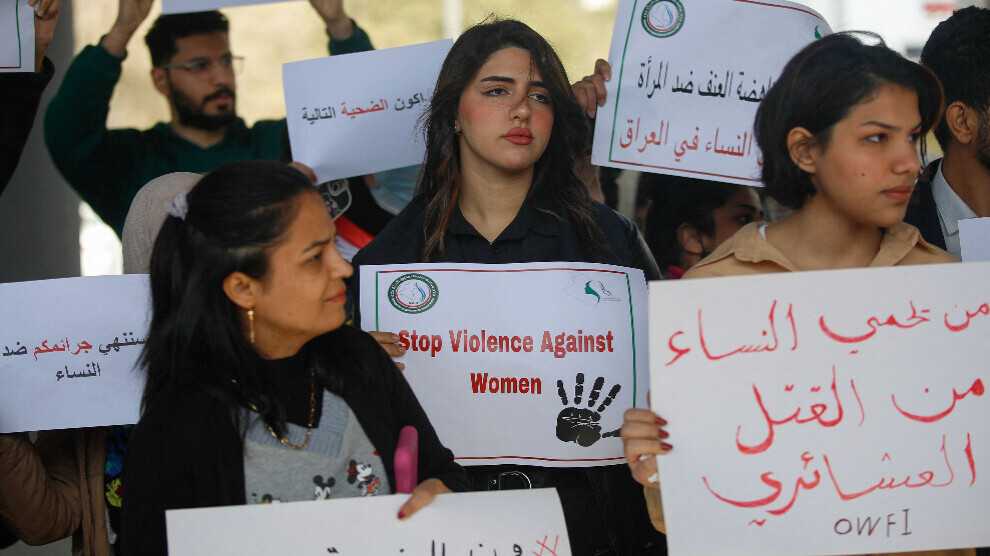
Two human rights activists denounce the crimes of killing young girls and demand accountability for the perpetrators
Domestic violence escalates in Iraq with rising child and women abuse amid social silence. Murder, rape, child marriage need deterrent legislation to protect family and childhood
Rajaa Hamid Rashid
Iraq – Amid rising incidents of domestic violence in Iraq, human rights activists warn of the widening circle of violations affecting women and children, amid continuing social and legal factors that contribute to exacerbating the phenomenon. Specialists call for tightening legislation and activating family and child protection laws to limit these crimes and ensure the deterrence of perpetrators.
We need stricter laws
Lawyer Sherin Zenkena spoke about the recent increase in domestic violence cases, particularly the abuse of children and women, affirming that the phenomenon is continuously worsening due to multiple reasons that can be mitigated through spreading community awareness and moving away from a culture of violence within the family.
She pointed out that many cases of domestic violence go unreported due to outdated customs and traditions and what is known as "shame," leading to violations remaining hidden within the family, even though women, as the foundation of the family and society, are subjected to psychological violence and violations whose effects impact all family members.
She cited the incident of the killing of a 15‑year‑old Iraqi girl because she refused to marry, considering that the case reflects the danger of child marriage, which still threatens society. She affirmed that killing a girl simply for refusing marriage is a religiously and humanely rejected behavior and violates the most basic human rights.
She added that the case of a girl who was raped and sexually assaulted by a relative and other suspects, whom security forces arrested, reveals the scale of existing social and legal challenges. She explained that the delay in deterrent legal procedures, along with family disintegration – whether emotional or resulting from divorce – leads to gaps within the family that negatively affect children, exposing them to neglect and violations.
Sherin Zenkena stressed the need to tighten penalties against those who assault children, to ensure justice and deter anyone who might consider committing such crimes. She called for the enactment of stricter laws that keep pace with social developments and increasing societal problems. She also renewed the demand to pass the domestic violence law, which was not voted on in previous parliamentary sessions, along with supporting laws that protect childhood and maintain family and social cohesion.
Violence threatens children's future
For her part, human rights activist Israa Salman affirmed that violence against children has become a widespread social phenomenon, including physical and sexual assault, child abuse, and child marriage. She warned that these violations create a social gap and widespread societal destruction, especially when the generation that will build society's future is subjected to this level of violence and violation.
She added that societal leniency toward violence against children, considering it normal under the pretext of discipline or marriage, leads to catastrophic results that are now evident in the decline of education, culture, and human values, as well as the growing societal acceptance of horrific violence against children.
She explained that voices calling for child protection often face smear campaigns and accusations, despite continuous warnings about the danger of violations children are subjected to inside and outside the family. She pointed out that public spaces are no longer safe for children; rather, some children are not even safe inside their own homes, raising concern and fear about the future of childhood in Iraq.
She continued that many cases have not reached the media, while some widely reported incidents have revealed the scale of the tragedy, including the killing of a girl because she refused to marry, and rape cases that ended with victims losing their lives. She affirmed that these crimes are not the first and will not be the last unless real measures are taken to protect girls. She also pointed to cases of other children who lost their lives amid the absence of radical solutions to stop child rights violations in the country.
Israa Salman criticized some legal provisions, including Articles 409, 128, and 41 of the Iraqi Penal Code, considering that they are used to reduce penalties in crimes of violence against women and children under the pretext of so‑called "honor or discipline," which contributes to perpetrators escaping punishment. She also warned against legislation that allows child marriage, considering it deepens violations against girls and children.
She affirmed that civilized societies and divine laws reject all forms of violence and violation of children's bodies, pointing out that justifying assaults or questioning the morality of victims constitutes an additional crime against childhood and women.
In conclusion, Israa Salman called for the enactment of family and child protection laws, foremost among them the domestic violence law and the child protection law, affirming that these legislations aim to protect society, not dismantle it. She called for providing a legal and social environment that ensures the protection of children and women and safeguards the future of the Iraqi family.