
Feminist activists face smear campaigns amid rising political violence in Sweid
Civil solidarity with women's lobby activists grows after incitement and defamation campaigns aimed at limiting women's participation in political and social life.
Rosheil Junior
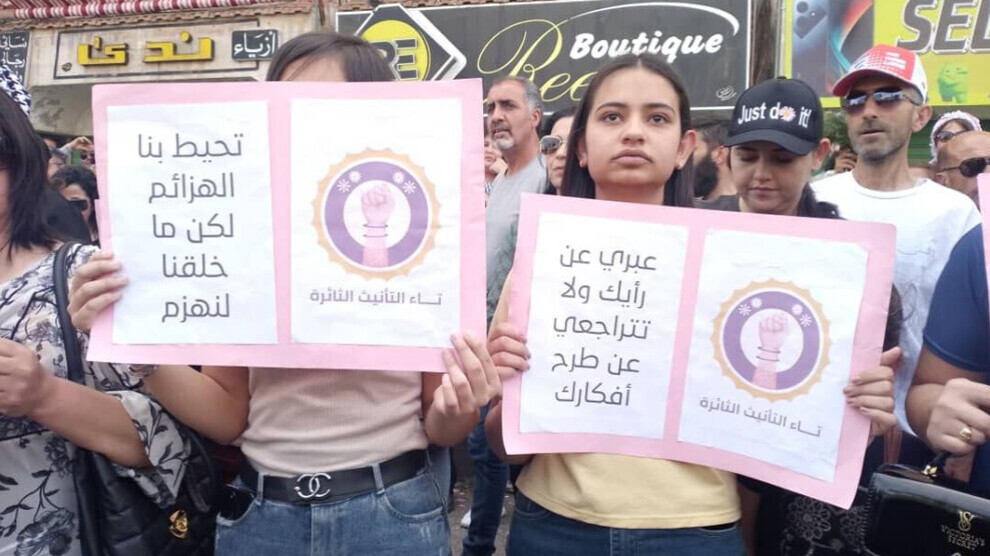
As-Sweida — A group of organizations and activists in the city of Sweida announced their support for the Syrian Women's Lobby in a recent solidarity statement, following a systematic smear and incitement campaign targeting activists in the fields of rights and public work. This comes amid warnings of rising gender‑based political violence, especially through social media.
This statement comes in the context of growing civil solidarity with women's lobby activists. The signatories considered that these campaigns do not only target specific individuals but represent a broader attempt to undermine women's role in the public sphere and limit their participation in political and social life.
Historically rooted violence
In this context, lawyer and civil society activist Shorouq Abu Zeidan, one of the supporters of the statement, said that the recent campaign falls within a long history of violence against women. She explained that this type of targeting "is not confined to a specific geography, but is historically rooted violence that escalates particularly when women engage in public affairs and seek to expand other women's participation in this field."
She added that what the women's lobby activists are facing is "a black mark in public and feminist work," especially since the targeted women have provided professional efforts in documentation, supporting women, and assisting survivors during and after the Syrian crisis. She noted that this work included documenting multiple violations, including the events on the coast and what happened in Sweida last July.
Shorouq Abu Zeidan explained that the aim of these campaigns goes beyond personal defamation to an attempt to limit these women's capacities, belittle their potential, and push them to leave this work. She noted that their targeting is largely due to their effectiveness and impact, proving that women are capable of "making a difference and change, and that they are essential partners in peacebuilding, political life, and decision‑making centers."
Regarding the nature of the smear campaigns, she stated that they often focus on the personal lives of activists, accusing and defaming women specifically from this angle because of its impact in some societies, aiming to turn society itself against them and participate in their exclusion.
As for the psychological and professional impact, she indicated that these campaigns may lead some women to withdraw from public participation for fear of damaging their reputation. However, she stressed that such violence may push others to become more determined, saying: "All this incitement, despite its cruelty, may be a motivation to continue working, because targeting women in this way reflects that their voice is heard and their impact is real."
She affirmed that women today constitute a fundamental pillar in peacebuilding and transitional justice processes, calling for strengthening their presence in various sectors and emphasizing the necessity of solidarity among women as an essential tool to face these challenges.
Shorouq Abu Zeidan also held the authorities directly responsible for protecting women activists, calling for "stopping incitement and defamation rhetoric, especially on social media," and working to issue clear legislation against violence against women that includes penalties for incitement as one of the influential forms of violence that may hinder women's participation in public life.
Smear campaigns fall under political violence
For her part, activist Najwa Al‑Tawil considered that what women activists are facing falls under a recurring pattern of political violence, explaining that women are constantly subjected to smear campaigns targeting their reputation based on gender, which constitutes one of the most prominent forms of political violence directed against them.
She added that members of the Women's Lobby, along with other activists, have been subjected to "organized defamation campaigns by various entities and individuals," noting that the reason is their work on sensitive issues, particularly those related to women survivors of sexual violence and documenting these violations, which "contradicts certain narratives that some parties try to promote."
She explained that women face double challenges compared to men in the public sphere, as their political opinions are not treated the same way; instead, they are targeted on a personal and moral level due to "societal constraints and prevailing male‑dominated thinking."
Najwa Al‑Tawil affirmed that political violence against women often takes a sexualized character, especially when a woman adopts civil or rights issues that do not align with the orientations of certain parties, noting that this type of targeting is used as a tool to exclude women and deter them from continuing public work.